Three Grades of Fortune
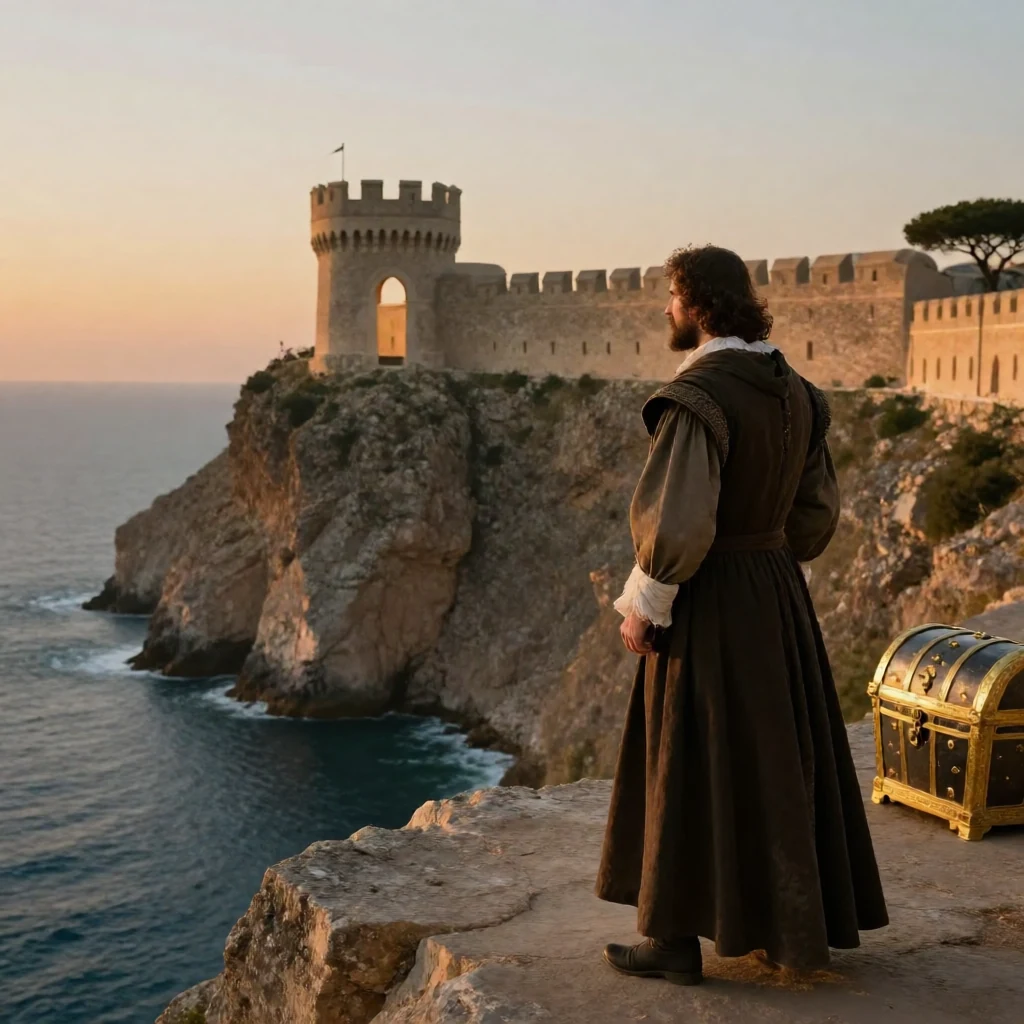
Monte Cristo explains his classification of fortunes into three grades. First-rate fortunes consist of tangible assets like mines, lands, and funded property totaling about a hundred million francs. Second-rate fortunes come from manufacturing enterprises and joint-stock companies, reaching about fifty millions. Third-rate fortunes are fluctuating capital dependent on speculation, credit, and chance—worth only about fifteen million francs, with Danglars fitting into this last category. Monte Cristo warns that continued losses will reduce his credit and real capital by half, comparing it to bleeding that, if repeated, will cause death.
The Cavalcanti Project
Monte Cristo vouches for Major Cavalcanti, instructing Danglars to give him money if properly recommended. The major has presented a bond of 40,000 francs payable at sight, signed by Abbé Busoni and endorsed by Monte Cristo. Danglars immediately counted out the forty bank-notes. Monte Cristo confirms he would advance ten millions on the major’s signature, having great confidence in him.
Andrea’s Allowance
The major has opened an account with Danglars for his son Andrea, allowing the young man 5,000 francs per month—60,000 francs annually. Monte Cristo considers this stingy, wondering how a young man can live on such an amount, and warns Danglars not to advance any extra funds, as the father will never repay them.
The Morcerf Engagement
Danglars discusses Albert de Morcerf’s betrothal to his daughter, noting that Madame de Morcerf and Albert themselves have not yet agreed. He suggests Mademoiselle Danglars is as good a match as Albert, hinting that while the Morcerf name is prestigious, his own fortune will be considerable. When pressed about why he did not invite the Morcerfs to dinner, he explains they excused themselves, with Madame de Morcerf supposedly going to Dieppe for sea air—which Danglars mocks as the air she “always breathed in her youth.”
Danglars’ True Name
Danglars reveals that while he received his baron title legitimately, Morcerf merely made himself a count. He claims Morcerf was once named Fernand Mondego, a mere fisherman when they were both clerks. Danglars insists he has bought enough fish from him to know his true name, and that both men are parvenus who became noble through wealth rather than birth.
The Mondego Mystery
Monte Cristo recalls hearing the name Fernand Mondego in connection with affairs in Greece, specifically in conjunction with Ali Pasha. Danglars confirms this is the mystery surrounding Morcerf—certain things have been mentioned about him that were never said of Danglars, but he will not specify what.
The Yanina Investigation
Monte Cristo suggests Danglars write to his correspondent in Yanina to investigate what part was played by the Frenchman Fernand Mondego in the catastrophe of Ali Tepelini. Danglars seizes upon this immediately, rising quickly and declaring he will write that very day. He promises to communicate anything scandalous he discovers, obliging Monte Cristo before rushing out.
CHAPITRE 67. The Office of the King’s Attorney
The chapter depicts a clandestine meeting between Madame Danglars and Procureur Villefort at the Palais de Justice, during which Villefort recounts the dark history of a buried child at Auteuil and reveals that the remains are now missing, pointing to a conspiracy linked to the Count of Monte Cristo. Chapter 67, “The Office of the King’s Attorney,” continues the confrontation between Villefort and Madame Danglars over their dark shared secret. Villefort explains his efforts to trace the fate of the child presumed dead, reveals that the child was likely alive and given to a foundling hospital, and ultimately resolves to investigate the Count of Monte Cristo, whom he now suspects of holding damaging knowledge about their past.
CHAPITRE 67. The Office of the King’s Attorney
The chapter depicts a clandestine meeting between Madame Danglars and Procureur Villefort at the Palais de Justice, during which Villefort recounts the dark history of a buried child at Auteuil and reveals that the remains are now missing, pointing to a conspiracy linked to the Count of Monte Cristo.
The original text of this work is in the public domain. This page focuses on a guided summary article, reading notes, selected quotes, and visual learning materials for educational purposes.