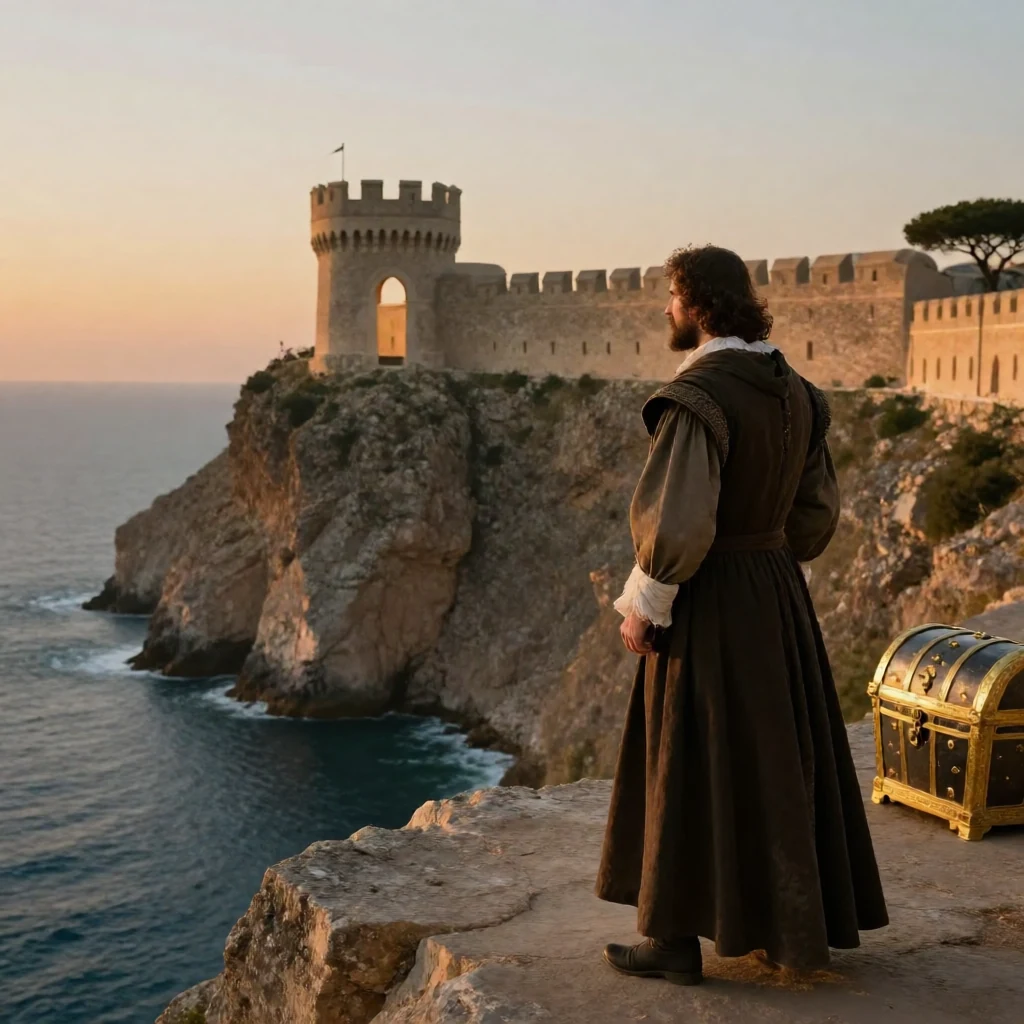
Dantès Reacts to Faria’s Insight Into His Unconscious Thoughts
Dantès is left confused and silent by Faria’s reading of his unspoken thoughts. The narrator distinguishes between ideas that proceed from the head and those that emanate from the heart, suggesting that Faria has touched the deeper, soul-level workings of Dantès’s mind.
Faria’s Study of Historical Prison Escapes
Faria explains that since his imprisonment he has studied the most celebrated cases of escape on record. Successful escapes, he observes, have nearly always been long meditated and carefully arranged — citing the Duc de Beaufort’s escape from the Château de Vincennes, the Abbé Dubuquoi’s from For l’Évêque, and Latude’s from the Bastille. He advises Dantès that the best opportunities come from chance, and counsels patient waiting until a favorable moment presents itself. Dantès remarks that such patience was easier for Faria, who was constantly occupied with a chosen task and sustained by hopes.
Dantès Inquires Into Faria’s Imprisonment Activities
Faria counters that he did not draw on hope for recreation or support, but rather wrote or studied. When Dantès asks how he managed without official permission for writing materials, Faria replies that he made them for himself, prompting Dantès’s astonishment.
Faria’s Homemade Writing Supplies
Faria details how he manufactured his own writing supplies. He treated two of his shirts with a chemical preparation to make the linen as smooth to write on as parchment. For pens, he selected the cartilages from the heads of the huge whitings served on maigre days, welcoming each Wednesday, Friday, and Saturday as an opportunity to increase his stock. For ink, he dissolved soot scraped from a long-sealed fireplace in his dungeon into a portion of the wine brought to him every Sunday. For especially important notes requiring closer attention, he pricked his own finger and wrote with his blood.
The original text of this work is in the public domain. This page focuses on a guided summary article, reading notes, selected quotes, and visual learning materials for educational purposes.