Leghorn and the Barber
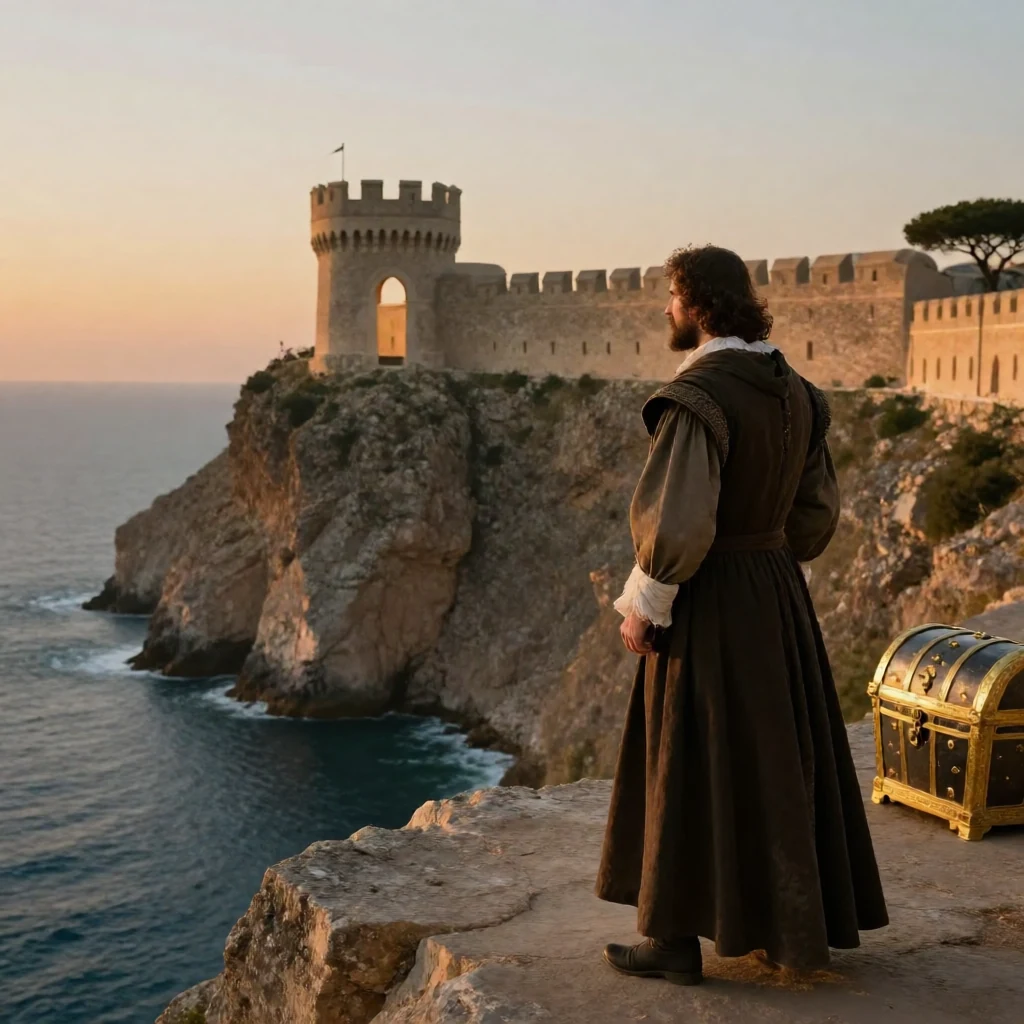
Reaching Leghorn, Dantès faces another test: he must see if he can recognize himself, having not glimpsed his own face for fourteen years. He remembers a barber in Saint Ferdinand Street from his twenty previous visits to the port and goes there to have his beard and hair cut. The Leghorn barber gazes in amazement at this man whose long, thick, black hair and beard give his head the appearance of one of Titian’s portraits—at a time when such abundance was unfashionable.
The Metamorphosis
The barber says nothing and goes to work. When the operation concludes and Edmond feels his chin completely smooth with his hair reduced to its usual length, he asks for a looking-glass. He is now thirty-three years old, and fourteen years of imprisonment have produced a great transformation in his appearance.
A Transformed Appearance
Dantès had entered the Château d’If with the round, open, smiling face of a young and happy man whose early paths had been smooth. Now all is changed. The oval face has lengthened, his smiling mouth has assumed the firm, marked lines that betoken resolution, his eyebrows arched beneath a brow furrowed with thought, his eyes full of melancholy occasionally sparkling with gloomy fires of misanthropy and hatred. His sun-deprived complexion has become pale, producing an aristocratic beauty in contrast with his black hair. His features carry a refined intellectual expression from his profound studies, and his naturally goodly stature has acquired the vigor of a frame that has long concentrated all its force within itself. A nervous, slight elegance has given way to solid, rounded muscularity. His voice, shaped by prayers, sobs, and imprecations, ranges from singularly penetrating sweetness to roughness and hoarseness. His eyes, accustomed to the gloom of prison, have acquired the faculty of distinguishing objects in darkness, common to hyenas and wolves. Edmond smiles when he beholds himself—it is impossible that even his best friend could recognize him; he cannot even recognize himself.
The original text of this work is in the public domain. This page focuses on a guided summary article, reading notes, selected quotes, and visual learning materials for educational purposes.