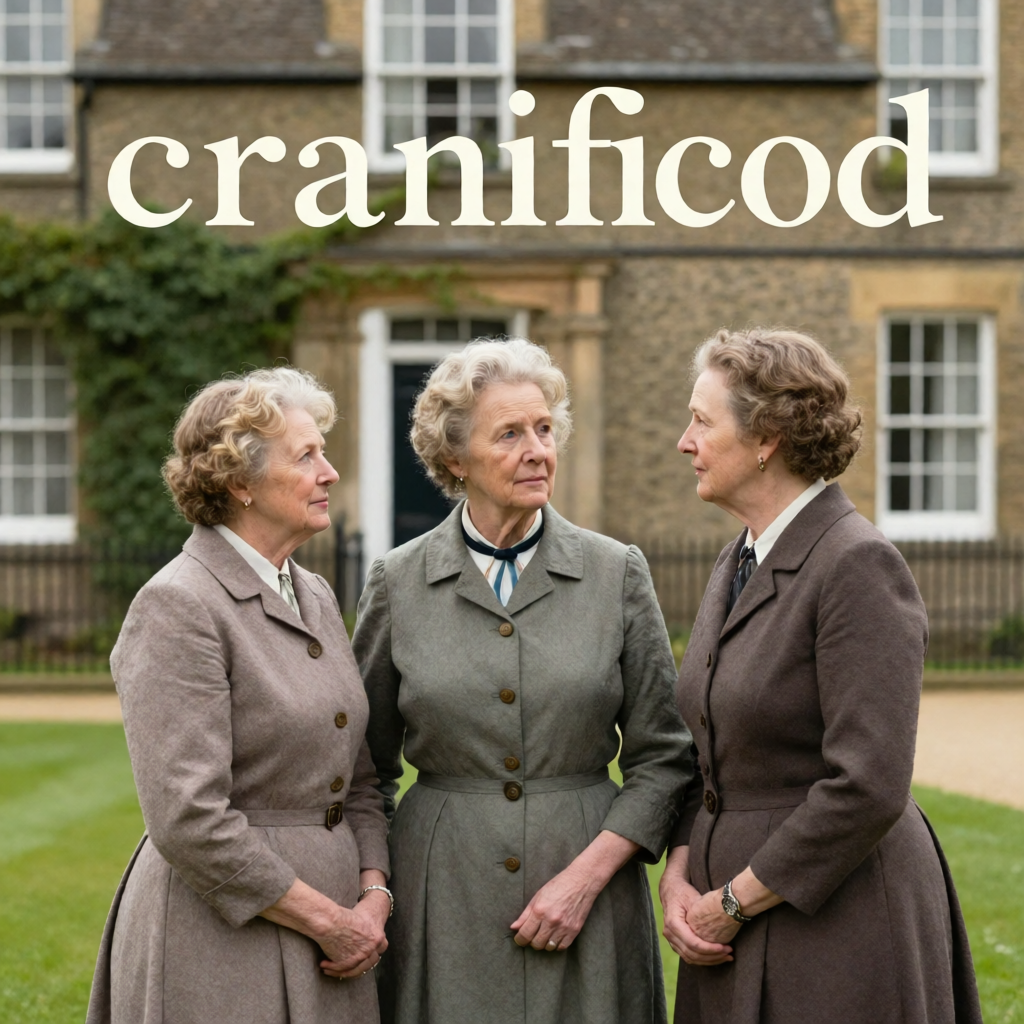
Study Guide: Cranford by Elizabeth Cleghorn Gaskell
Overview
Cranford (1853) is a episodic novel set in the fictional town of Cranford, a small English country town where women have come to dominate all aspects of social life. Through the eyes of the narrator, Mary Smith, readers encounter the “Amazons” of Cranford—widows and spinsters maintaining appearances through “elegant economy” while navigating a world slowly changing around them. Gaskell affectionately portrays a society of elderly women and genteel poor who resist the industrial age creeping beyond their boundaries.
Historical and Literary Context
Elizabeth Cleghorn Gaskell (1810–1865) wrote Cranford during the Victorian era, a period of tremendous social and industrial transformation. The novel reflects anxieties about changing social classes, the decline of aristocratic traditions, and the tension between old gentility and new commercial wealth. Gaskell’s portrayal of Cranford’s women anticipating and resisting modernization anticipates later feminist readings of Victorian domesticity.
Major Characters
The Jenkyns Sisters
- Miss Jenkyns (Deborah): The commanding eldest sister who dominates Cranford society until her death. A rigid intellectual devoted to Dr. Johnson’s writings, she maintains strict notions of propriety and rank. Her literary preferences and social pretensions are targets for Gaskell’s gentle satire.
- Miss Matty (Matilda): The gentle, kind-hearted younger sister who emerges as the novel’s moral center. After financial ruin, she opens a tea shop with quiet dignity. Her lifelong tenderness toward her lost love, Thomas Holbrook, and her devotion to her brother Peter define her emotional journey.
- Peter Jenkyns: The mischievous younger brother who ran away to sea after being publicly humiliated by his father. He returns from India as the “Aga Jenkyns,” having survived captivity and built a new life. His reunion with Miss Matty provides the novel’s triumphant climax.
The Brown Family
- Captain Brown: A half-pay army officer who challenges Cranford’s conventions by openly discussing his poverty. His kindness and heroism—culminating in his death saving a child at the railway station—earn him grudging respect.
- Miss Jessie Brown: The younger daughter who eventually marries Major Gordon after years of faithful waiting. She possesses “a round, dimpled face with large blue wondering eyes” and maintains her father’s cheerful resilience.
- Miss Brown: The eldest daughter who suffers from a painful, lingering illness. Her death following her father’s funeral leaves Miss Jessie to face an uncertain future.
The Cranford Ladies
- Miss Pole: A keen observer of society who collects news and gossip during her morning rambles. Her fear during the robbery panic leads to embellished descriptions of imagined criminals.
- Mrs. Forrester: A gentle, meek woman who believes in ghosts and French spies, and who sacrifices a twentieth of her meager income to help Miss Matty.
- Mrs. Jamieson: The Honourable widow who clings to aristocratic pretensions. Her exclusion of Lady Glenmire and her feud with the Hogginses represent the novel’s snobbery at its most absurd.
- Lady Glenmire: A Scottish peeress of modest means who marries the local surgeon Mr. Hoggins, scandalizing Cranford’s aristocracy but finding genuine happiness.
- Mrs. Fitz-Adam: The former Miss Mary Hoggins, whose long-held affection for Miss Matty dates to a childhood encounter at market. She contributes generously to the secret subscription.
Key Themes
Genteel Poverty and “Elegant Economy”
Cranford’s gentlefolk practice elaborate economies to maintain appearances. They walk to parties because “the night is fine,” wear prints because they “prefer washing materials,” never because silks exceed their means. This philosophy creates peaceful satisfaction—what they cannot afford simply becomes unfashionable by Cranford’s standards.
Social Class and Rank
The novel critiques the rigid social hierarchies that govern Cranford society. Mrs. Jamieson refuses to acknowledge the surgeon Mr. Hoggins at parties. Mrs. Fitz-Adam is excluded from “select” gatherings. Yet Gaskell suggests that genuine worth transcends rank: Captain Brown’s heroism, Lady Glenmire’s warmth, and Miss Matty’s kindness matter more than aristocratic blood.
Change and the Industrial Age
The railway station where Captain Brown dies symbolizes the industrial transformation encroaching on Cranford. The Town and County Bank failure illustrates how old systems crumble. The novel documents the tension between those who cling to tradition and those who adapt to modernity.
Love, Duty, and Loss
Multiple love stories structure the narrative: Miss Matty’s lost love for Thomas Holbrook, Major Gordon’s long devotion to Miss Jessie, the romance between Martha and Jem. Duty often trumps desire—Miss Jessie refuses Gordon to care for her dying sister, Miss Matty refuses Holbrook out of deference to her family’s wishes. Loss pervades the novel, yet Gaskell suggests that grief can ultimately give way to grace.
Community and Compassion
When Miss Matty loses her fortune to the bank failure, Cranford’s women rally to help her—secretly, so as not to wound her pride. Their collective generosity exemplifies the novel’s ideal of mutual support across class boundaries. Miss Matty’s unselfishness calls out similar qualities in others.
Chapter-by-Chapter Summary
Chapter I: Society of Amazons
The narrator introduces Cranford, a town belonging entirely to its women. Men seem to vanish—frightened away by feminine social gatherings. The chapter establishes elaborate visiting rules: calls last no more than fifteen minutes, returns must be made within three days. Captain Brown arrives and challenges conventions by openly discussing poverty. A literary dispute erupts at a card party when Captain Brown defends Dickens against Miss Jenkyns’s devotion to Dr. Johnson.
Chapter II: Tragedy and Reconciliation
Extended scenes reveal Captain Brown’s kindness and Miss Brown’s illness. After Captain Brown dies heroically at the railway station, Miss Brown follows him in death. Major Gordon arrives, having loved Miss Jessie since she was eighteen. His proposal, once refused, is now accepted. Years later, an elderly Miss Jenkyns cares for little Flora Gordon.
Chapter III: A Love Affair of Long Ago
Following Miss Jenkyns’s death, the narrator visits Miss Matty, who requests to be called “Matilda” to honor her dead sister. Miss Pole reveals Miss Matty’s old love story: Thomas Holbrook, a yeoman farmer, once offered for her hand but was discouraged by the family as beneath their station. An unexpected reunion occurs when they encounter the aging Mr. Holbrook in a shop.
Chapter IV: A Visit to Woodley
Miss Matty accepts an invitation to visit Mr. Holbrook’s farmhouse. The pastoral estate features alphabet-named cows and a counting-house overflowing with books. After a day of poetry reading and unconventional dining (pudding before meat, two-pronged forks for peas), Mr. Holbrook gives Miss Matty a book of poems and calls her “Matty” as he did thirty years before. She declines afterward, learning he is ill and then dying. In grief, she grants Martha permission to receive followers—providing happiness to the younger woman that she herself was denied.
Chapter V: Old Letters
Miss Matty and the narrator sort through and burn the old family letters. The correspondence reveals the rector’s passionate nature—quite different from his formal Johnsonian sermon style—and his bride’s practical concern for a white Paduasoy dress. Letters from Deborah show her intellectual pride, while Peter’s school notes include a touching appeal: “don’t, please, be ill for me; I am not worth it.”
Chapter VI: Poor Peter
Peter’s career at Shrewsbury brought reputation as a great practical joker. A terrible humiliation occurs when he dresses in Deborah’s clothing and pretends to be a baby in the garden; his father discovers and publicly flogs him. Peter runs away to Liverpool and enlists in the Navy. His mother dies before she can say farewell. Peter returns once as a lieutenant, then disappears during a war in India, leaving the family in genteel poverty.
Chapter VII: Miss Betty Barker’s Tea
Miss Betty Barker, retired milliner, invites the ladies to tea. The chapter reveals Cranford’s rigid social hierarchy: Mrs. Fitz-Adam is excluded as “not suitable company.” Lady Glenmire’s upcoming visit generates excitement. The evening includes card games, Mrs. Jamieson’s slumber, and cherry-brandy.
Chapter VIII: A Peeress in Cranford
Lady Glenmire’s arrival prompts questions about proper forms of address. Mrs. Jamieson unkindly hints that the Cranford ladies should not call upon her sister-in-law. Despite their initial indignation, they accept an invitation to tea. Lady Glenmire proves pleasant and modest—her entire dress worth only ten pounds. The formal distance dissolves into genuine sociability, and the ladies walk home “with refined and delicate perceptions.”
Chapter IX: Signor Brunoni
The mysterious Signor Brunoni performs magic at the Assembly Rooms. Miss Pole insists he cannot be the real conjuror because he has a beard. The tricks bewilder Mrs. Forrester and Miss Matty, who grow uneasy about whether such entertainment is proper for people of their standing. The rector’s presence provides sanction, though Miss Pole remains skeptical.
Chapter X: The Panic
Robberies spark widespread fear in Cranford. Miss Matty conducts nightly inspections with poker and hearth-brush. Mrs. Forrester believes French spies are responsible. Miss Pole flees her home with silver plate. Lady Glenmire reveals that Mrs. Jamieson’s house was attacked. After braving “Darkness Lane,” the ladies confess their individual fears—Miss Matty’s terror of someone concealed beneath her bed, solved by rolling a penny ball under it each night.
Chapter XI: Samuel Brown
Lady Glenmire and Miss Pole discover Signor Brunoni injured at a wayside inn. The conjuror’s wife reveals her husband’s true identity: Samuel Brown, former sergeant in the 31st Regiment. Their daughter Phoebe was saved at Chunderabaddad by “that good, kind Aga Jenkyns”—possibly the lost Peter Jenkyns. The Cranford panic dissolves when they learn the conjuror could not even manage a shying horse.
Chapter XII: Lady Glenmire’s Engagement
Major Gordon’s engagement to Miss Jessie is confirmed through letters. Then Lady Glenmire announces her marriage to Mr. Hoggins—shocking Cranford society but bringing her genuine happiness.
Chapter XIII: The Bank Failure
The Town and County Bank stops payment, reducing Miss Matty to poverty. She will lose nearly £150 annually, leaving her with only thirteen pounds. Miss Matty calmly calculates her position and expresses grief not for herself but for how her mother would have grieved to know she had “come down in the world.”
Chapter XIV: Community Response
Cranford’s women assemble at Miss Pole’s home to help Miss Matty secretly. Each writes a contribution and seals it. The narrator’s father helps arrange practical solutions: Martha and Jem marry and remain in the house, the ladies’ contributions cover the rent, and Miss Matty opens a tea shop in her dining parlour.
Chapter XV: Peter’s Return
Peter Jenkyns arrives at the tea shop, identified by his double eyeglass and foreign clothes. The brother and sister reunite over tearful recognition. Peter had been taken prisoner at Rangoon and believed dead. The narrator’s letter brought him home. He settles with Miss Matty in their old family home, distributes generous gifts throughout Cranford, and restores their prosperity.
Chapter XVI: Peace to Cranford
Peter becomes the darling of Cranford society with his wonderful stories. He reconciles Mrs. Jamieson with the Hogginses, bringing old friendly sociability back to the town. A festive gathering at the George inn and a Signor Brunoni performance celebrate the renewed harmony.
Literary Techniques
Episodic Structure
The novel unfolds as a series of connected episodes rather than a continuous plot. This structure mirrors the unhurried pace of provincial life while allowing Gaskell to explore themes through individual vignettes.
Gentle Satire
Gaskell mocks Cranford’s pretensions without cruelty. The ladies’ rigid visiting rules and fear of “vulgarity” are absurd, yet their genuine kindness and mutual support earn respect.
Irony and Social Commentary
Miss Jenkyns condemns “Pickwick Papers” as beneath Dr. Johnson’s dignity, yet her brother writes pompous Latin in letters to his wife. Mrs. Jamieson refuses to acknowledge Mr. Hoggins while accepting Peter’s cross-legged sitting as “Oriental” charm.
Domestic Detail
Gaskell grounds the novel in everyday concerns: candle economies, cap selections, the proper way to address nobility. These details create authenticity while revealing character.
Unreliable Narrator
Mary Smith observes and reports but admits her own weaknesses (hoarding string) and limitations. Her perspective shapes our understanding without claiming omniscience.
Symbols and Motifs
The Red Silk Umbrella
The little spinster’s magnificent red silk umbrella becomes a local landmark—symbolizing both the pride Cranford takes in eccentricity and the way small signs mark social identity.
Candles and Economy
Miss Matty’s candle-watching represents the larger “elegant economy” pervading Cranford. The two candles kept ready to create the appearance of burning two consistently suggest how carefully appearances are maintained.
The Railway Station
Where Captain Brown dies, the railway represents industrial progress threatening to sweep away old ways of life. Yet the station also connects Cranford to the wider world—bringing Signor Brunoni, allowing Peter to return.
Penny Ball
Miss Matty’s solution to her nocturnal terror—a ball rolled under the bed to test for concealed intruders—represents her practical ingenuity in facing fears.
Important Quotations
“What does it signify how we dress here at Cranford, where everybody knows us?”
This captures the town’s independence from fashion and external judgment, yet also its insularity and self-satisfaction.
“We are the Amazons of Cranford.”
Miss Pole’s phrase encapsulates the female-dominated society and its proud self-awareness.
“God forbid that I should grieve any young hearts.”
Miss Matty’s permission for Martha to have followers, granted in grief after Mr. Holbrook’s death, shows how personal sorrow can open the heart to others’ happiness.
Study Questions
-
How does Gaskell use the narrator Mary Smith to shape our perception of Cranford society?
-
Compare the “elegant economy” practiced by Cranford’s ladies with the open poverty acknowledged by Captain Brown. What does this contrast reveal about the town’s values?
-
Trace the theme of lost love throughout the novel. How do characters like Miss Matty, Major Gordon, and Miss Jessie cope with romantic disappointment?
-
What role does social class play in shaping characters’ choices and relationships?
-
Analyze the significance of Peter’s return. How does his reappearance resolve or complicate the novel’s themes?
-
How does Gaskell balance gentle satire with genuine affection for her characters?
-
Discuss the function of the robbery panic in Chapter X. What does it reveal about Cranford’s self-image?
-
Consider the novel’s ending. What does “peace to Cranford” mean, and how is it achieved?
Key Facts for Review
- Publication: 1853 (originally in eight installments in Household Words)
- Author: Elizabeth Cleghorn Gaskell (1810–1865)
- Setting: The fictional town of Cranford, presumably in the English Midlands
- Narrator: Mary Smith, a visitor to Cranford
- Time Period: Approximately 1820s–1840s
- Structure: Sixteen chapters in episodic form
- Major Events: Captain Brown’s death, Miss Matty’s financial ruin and recovery, Peter Jenkyns’s return from India
- Central Relationship: The Jenkyns family—Miss Matty, Deborah, and Peter
- Thematic Concerns: Class, gender, change, economy, community, love, loss
Cranford remains a beloved portrait of provincial English life, its blend of comedy, pathos, and gentle satire continuing to enchant readers while offering sharp insights into Victorian society’s anxieties and pretensions.