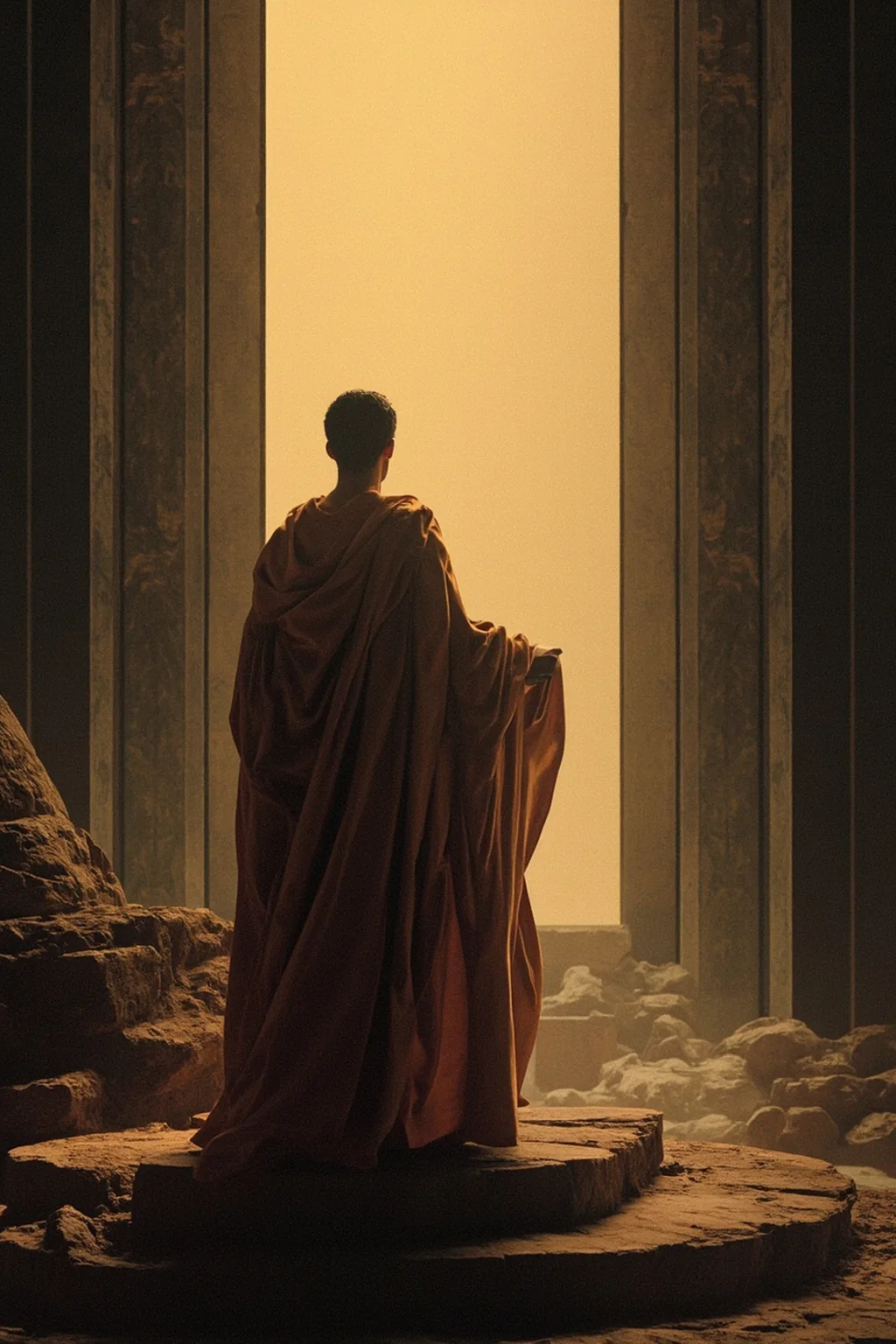
He inquires about the present estate of his understanding, for therein lies all. Other things are without the compass of his will and are therefore dead to him, mere smoke. To stir up a contempt of death, he notes that even they who esteemed pleasure to be happiness and pain misery often contemned death. Can death be terrible to him to whom only what is seasonable seems good, or to whom it matters not whether his actions are many or few so long as they are good? O man, as a citizen you have lived in this great city, the world. Whether for five years or a hundred, what is it to you? You have lived as long as the laws and orders of the city required. Why should it be grievous if the same nature that brought you in now sends you out? It is as if a praetor should fairly dismiss an actor from the stage. The actor might protest that the play is not yet at an end, that only three acts have been performed, but in matter of life, three acts is the whole play. The time belongs to Him who composed you and is now the cause of your dissolution. You have to do with neither. Go your ways well pleased and contented, for He that dismisses thee is pleased.
The original text of this work is in the public domain. This page focuses on a guided summary article, reading notes, selected quotes, and visual learning materials for educational purposes.