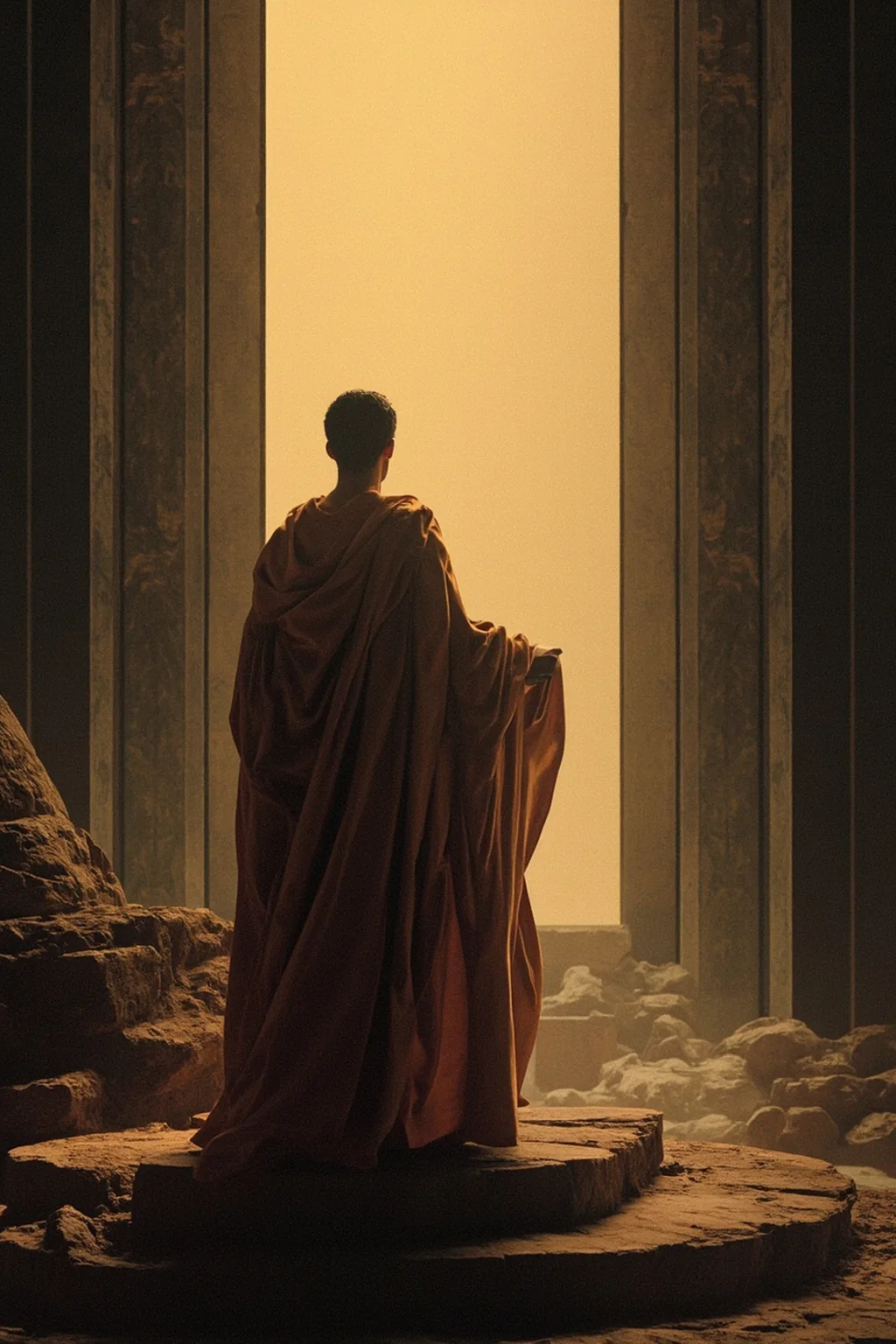
Written during military campaigns at the edges of the empire, the *Meditations* represent a private dialogue between a ruler and his conscience. Marcus Aurelius does not seek to teach a system, but to fortify his own mind against the corruption of power and the fear of death. The work moves from a catalog of gratitude to his teachers to a rigorous metaphysical examination of change, duty, and the rational soul, ultimately concluding that the good life consists in acting justly and accepting fate as a necessary part of the cosmic whole.
The final section expands the view to the cosmic scale. Marcus notes that the body cannot perceive differences in things, and the mind should only care about its own present operations, as future and past are indifferent. He observes that Asia and Europe are but corners of the world, Mount Athos is a clod, and present time is a point in eternity. All things are petty and soon altered, coming from one common beginning. He argues that he who sees the present has seen all that ever was or shall be, for all things are mutually related and folded together. One must fit oneself to the estate allotted by fate; if the Gods have deliberated, one must accept it as wise, and if they have not, one must deliberate for oneself according to one’s rational nature as a member of the world-city. Life is like a theater show that becomes tedious through repetition, and Marcus urges constant meditation on the deaths of all sorts of men—kings, philosophers, and scoffers—to realize that conversing according to truth and righteousness is the only worthwhile pursuit. The wise man finds happiness in his own action, not in applause or pleasure, and can exclude grief by excluding opinion. No man can hinder him from living as nature requires, for nothing can happen but what the common good requires.
The Seventh Book opens with a meditation on the nature of wickedness and the cyclical repetition of human history. Marcus Aurelius observes that what is considered wicked is not a novel phenomenon but a familiar pattern that has occurred countless times throughout the ages. He urges himself to view the chaotic spectacle of the world—public shows, conflicts, the struggles of animals, and the trivial movements of puppets—with a sense of detachment. By recognizing that nothing is truly new and that all things are transient, he can stand steadfast amidst the turmoil, unaffected by the vanity that surrounds him. He emphasizes that his worth is internal, determined by his own reason rather than the external objects he might affect or be affected by. He resolves to understand words and deeds as they are, purpose after purpose, conceiving each according to its true nature rather than common usage.
The original text of this work is in the public domain. This page focuses on a guided summary article, reading notes, selected quotes, and visual learning materials for educational purposes.