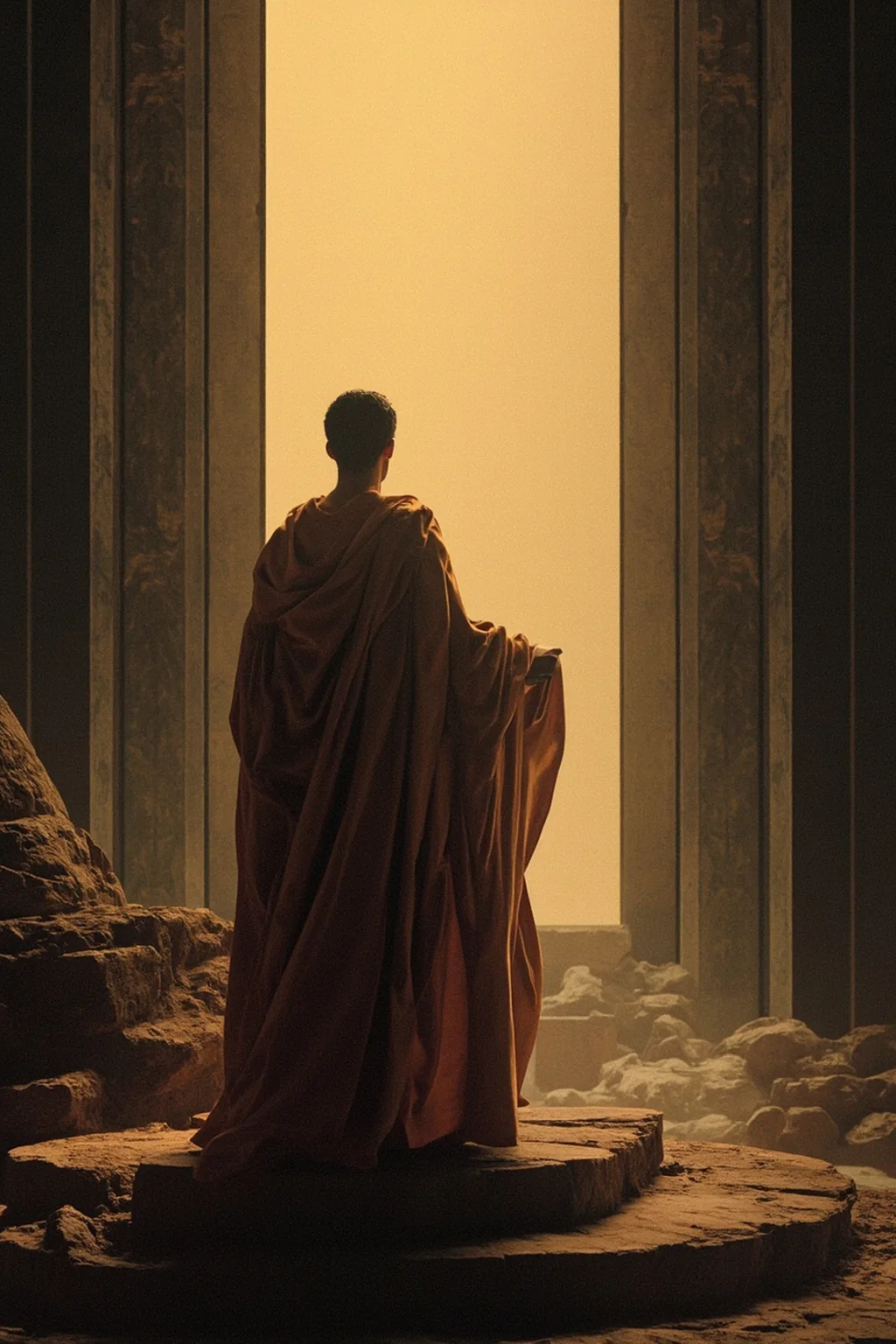
The Third Book
The Third Book opens with a stark double warning. A man must consider not only that his life diminishes daily, but also that even if he lives long, he cannot be certain his understanding will remain fit for either business or contemplation. The intellective faculty—the very capacity to know the true nature of things and to order actions accordingly—may fail before death itself arrives. Marcus therefore urges haste: not only because one draws nearer to death each day, but because the mind’s power to discern right from wrong, and even to consider whether one should live any longer, can wither away. The natural faculties of breath, nourishment, and appetite may persist, but the best strength and vigour of the mind, the part on which true knowledge of both divine and human things depends, may be lost.
From this urgency Marcus turns to a curious meditation on beauty. Whatever naturally happens to natural things carries with it a peculiar delight. A baked loaf whose crust has split and become rugged; figs deemed fairest when they begin to shrink and wither; ripe olives at the very edge of putrefaction; the hanging cluster of grapes, the brow of a lion, the froth of a wild boar—each, though considered in itself far from beautiful, becomes comely and delightful because it happens naturally. With such a mind a person can behold the true rictus of wild beasts with as much pleasure as skilled painters imitate them, and perceive the proper ripeness and beauty of old age. These things, Marcus admits, are not credible to everyone, only to those truly acquainted with nature and all natural things.
The third meditation assembles a roll-call of the dead to make death feel ordinary rather than terrible. Hippocrates cured many sicknesses and then died. The Chaldeans and astrologers who foretold the deaths of others were themselves overtaken. Alexander, Pompey, and Caesar—destroyers of cities, slayers of thousands—finally surrendered their own lives. Heraclitus, who wrote of the world’s conflagration, died filled with water and bedaubed with dung. Lice killed Democritus; Socrates was killed by wicked men. The lesson is plain: you have taken ship, sailed, come to land; now go out, and whether to another life with gods, or into a final ceasing of pain and pleasure and servitude to this vile cottage, you are safe either way, since the rational spirit within excels what merely ministers to it.
Marcus then demands that the reader spend no more time on the thoughts, words, and schemes of others when it leads to no common good. One should prevent idle, impertinent, curious, and malicious thinking, and be ready to answer plainly if suddenly asked what one is thinking. The well-disciplined mind becomes a kind of priest and minister of the gods, deeply dyed in righteousness, embracing whatever happens, caring only for what lies within one’s own power, treating all who partake of reason as kin, and accepting praise only from those who live according to nature.
Several short precepts follow. Do nothing against your will, against the community, or without due examination. Let the God within find in you an aged, sociable, Roman, princely man who needs no oath and no witness. Be cheerful and self-sufficient, more like one always straight than one merely straightened. Nothing in mortal life is better than righteousness, truth, temperance, fortitude, and a mind contented both with its own actions and with what providence brings; if anything better exists, pursue it, but otherwise cling to this. Never esteem as profitable anything that would break faith, lose modesty, or require secrecy. The mind once truly purged and disciplined contains nothing foul, servile, or concealed, and cannot be surprised by death as an actor cut off before his play ends.
Marcus adds the discipline of examining every object that presents itself, contemplating it bare and naked, divided into parts, and seeing both its proper use and its place within the universe. Every fancy should be examined for what it is, how long it lasts, and which virtue—meekness, fortitude, truth, faith, sincerity, contentment—properly applies. If one intends the present, follows reason solidly and meekly, preserves the spirit unpolluted, and cleaves to God without hope or fear, no man can hinder such a life.
Finally, Marcus warns against self-deception: one will never actually live to read the moral commentaries, Roman and Greek acts, and excerpta prepared for old age. Hasten, therefore, to an end and help yourself in time. The senses belong to the body, desires to the soul, and dogmata to the understanding. The truly good man—who likes and embraces all that is destined, never troubles the spirit seated in the temple of his breast, speaks nothing against truth, and does nothing against justice—lives purely, ever ready to depart, willing of himself to accommodate himself to his proper lot, whether or not any other person believes, approves, or even notices how he lives.
The original text of this work is in the public domain. This page offers a compressed quick-read summary for educational purposes.