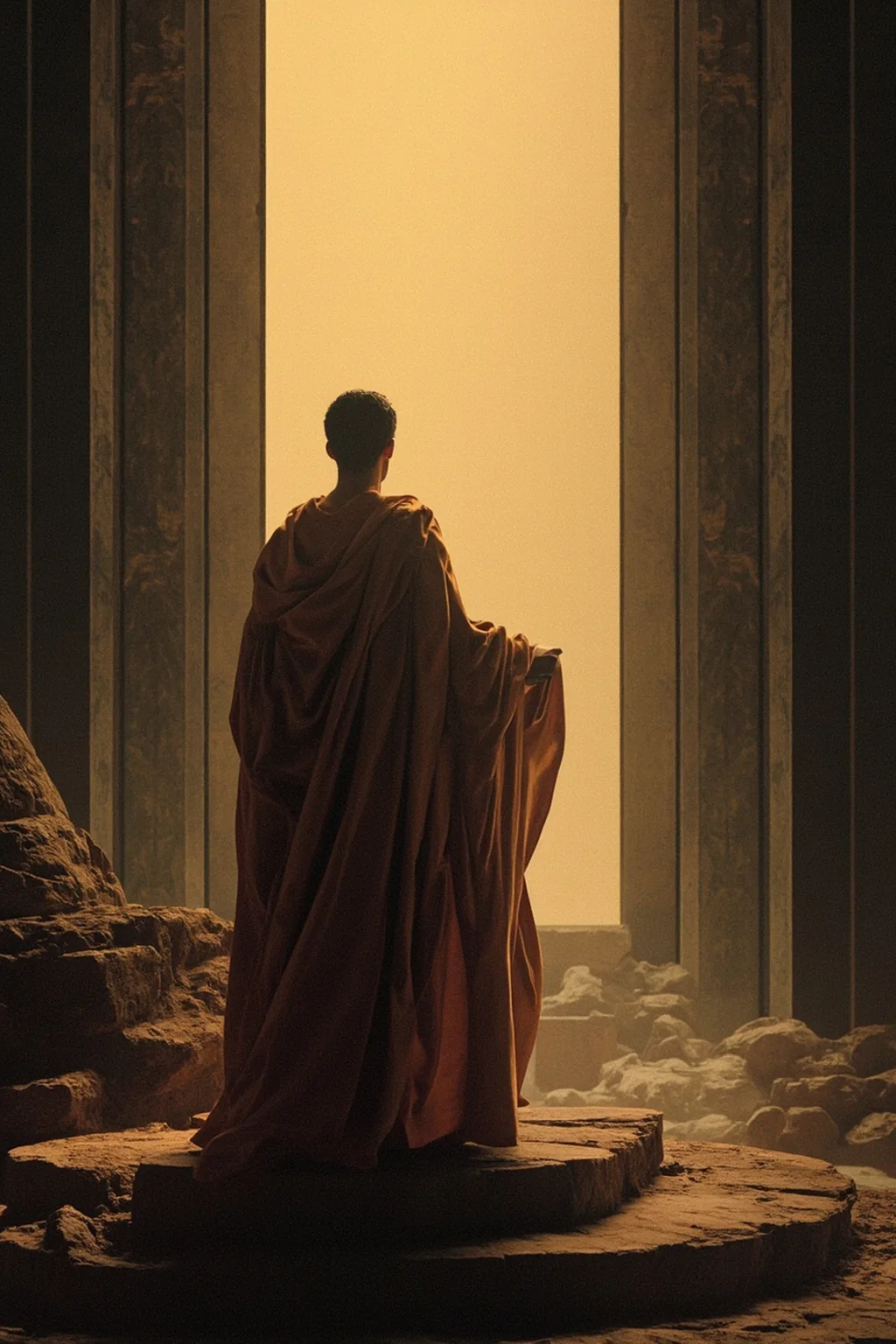
Written during military campaigns at the edges of the empire, the *Meditations* represent a private dialogue between a ruler and his conscience. Marcus Aurelius does not seek to teach a system, but to fortify his own mind against the corruption of power and the fear of death. The work moves from a catalog of gratitude to his teachers to a rigorous metaphysical examination of change, duty, and the rational soul, ultimately concluding that the good life consists in acting justly and accepting fate as a necessary part of the cosmic whole.
In the eleventh book of his Meditations, Marcus Aurelius examines the unique properties and privileges of the rational soul, distinguishing it from the lower orders of existence. He begins by defining the soul’s capacity for self-awareness, self-ordering, and self-sufficiency. Unlike plants or irrational animals that bear fruit for others, the rational soul reaps its own fruits. Furthermore, unlike a dancer whose performance is ruined if interrupted, the soul possesses the ability to make her life complete and full at any moment, ready to depart with the satisfaction that she has lived according to nature. Beyond the self, the rational soul comprehends the whole world, the vanity of external appearances, and the cycles of eternity. She perceives that those who follow will see nothing new, and those who preceded saw nothing different, for all things are of one kind. This cosmic vision fosters a natural sociability, a love for neighbors, and a regard for justice as the chief end of reasonable creatures.
Aurelius then turns to the discipline of perception, offering a technique to dismantle the allure of sensual attractions. By dividing a pleasant song into its individual sounds, or a dance into its specific postures, one sees that no single part is captivating, leading to a rightful contempt for the whole. This analytical method should be applied to all of life’s attachments, ensuring that one is only affected by things that proceed from virtue. He contrasts this philosophical readiness for death with the obstinate resistance of others, arguing that the soul is blessed if it is ever ready to be separated from the body, whether by extinction, dispersion, or continuation. This readiness, however, must proceed from discrete judgment and gravity, not from a passionate, oppositional resolve like that attributed to Christians, so that others may be persuaded by the example rather than repelled by the noise.
The Emperor reflects on the purpose of dramatic arts, noting that tragedies were instituted to remind men that worldly chances happen naturally, so that they would not be grieved by the same events in real life having enjoyed them on stage. Ancient comedy served a similar moral function by restraining pride through the liberty of inveighing against personal vices. He then addresses the social nature of humanity, using the metaphor of a tree to illustrate the damage caused by conflict. A branch cut off from its neighbor is cut off from the whole tree; similarly, a man who hates his neighbor unknowingly severs himself from the entire human community. While God allows for regrowth and reunion, frequent division makes restoration difficult. Therefore, one must strive to keep both right judgment and meekness toward those who oppose one. Failing in either—abandoning action out of fear or abandoning affection out of spite—is base and cowardly.
The original text of this work is in the public domain. This page focuses on a guided summary article, reading notes, selected quotes, and visual learning materials for educational purposes.