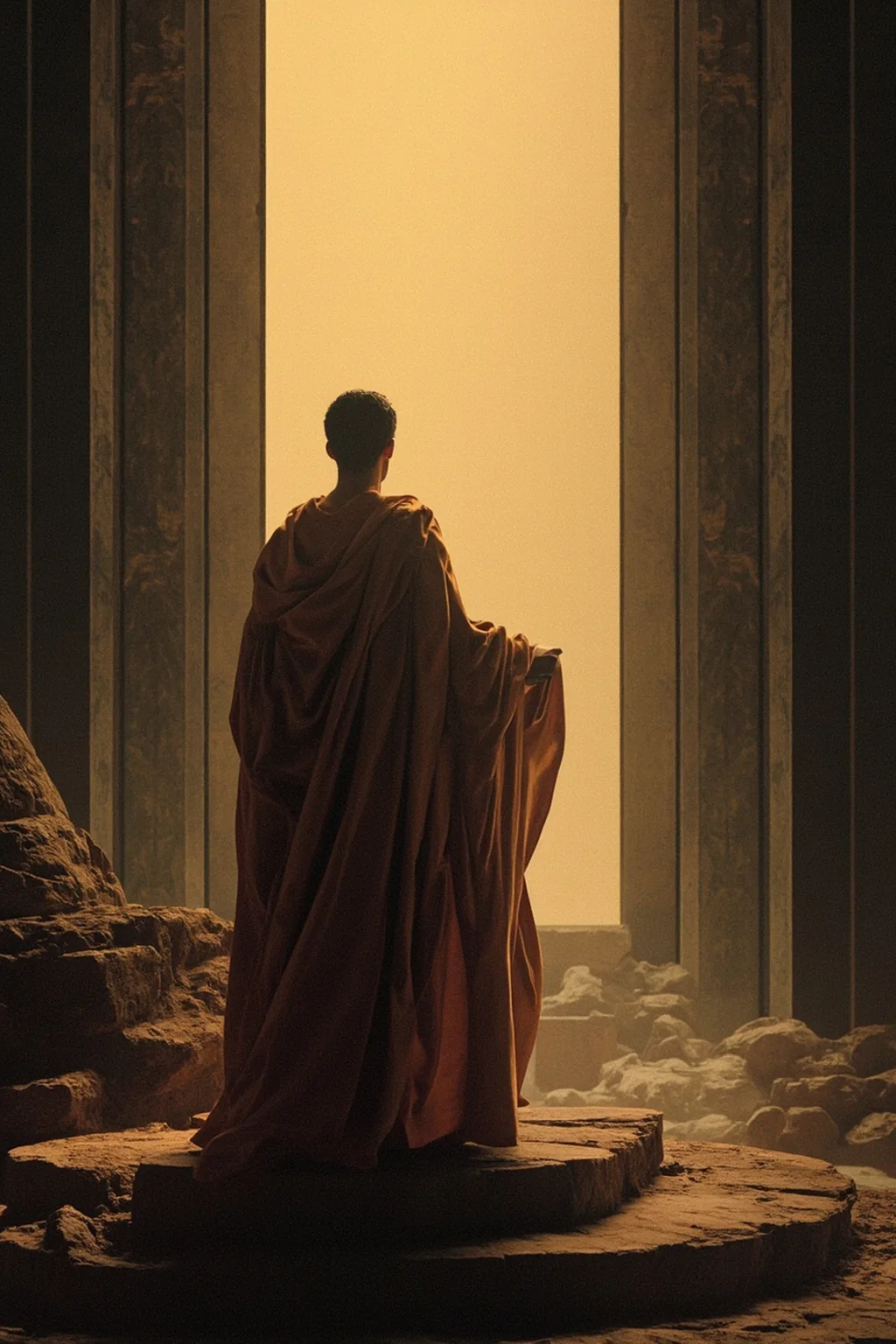
Written during military campaigns at the edges of the empire, the *Meditations* represent a private dialogue between a ruler and his conscience. Marcus Aurelius does not seek to teach a system, but to fortify his own mind against the corruption of power and the fear of death. The work moves from a catalog of gratitude to his teachers to a rigorous metaphysical examination of change, duty, and the rational soul, ultimately concluding that the good life consists in acting justly and accepting fate as a necessary part of the cosmic whole.
To cultivate indifference to death, Aurelius provides mental exercises focused on the brevity of life. He urges the reader to live as if already loosed from the body, focusing only on righteousness and acceptance of God’s will, ignoring the opinions of others. He advocates viewing the present age and substance of the world as a single moment, and seeing all particular objects as already in the process of dissolution. When viewing great men in their most majestic or angry moments, one should recall their base bodily functions and how quickly they will be seized by death, reducing their grandeur to smoke and nothingness.
In the realm of social ethics, Aurelius offers advice on maintaining integrity within society. He suggests living as if on a desert hill, indifferent to place or company. If the world cannot tolerate a good man, death is preferable to compromise. When dealing with anger or offense, one should reflect on one’s own similar faults and remember that the offender acts out of ignorance, which constrains them. Anyone who is sad, angry, or afraid is defined as a fugitive from the Law of Nature, a runaway slave rebelling against the governance of the universe.
Aurelius uses the metaphor of leaves falling and regrowing to illustrate the cycle of generations. Just as trees lose leaves and grow new ones, men die and are born. One’s children, admirers, and detractors are all merely temporary leaves. Since nothing endures forever, he asks, why should one earnestly seek or flee these temporary things? Death will come soon enough to all.
The chapter concludes with a powerful assertion of the mind’s autonomy. Aurelius argues that a good eye sees all things, not just green ones, and a good mind accepts all that happens. To wish for things to be otherwise is a sickness of the soul. Unlike fire or water, which are constrained by external forces, the rational mind can adapt to any obstacle and move forward according to its own will. He reiterates that what drives a man is not external tools or the body, but his internal opinions and dogmata. The body is merely an instrument, like a carpenter’s axe; the ruling faculty is the man himself, capable of finding happiness in any circumstance by acting in accordance with reason.
The original text of this work is in the public domain. This page focuses on a guided summary article, reading notes, selected quotes, and visual learning materials for educational purposes.