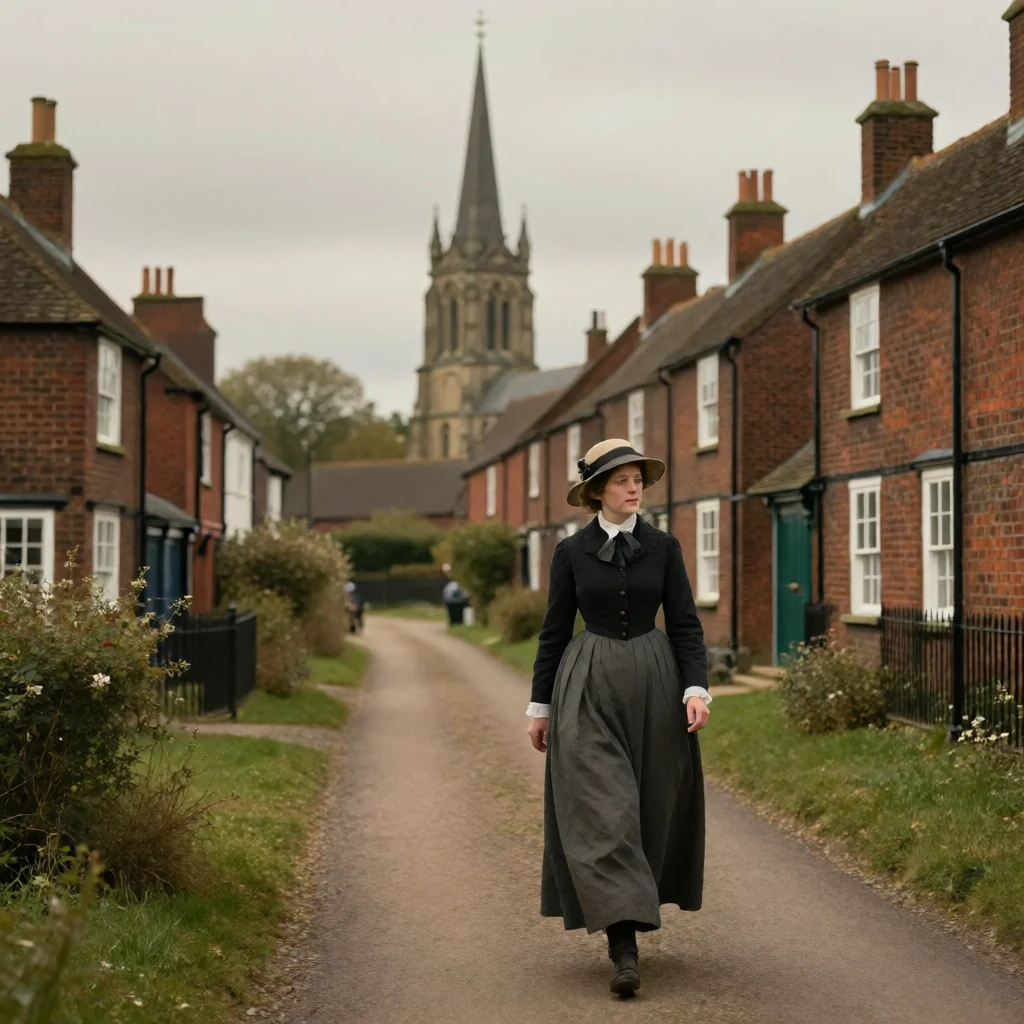
Reading Notes: Middlemarch
Book Overview
George Eliot’s Middlemarch (1871) stands as one of the most significant novels in English literature, depicting the interwoven lives of characters in a fictional English provincial town during the era of the Reform Bill debates of 1829-1832. The novel explores themes of marriage, ambition, social reform, idealism, and the tension between individual desires and societal constraints.
Principal Characters
The Brooke Sisters Dorothea Brooke and her younger sister Celia represent contrasting approaches to life. Dorothea possesses an earnest, idealistic nature, seeking a life of purpose and meaning through dedication to a superior intellect. Celia offers practical wisdom grounded in social convention and domestic contentment.
Edward Casaubon A middle-aged clergyman and scholar, Casaubon has spent decades compiling notes for his magnum opus, the “Key to all Mythologies.” His dry intellectuality masks profound insecurity about his work’s value and his suitability as Dorothea’s husband.
Will Ladislaw Casaubon’s young, passionate cousin, of mixed heritage including Polish and Jewish ancestry. Will embodies artistic temperament and emotional intensity, providing Dorothea’s first experience of intellectual companionship and romantic possibility.
Tertius Lydgate An ambitious young physician who arrives in Middlemarch with innovative medical ideas. His professional aspirations conflict with provincial social expectations and his disastrous marriage to Rosamond Vincy.
Rosamond Vincy Beautiful, coldly self-possessed, and socially ambitious, Rosamond represents the dangers of prioritizing appearance over substance. Her marriage to Lydgate becomes a study in incompatibility.
Additional Figures Fred Vincy struggles between romantic devotion to Mary Garth and pressure to enter the clergy. Mary Garth embodies practical wisdom and moral integrity. Nicholas Bulstrode, a hypocritical banker, conceals scandalous secrets. Caleb Garth represents honest labor and sound practical judgment.
Key Plot Threads
Dorothea’s Marriages
Dorothea’s early idealism leads her to marry the elderly Edward Casaubon, expecting to share in his scholarly mission. The marriage proves profoundly disappointing as she discovers her husband’s coldness and intellectual limitations. Casaubon’s death leaves Dorothea a widow—and reveals his codicil forbidding her to marry Will Ladislaw under penalty of losing her inheritance.
This prohibition, intended as posthumous control, instead clears Dorothea’s path to Will. She chooses love over fortune, marrying him despite social disapproval and reduced circumstances.
Lydgate’s Decline
Tertius Lydgate arrives in Middlemarch with reforming ambitions in medicine. His association with Bulstrode, who funds the new Fever Hospital, entangles him in scandal after Bulstrode’s past misdeeds surface. Lydgate accepts a thousand pounds from Bulstrode, creating compromising obligations.
His marriage to Rosamond compounds his troubles. She resists economy, maintains inappropriate social pretensions, and remains emotionally closed to him. Lydgate’s scientific ambitions wither under financial pressure and social isolation. He dies at fifty, unfulfilled.
Fred and Mary’s Union
Fred Vincy must abandon his gentleman’s expectations and find honest work. Under Caleb Garth’s tutelage, he develops into a competent land manager. His steadfast devotion to Mary, despite her initial resistance to his lack of resolve, eventually wins her acceptance. Their practical happiness at Stone Court represents Eliot’s vision of contentment through honest labor.
Bulstrode’s Exposure
The banker’s past sins—concealing information about his first wife’s daughter, profiting from a disreputable business—emerge through the blackmailing John Raffles. Bulstrode’s attempts to silence the scandal fail, and he flees Middlemarch in disgrace. His wife Harriet, though shocked, remains loyal.
Thematic Elements
The Tragedy of Idealism
Eliot examines how high-minded aspirations can lead to destruction. Dorothea’s quest for a grand purpose entraps her in a sterile marriage. Lydgate’s reformist ambitions expose him to corruption. Casaubon retreats into arid scholarship rather than risk judgment of his work. The reformer cannot reform without compromise, and compromise stains idealism.
Marriage as Social Institution
The novel presents marriage as neither romantic fulfillment nor simple partnership but a social arrangement with profound consequences. Dorothea’s entrapment demonstrates how marriage can crush spirit. Rosamond’s coldness shows how it can corrupt. Lydgate’s entanglement illustrates how financial and social pressures distort intimate bonds.
Provincial Society
Middlemarch embodies a closed social world where reputation matters enormously and outsiders face suspicion. Local opinion shapes possibilities; gossip determines trajectories. The town’s resistance to reform, whether Lydgate’s medical innovations or political change, reveals how institutions preserve themselves against disruption.
The Provincial Condition
Characters like Fred Vincy must abandon romantic fantasies of self-discovery and accept practical constraints. The novel values competence and duty over aspiration without foundation. Caleb Garth’s honest labor earns respect; Casaubon’s arid scholarship earns only pity.
Structural Observations
The novel unfolds across eight books with eighty-six chapters, developing multiple plot lines simultaneously. Eliot’s omniscient narrator offers extensive commentary on character psychology and social dynamics. The narrative interweaves domestic detail with political and historical context, grounding abstract themes in concrete experience.
The prologue invokes Saint Theresa of Ávila as Dorothea’s parallel—a great soul frustrated by circumstances. The conclusion suggests modern Theresas remain unfulfilled not from lack of greatness but from social conditions preventing its expression.
Central Insights
Character reveals itself through choice under pressure. Lydgate’s compromise with Bulstrode shows how circumstance tests principle. Dorothea’s rejection of the codicil demonstrates integrity over advantage. Mary’s steadfastness despite disappointment exhibits constancy.
The novel suggests that happiness requires accepting limitation—practical rather than transcendent achievement. Fred’s honest work, Mary’s companionship, Dorothea’s devotion to Will all involve yielding romantic fantasy for authentic connection.
Eliot’s moral vision resists easy judgment. Even Bulstrode evokes sympathy; even Rosamond contains complexity. The tapestry of Middlemarch reveals how all lives interweave, each thread affecting others.
Final Assessment
Middlemarch presents a comprehensive portrait of provincial English society during transformation. Its characters embody universal struggles between aspiration and acceptance, principle and compromise, isolation and connection. The novel argues that moral achievement often lies in small, unhistoric acts rather than grand reform, in daily faithfulness rather than heroic gesture.
Eliot’s achievement lies in rendering psychology with unprecedented depth while maintaining engagement with social structure. The reader experiences both intimate access to consciousness and awareness of how circumstance shapes possibility. Middlemarch remains essential for understanding how novels can encompass human complexity without reducing it to system or formula.
The work concludes that while the idealist’s grand purposes may go unrealized, the world improves partly through those who live faithfully in obscurity, contributing to the common good through attention to immediate duty rather than distant ambition.