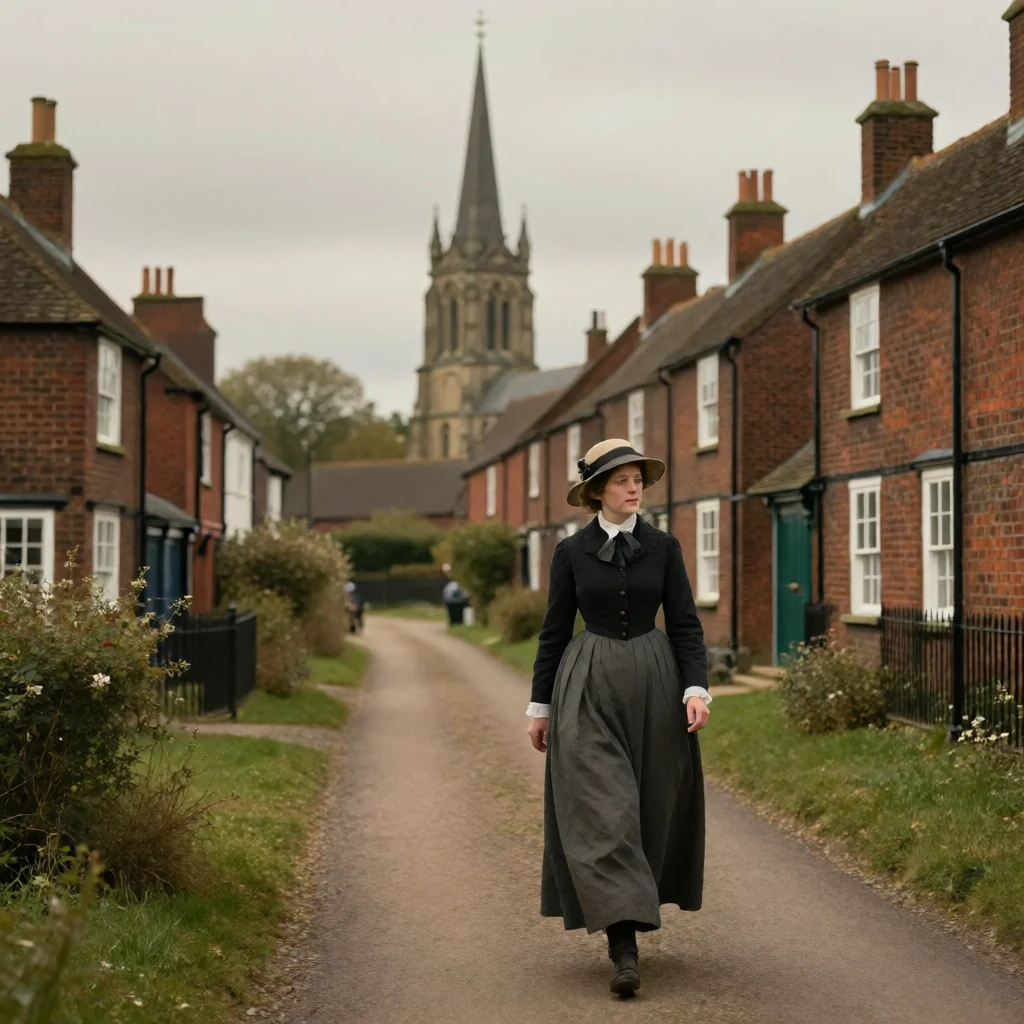
Study Guide: Middlemarch by George Eliot
Book Overview
Middlemarch: A Study of Provincial Life is an 1871 novel by George Eliot (Mary Ann Evans) set in the fictional English town of Middlemarch during the years 1829–1832. The novel explores the intertwined lives of several central characters as they navigate marriage, ambition, social reform, and personal integrity. Eliot subtitled her work “A Study of Provincial Life,” signaling her intention to examine how social environment shapes character and destiny.
The novel comprises eight books, each divided into multiple chapters, totaling 92 chapters in all. The action centers on three primary plot threads: the doomed marriage of Dorothea Brooke to the elderly scholar Edward Casaubon; the rise and fall of the ambitious young doctor Tertius Lydgate; and the romantic misadventures of Fred Vincy and the Garth family. These narratives intertwine through a dense web of social relationships, professional ambitions, and moral dilemmas.
Major Characters
The Brooke Sisters
Dorothea Brooke is the novel’s heroine—a young woman of intense moral earnestness and intellectual ambition who bridges Puritan severity with romantic yearning. She marries Edward Casaubon expecting to share in his great scholarly work, only to discover the marriage a prison of loneliness and disappointed expectation. Celia Brooke, her younger sister, represents practical domestic wisdom in contrast to Dorothea’s soaring idealism. Celia marries Sir James Chettam and provides a grounded counterpoint to her sister’s romantic extravagance.
The Casaubons
Edward Casaubon, a clergyman of fifty, has spent decades laboring on his magnum opus, “A Key to All Mythologies,” a work he fears may be rendered obsolete by German scholarship he cannot read. His dried-up intellectual life and desperate need for a helpmeet lead him to court Dorothea, but his emotional incapacity and secret jealousy poison their union. After his death, a codicil to his will prevents Dorothea from marrying Will Ladislaw, demonstrating how even death continues to constrain her choices.
Tertius and Rosamond Lydgate
Tertius Lydgate arrives in Middlemarch with ambitious plans to revolutionize provincial medicine and make significant scientific discoveries. His high birth and Parisian training give him confidence, but his pride blinds him to practical necessities and interpersonal realities. He marries Rosamond Vincy, a beautiful woman of great accomplishments but emotional emptiness, whose vanity and inability to love beyond herself traps Lydgate in a marriage of quiet desperation. Lydgate’s association with the morally compromised Bulstrode eventually destroys his professional reputation.
Rosamond Lydgate represents the dangers of self-display without substance. Her perfect composure masks an immovable self-regard that prevents her from truly connecting with her husband. She collects admirers as she collects fine furniture, never understanding why happiness eludes her.
Will Ladislaw
Will Ladislaw, Casaubon’s poor cousin, arrives in Middlemarch as an artistic, idealistic young man of mixed heritage (his grandmother was a Polish refugee, his mother a disgraced daughter who became an actress). His romantic passion for Dorothea develops in secret, leading to a confrontation between duty, desire, and the impossibility of their social position. Will becomes editor of Mr. Brooke’s newspaper, entering politics with reformist ideals.
The Vincy Family
Fred Vincy, the mayor’s eldest son, embodies the idleness and false expectations of young men of his class. His hopes for inheriting from Peter Featherstone are shattered by the will, forcing him to find honest work with Caleb Garth. He loves Mary Garth but must prove himself worthy of her. His sister Rosamond achieves the social success she craves but finds marriage to Lydgate a disappointment. Mr. Vincy, the mayor, represents the prosperous provincial manufacturer, while Mrs. Vincy maintains social pretensions despite financial pressures.
The Garth Family
Caleb Garth embodies honest labor and practical wisdom. A land agent and surveyor, he commands respect through competence rather than birth. His wife Susan Garth manages their large family with firm affection and moral clarity. Mary Garth, their daughter, represents the novel’s ideal of intelligent, principled womanhood—she refuses Fred until he proves himself through honest work, displaying the moral backbone that distinguishes genuine worth from social polish.
Nicholas Bulstrode
Bulstrode is the novel’s great villain—a banker and religious philanthropist whose respectable facade conceals a corrupt past. He built his fortune through a pawnshop connected to disreputable dealings and inherited it by suppressing knowledge of his late wife’s lost daughter. His present respectability exists in uneasy tension with past sins, and the return of John Raffles, who knows his secrets, precipitates his downfall.
Major Themes
The Failure of Idealism
Eliot systematically examines how high-minded intentions collide with social reality. Dorothea’s earnest desire to devote herself to great purposes becomes self-imprisonment in a joyless marriage. Lydgate’s scientific ambitions curdle into professional ruin through his compromises with Bulstrode. Will’s artistic idealism struggles against economic necessity. The novel argues that idealism without practical wisdom becomes its own form of self-deception.
Marriage as Social Institution
Throughout Middlemarch, marriage operates not as romantic fulfillment but as social contract determining women’s lives. Dorothea’s marriage to Casaubon removes her from agency; Rosamond’s marriage to Lydgate traps her in social display; Lydgate’s marriage to Rosamond exhausts his energies on incompatible temperaments. Even happy marriages like Fred and Mary’s arrive only after probation and proof of capacity for honest labor. Eliot shows marriage as the central institution shaping Victorian women’s possibilities.
The Complexity of Moral Character
Eliot refuses simple好人/坏人 divisions. Bulstrode’s villainy emerges from a lifetime of self-deception rather than conscious evil. Lydgate’s compromises with Bulstrode stem from genuine financial desperation, not corruption. Rosamond’s coldness reflects emotional limitation rather than malice. Even Mr. Brooke, the social climber and political incompetent, serves sympathetic functions. Characters become their choices, yet choices emerge from circumstances beyond individual control.
Social Reform and Individual Action
The novel’s 1829–1832 setting coincides with the first Reform Act agitation, allowing Eliot to examine how individual conscience navigates social change. Lydgate’s medical reforms encounter professional resistance; Bulstrode’s charitable projects serve personal reputation; Brooke’s political ventures collapse in humiliation. The novel suggests social progress requires practical wisdom and moral humility, not merely good intentions.
The Costs of Prudery and the Value of Sympathy
Eliot’s narrator repeatedly chides characters (and readers) for premature judgment. Casaubon is mocked for his physical appearance before his inner sterility becomes apparent; Lydgate is suspected of corruption before his genuine distress is understood; Rosamond’s composure is admired before her emotional vacancy is revealed. The novel argues for sympathy that resists snap judgments, recognizing the complexity beneath surface appearances.
Structure and Organization
Book I: Miss Brooke
The opening book establishes the central characters and their situations. Chapter II introduces the Brooke household, Mr. Casaubon, and Sir James Chettam through a dinner party that reveals the characters’ values and social positions. Chapter III traces Dorothea’s growing conviction that Casaubon intends to propose, her solitary daydreams of usefulness, and her encounter with Sir James. Chapter IV presents her distress at learning of Sir James’s intentions and her relief at Casaubon’s formal proposal. Chapters V through X develop the courtship, introduce Will Ladislaw, present Lydgate’s arrival, and establish the social web that will entangle all characters.
Book II: Old and Young
This book follows Fred Vincy’s hopes for Featherstone’s inheritance and introduces Mary Garth as the counterpoint to Rosamond’s social polish. Lydgate’s background and ambitions receive extended treatment, establishing his scientific idealism before it collides with Middlemarch reality. The section concludes with the Casaubons’ departure for Rome on their wedding journey.
Book III: Waiting for Death
Set in Rome, this section charts Dorothea’s disillusionment as her high expectations confront the sterility of her husband’s intellectual life. Will Ladislaw appears as her companion in artistic discovery, awakening feelings she cannot acknowledge. The section concludes with Casaubon’s collapse and the couple’s return to England.
Book IV: Three Love Problems
This book interweaves the Fred-Mary romance with Lydgate’s social establishment and the Casaubons’ troubled return. Featherstone’s failing health generates tension over inheritance. Lydgate becomes entangled in the chaplaincy controversy, voting for Bulstrode’s candidate despite friendship with Farebrother. The section ends with Casaubon’s death in the Yew-Tree Walk, moments after extracting from Dorothea a promise he dies before receiving.
Book V: The Dead Hand
The aftermath of Casaubon’s death reveals the codicil forbidding Dorothea from marrying Will Ladislaw, reducing her inheritance if she does so. Lydgate’s financial difficulties deepen; his marriage to Rosamond founders on her vanity and his exhaustion. Bulstrode’s past begins to surface through John Raffles, whose return threatens exposure. The section concludes with Lydgate voting for Bulstrode’s candidate at a crucial meeting, marking his moral compromise.
Book VI: The Widow and the Wife
Dorothea returns to Lowick, choosing purposeful solitude over social expectation. Will’s departure seems final until a farewell visit at the Grange reveals the depth of their mutual passion. Lydgate’s gambling losses at the billiard-room represent his moral descent, though Fred’s intervention saves him. Bulstrode’s loan to Lydgate, ostensibly charitable, binds the doctor to the banker’s fate.
Book VII: Two Temptations
Bulstrode’s scandal breaks publicly, with Lydgate’s reputation destroyed by association. Dorothea’s defense of Lydgate strengthens her resolve to help others. Her discovery of Will and Rosamond in private conversation shatters her illusions and initiates a period of anguish. The section traces the emotional bankruptcy of all parties—Bulstrode fleeing, Lydgate ruined, Rosamond exposed, Will horrified at his own cruelty.
Book VIII: Sunset and Sunrise
The final book brings resolution: Lydgate accepts Dorothea’s financial help and plans to leave Middlemarch; Bulstrode departs in disgrace; Will and Dorothea declare their love despite poverty; Fred and Mary marry at Stone Court. The conclusion acknowledges that some crusaders of hope fail for lack of patience, while others achieve fulfillment through perseverance and mutual support.
Key Literary Devices
Free Indirect Discourse
Eliot pioneered the technique of presenting character consciousness without authorial comment, allowing readers to inhabit perspectives while maintaining narrative authority. When Dorothea believes Casaubon will propose, we experience her conviction through her own thought processes rather than through external description. This technique creates moral complexity by involving readers in characters’ self-justifications while maintaining critical distance.
Symbolic Imagery
Throughout the novel, weather and landscape mirror emotional states. The storm during Will and Dorothea’s declaration at the Grange physicalizes the turmoil of their passions. The Yew-Tree Walk at Lowick, with its dark hanging branches, becomes associated with death and constraint. The Roman Campagna’s thousand-year weight crushes Dorothea’s youthful expectations, making landscape a moral force.
Chronological Precision
Eliot anchors her narrative in historical time, referencing the Reform Bill debates, the death of George IV, and specific local elections. This temporal specificity grounds abstract moral questions in material reality, showing how social conditions shape individual possibilities.
Irony and Narratorial Intervention
The narrator frequently addresses readers directly, offering philosophical asides on the nature of character, the difficulty of judgment, and the limitations of human knowledge. These interruptions create a moral framework without reducing complexity to simple verdict. The narrator’s sympathy for all parties models the compassionate understanding Eliot asks of her readers.
Historical and Social Context
Reform Era England (1829–1832)
The novel’s setting coincides with the passage of the Reform Act in 1832, marking a transition from aristocratic to bourgeois political power. Eliot uses this moment to examine how social change creates both opportunity and displacement. Characters’ professional ambitions (Lydgate’s medical reforms, Brooke’s political ventures, Bulstrode’s charitable projects) reflect anxieties about social position in a transforming society.
Provincial Life and Social Hierarchy
Middlemarch represents the provincial middle class—manufacturers, clergymen, doctors, land agents—whose social pretensions and genuine accomplishments intersect in complex ways. Characters’ speech, dress, and household management signal class positions that determine marriage prospects, professional opportunities, and social influence.
Gender and Domesticity
The novel examines how Victorian gender expectations constrained women. Dorothea’s intellectual ambitions have no legitimate outlet except through a husband; Casaubon’s control of her inheritance demonstrates men’s power over women’s choices. Even Celia, who accepts domestic constraints, achieves contentment through practical wisdom Dorothea initially dismisses.
Study Questions
-
How does George Eliot use the opening epigraph from Don Quixote to establish the novel’s treatment of idealism and perception?
-
Compare Dorothea’s choices with Rosamond’s. What does Eliot suggest about the relationship between moral seriousness and personal happiness?
-
Why does Lydgate’s compromise with Bulstrode lead to such devastating consequences? Could he have acted differently given his circumstances?
-
What is the significance of the novel’s ending? Does the resolution of Fred and Mary’s story validate the novel’s moral framework?
-
How does Eliot present Bulstrode—as villain, as victim of his own self-deception, or as something more complex?
-
What does the novel suggest about the relationship between social reform and individual moral integrity?
-
How does Eliot use the Roman sections to develop the theme of disillusionment?
Chapter Highlights
The early chapters establish the novel’s moral architecture through the contrast between Dorothea’s earnest ambition and the social constraints that will imprison it. Casaubon’s proposal scene represents one of literature’s most unsettling depictions of marriage as trap. The Roman sections trace Dorothea’s disillusionment through masterful psychological detail.
The middle sections develop the interlocking plots with particular attention to Lydgate’s fall, which emerges from accumulated compromises rather than single catastrophic choice. The Featherstone inheritance plot provides comic relief while exposing the greed beneath provincial respectability.
The final sections bring emotional reckoning as Dorothea discovers Will’s passion and chooses love over social advantage. Bulstrode’s exposure satisfies moral justice while refusing simple punishment. The conclusion acknowledges that not all crusaders of hope succeed, but the growing good of the world depends on those who try.
Summary
George Eliot’s Middlemarch presents a comprehensive study of how social conditions shape character and destiny, following multiple characters through marriage, ambition, reform, and moral reckoning. The novel argues that idealism without practical wisdom becomes self-deception, that marriage constrains women’s agency, and that moral integrity requires recognizing complexity beneath surface appearances. The conclusion acknowledges that some crusaders of hope fail for lack of patience, while others achieve fulfillment through perseverance, mutual support, and the unvisited tombs where good people rest in undeserved obscurity, making the world better than it might otherwise have been.