The Dante Epigraph
The chapter opens with a full excerpt from Dante’s La Vita Nuova, a poem praising a woman whose gentle, graceful presence softens pride and anger in others, inspires humility and joy in those who speak with her, and whose very smile is described as a new, gentle miracle. This epigraph frames the chapter’s focus on Dorothea’s quiet, deeply felt emotional life.
Dorothea Returns to Lowick
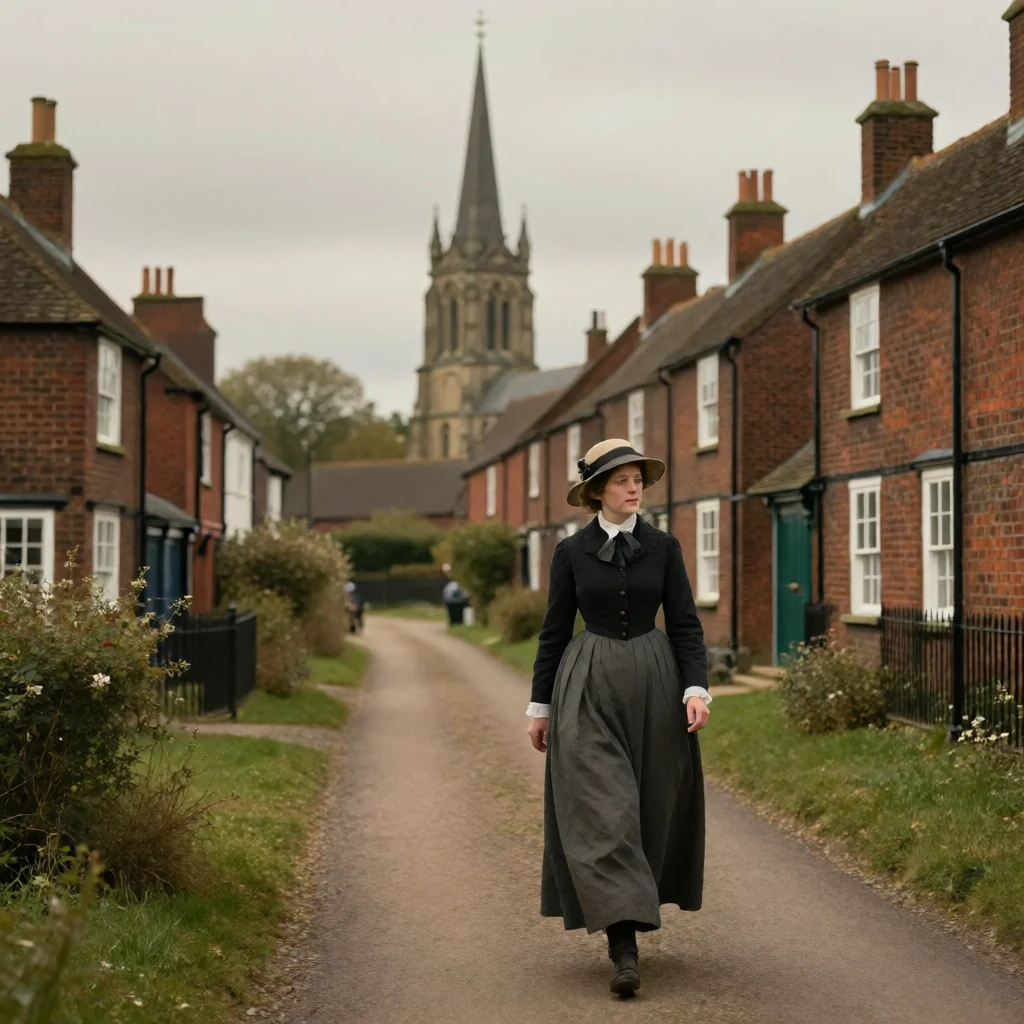
After three months staying with her sister Celia and brother-in-law Sir James Chettam at Freshitt, Dorothea grows restless with the demands of being a doting aunt to her infant nephew Arthur. While she would happily care for the baby if needed, she finds the constant, undemanding work of admiring him monotonous, and feels a strong pull to return to her own home at Lowick Manor, a decision Celia receives with quiet disappointment.
Conversations at Freshitt
In conversations with Celia and Sir James before her departure, Celia argues that Dorothea’s childless widowhood makes her an ideal devoted aunt to Arthur, while Sir James jokes he wishes Dorothea were a queen to match her qualities, and Celia dismisses the idea of altering their family dynamic. Dorothea quietly states she is returning to Lowick to get to know the Farebrother family better and discuss local Middlemarch affairs with the new rector, withholding her full, private reasons for the move.
Opposition to the Move
Dorothea’s decision to return to Lowick alone draws widespread disapproval from her social circle. Sir James is deeply pained and suggests the entire Chettam household relocate to Cheltenham for months to keep Dorothea nearby, while the Dowager Lady Chettam insists Dorothea must hire a companion, proposing Mrs. Vigo, a well-educated former royal reader and secretary, to live with her, arguing a young widow cannot reasonably live alone in the manor.
Mrs. Cadwallader’s Counsel
Mrs. Cadwallader warns Dorothea that living alone at Lowick will drive her mad from isolation and her habit of holding unconventional, idealistic views, urging her to surround herself with ordinary people who will ground her and stop her from playing the “tragedy queen.” When Dorothea insists she still believes most of the world is wrong about many things, Mrs. Cadwallader later tells her husband that Dorothea needs to remarry as soon as is appropriate to keep her stable, suggesting Lord Triton as a suitable match, and noting that Will Ladislaw is leaving the neighborhood to avoid further scandal related to Mr. Casaubon’s will.
Settling at Lowick Manor
Dorothea persists in her plan despite all objections, and moves back to Lowick Manor by the end of June. She walks through every room, revisiting memories of her 18-month marriage to Mr. Casaubon, and carefully arranges his note-books in the order she believes he would want them displayed. She also seals the Synoptical Tabulation she had prepared for him in an envelope, writing inside that she could not submit her soul to his by working hopelessly on a project she did not believe in, and stores the sealed paper in her own desk.
Longing for Will Ladislaw
Underlying Dorothea’s stated reasons for returning to Lowick is a deep, unspoken longing to see Will Ladislaw, even though she knows their meeting could cause scandal and she has no power to correct the unfair banishment of Will from the neighborhood stipulated in Mr. Casaubon’s will. She hopes Will will visit Lowick to see the Farebrother family, and asks Mrs. Farebrother indirect questions about whether her son’s Middlemarch parishioners will follow him to Lowick, though Mrs. Farebrother completely misses her true motive.
The Unexpected Meeting
One morning, while Dorothea sits in her boudoir reviewing her estate affairs, her maid Tantripp informs her that Will Ladislaw has called to say goodbye before leaving the neighborhood. Dorothea immediately agrees to see him, and meets him in the neutral drawing-room below her boudoir. The meeting is tense and emotionally charged: Will is miserable and proud, refusing to linger now that Dorothea is a wealthy widow, while Dorothea is deeply flustered and unable to hide her agitation. Will explains he is leaving to study to be a barrister in London, hoping to build an independent career in public work without family wealth or status, as Dorothea listens, her long-held desire to see him clear even in the awkward, formal interaction.
The original text of this work is in the public domain. This page focuses on a guided summary article, reading notes, selected quotes, and visual learning materials for educational purposes.