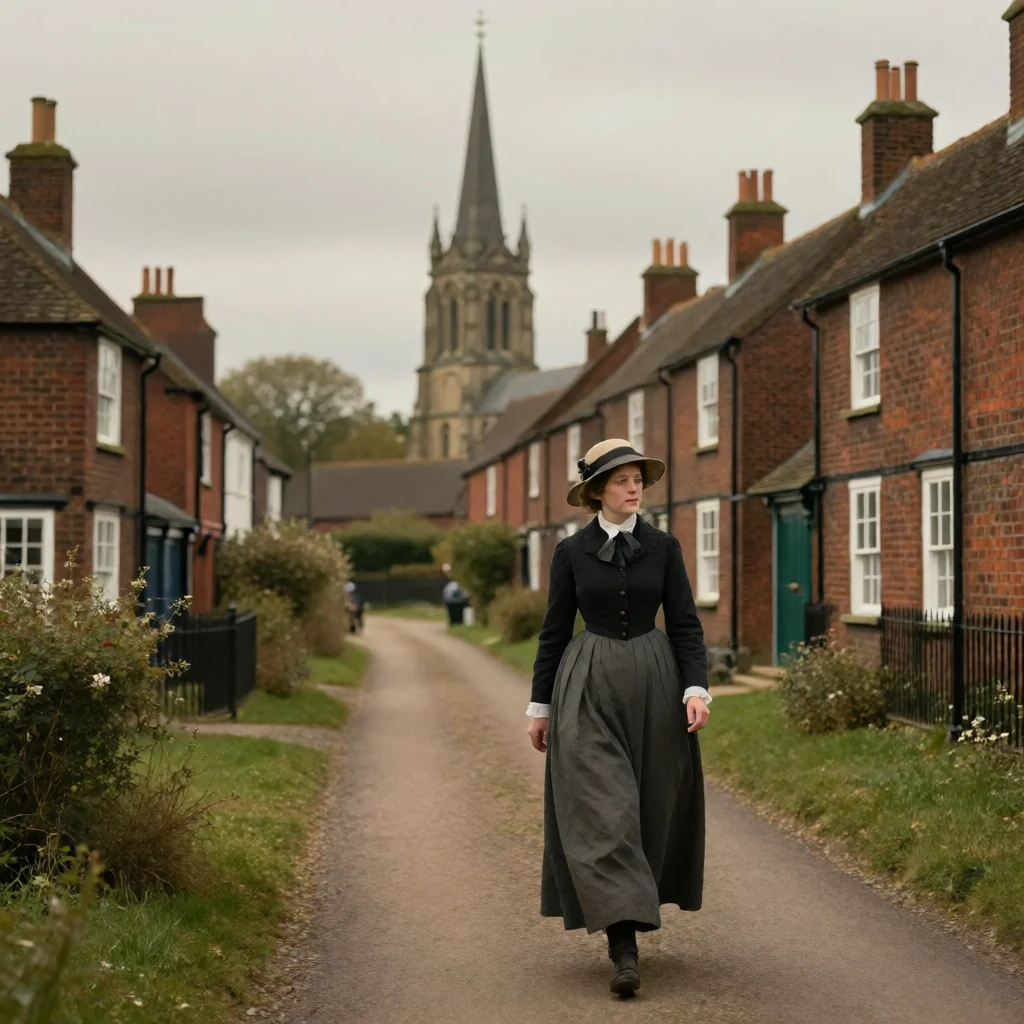
The Attack on the Railway Agents
Fred spotted a group of seven local laborers in smock-frocks, armed with hay forks, advancing aggressively on the four railway surveyors. Caleb Garth and his assistant rushed to intervene, but before they could reach the group, the laborers charged, knocking Caleb’s 17-year-old assistant to the ground and driving the surveyors back, while Fred arrived moments too late to stop the initial attack.
Fred Vincy’s Timely Intervention
Fred immediately intervened to protect the surveyors, charging the laborers on horseback and using his whip to scatter them, giving the surveyors time to retreat through the gateway to their hay field. He threatened the laborers with legal action, including hanging at the next assizes, for assaulting the surveyors and injuring his assistant. One laborer, Hiram Ford, challenged Fred to a fistfight once he dismounted, but Fred declined for the moment to check on Caleb and the injured assistant.
Fred Assists Caleb Garth
After confirming the surveyors were safe and his assistant’s ankle was only strained (not seriously injured), Fred offered to help Caleb complete his land measurement work for the day. Caleb initially refused, intending to speak to the laborers himself to calm the situation, but eventually accepted Fred’s help, as the disruption had set back his work for the day. Fred planned to return later to confront Hiram Ford, prioritizing helping Caleb first.
CHAPTER LVI.
This chapter centers on Caleb Garth’s efforts to resolve a conflict between local laborers and railroad surveyors, followed by his decision to mentor Fred Vincy after Fred confides his career uncertainties and love for Mary Garth.
Caleb Confronts Laborers Over Railroad Meddling
Caleb Garth confronts a group of laborers who had been interfering with railroad surveyors on the property, telling them the railroad is inevitable, that their meddling will lead to legal consequences including arrest and jail time, and that they were misled by false claims that the railroad would be harmful to the community.
Timothy Cooper Expresses Distrust of Railroad Benefits for the Poor
Elderly laborer Timothy Cooper pushes back on Caleb’s position, noting that over his lifetime, changes including canals and shifts in monarchy have never improved conditions for the poor, and he expects railroads will only leave working people further behind, though he admits that interfering with the surveyors is foolish.
Caleb Secures Laborers’ Pledge Not to Interfere
Caleb acknowledges the hardships poor people face, but argues that interfering with the railroad will only worsen the laborers’ own situations, using the analogy of overburdened cattle making their plight worse by throwing off their load. He secures pledges from most of the group to leave the surveyors alone, though Timothy refuses to make a formal promise, before returning to Fred who had been waiting for him.
Fred Confides Career Ambitions and Love for Mary to Caleb
After the laborers disperse, Fred helps Caleb with his work and reveals he no longer intends to enter the clergy, as Mary has stated she will not marry a clergyman. He tells Caleb he wants to pursue practical, outdoor-focused work, ideally under Caleb’s mentorship, and confesses his deep love for Mary, asking for Caleb’s support in building a future that would make him worthy of her hand.
Caleb Discusses Mentoring Fred with His Wife Susan
Caleb returns home and shares Fred’s request and confession with his wife Susan, revealing he has already decided to take Fred on as an apprentice. Susan expresses quiet disappointment, noting Mary might have had a more promising match in Mr. Farebrother, but Caleb insists Fred’s genuine love for Mary and good character make him worthy of support, and he feels it is his duty to help the young man build a stable, honorable life.
Caleb Tests Fred’s Clerical Work Skills the Next Morning
The next morning, Fred arrives at Caleb’s office as agreed, and Caleb tests his aptitude for the desk work required for his business by asking him to copy a line of valuation text with accompanying figures. Fred produces a very neat, highly stylized “gentlemanly” hand that is nearly illegible to anyone who does not already know the content, reflecting the era’s common belief that clear, practical handwriting was beneath a gentleman’s standards.
The original text of this work is in the public domain. This page focuses on a guided summary article, reading notes, selected quotes, and visual learning materials for educational purposes.