Busy Benevolence
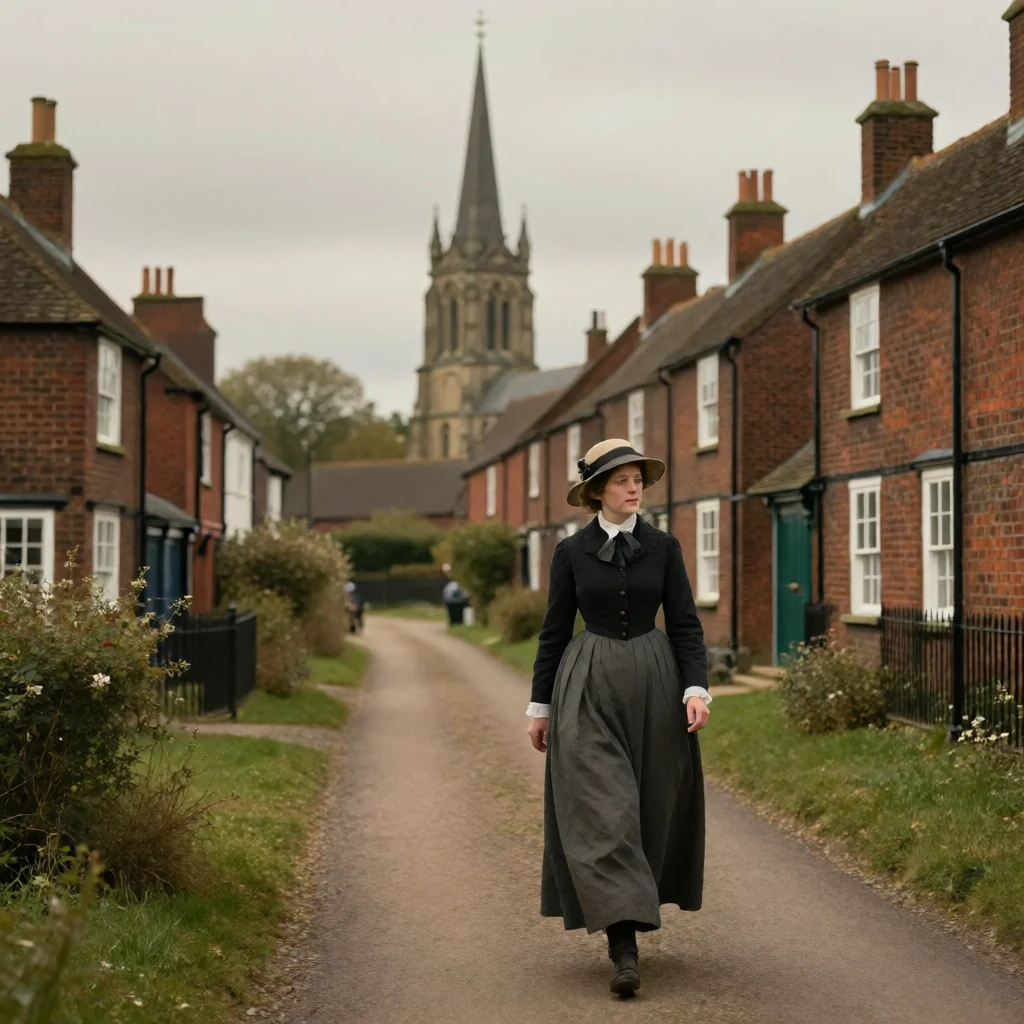
The wives most likely to provoke this moral activity are Rosamond and her aunt Harriet Bulstrode. Mrs. Bulstrode, regarded as honest and unsuspecting of her husband’s hypocrisy, draws pity as “poor Harriet,” while Rosamond is more severely criticized though also seen as a victim of marriage to an interloper. The Vincys’ weaknesses are known but surface-level, and Mrs. Bulstrode is considered entirely unlike her husband, whose faults are his alone.
The Tea Party
At Mrs. Hackbutt’s tea gathering, the women discuss Harriet’s showy nature and conformity to her husband’s religion, the various clergymen who have countenanced Bulstrode, Mr. Tyke’s distress, and whether religion should be blamed for bad actions. Mrs. Plymdale reminds the company of her friendship with Harriet but insists she has always kept her own opinions. The conversation turns to speculation about what Harriet will do when she learns the truth, and concern that such men should not be cared for by good wives.
Pity for Harriet
The women discuss Harriet’s character and devotion, her neat patterns and dyed lavender feather, and the likelihood that her husband has never denied her anything. They observe that the Vincys know of the scandal since Mr. Vincy attended the meeting, and that Rosamond’s husband Lydgate now looks compromised by the thousand pounds he took at the man’s death. Mrs. Plymdale, while admitting she is less sorry for Rosamond, predicts Harriet will be utterly crushed and pities her deeply, recalling her good-heartedness from girlhood and the impossibility of her going among foreigners.
Mrs. Plymdale’s Conscience
Mrs. Plymdale faces a complicated situation arising from her intimacy with Mrs. Bulstrode, her dyeing house family’s profitable business with Mr. Bulstrode, and her late alliance with the Tollers placing her in the best circle. Her “sharp little conscience” struggles to reconcile these competing interests and “bests,” especially as events threaten to humble those who deserve humbling yet also fall heavily on her old friend Harriet, whose faults she would have preferred to see set against a background of prosperity.
A Secret Uneasiness
Mrs. Bulstrode, meanwhile, has been quietly unsettled by her husband’s behavior since Raffles’s last visit to The Shrubs. His choice to remain with the sick man she accepts as benevolence toward a former employee, and she has been cheered by his hopeful talk of health and business. The calm broke when Lydgate brought him home ill from the meeting; since then he has refused her company and reading, claiming nervous sensitivity, though she suspects he is occupied with papers. She becomes convinced something has happened—perhaps a great financial loss—and that she is being kept in the dark.
An Inquiry of Lydgate
On the fifth day after the meeting, having ventured out only to church, Mrs. Bulstrode directly questions Lydgate about her husband’s condition. He offers evasive medical explanations about the poisonous air of public rooms and the unpredictability of nervous attacks. Unsatisfied, she insists on sitting with her daughters at his side and drives into town to pay visits, hoping to detect any sign that something has gone amiss in Mr. Bulstrode’s affairs.
The Visit to Mrs. Hackbutt
Spotting Mrs. Bulstrode’s carriage, Mrs. Hackbutt nearly feigns being out but is drawn by the desire for an interview in which she can refrain from allusion. She receives her guest with strained composure and tight-lipped precautions. Mrs. Bulstrode speaks of her husband’s illness from the cholera-meeting and her reluctance to leave home. Mrs. Hackbutt’s evasive remarks about resigning oneself to wherever one’s lot is cast leave Mrs. Bulstrode chilled and trembling; unable to press further, she turns the conversation to the young Hackbutts and departs for Mrs. Plymdale’s, trying to convince herself the cause was some quarrel at the meeting.
Mrs. Plymdale’s Pity
Mrs. Plymdale receives Mrs. Bulstrode with pathetic affection and an inclination toward edifying answers, which cannot be explained by an ordinary quarrel. Although Mrs. Bulstrode had intended to question “Selina” more readily than anyone else, the remembered history of confidences and her dislike of being pitied by one who has long acknowledged her superiority now make the old friend a difficult confidante. Mysterious remarks about never turning her back on friends convince Mrs. Bulstrode that the misfortune is more than lost money, and she flees in nervous haste without asking plainly what is in Mrs. Plymdale’s mind.
The original text of this work is in the public domain. This page focuses on a guided summary article, reading notes, selected quotes, and visual learning materials for educational purposes.