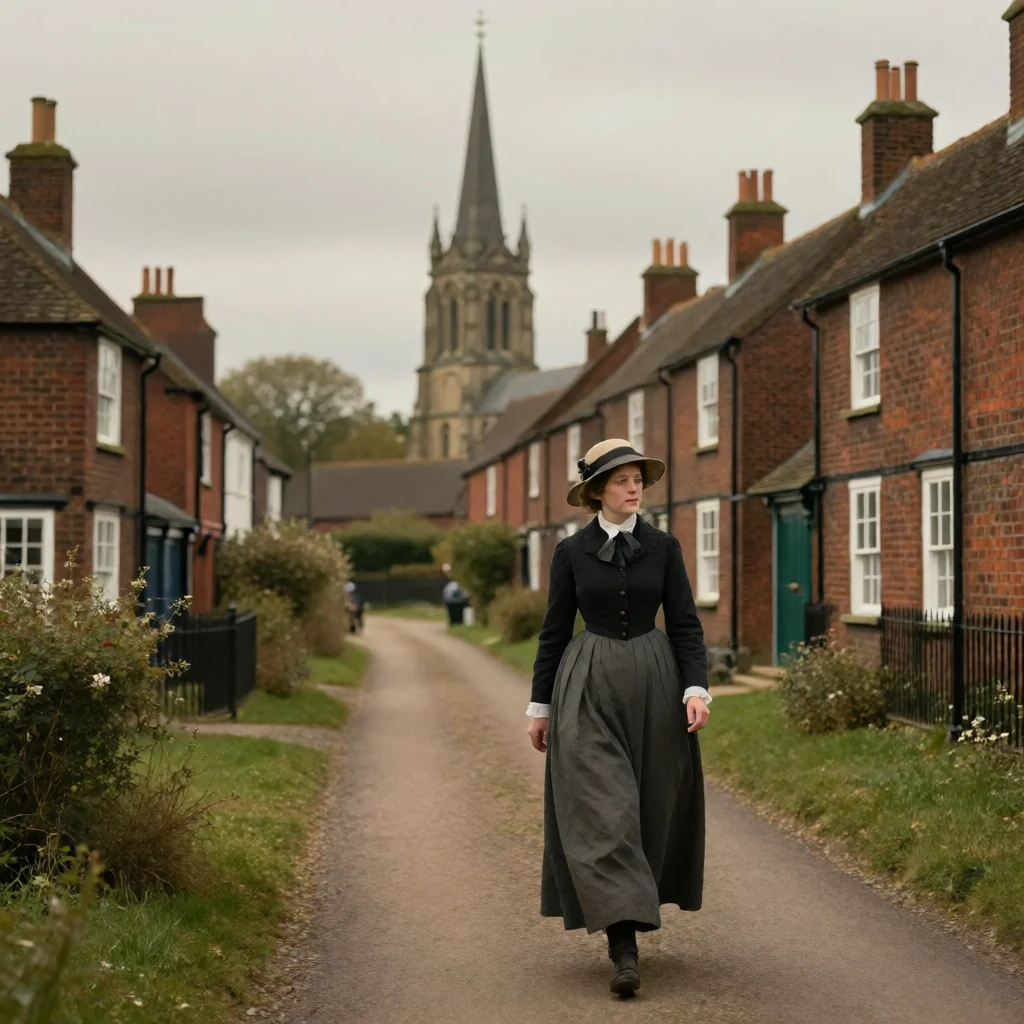
Apart in Thought
Lydgate’s energy falls short of its task—he cannot persist in his determination to give more because she is less. If his energy could have borne down that check, he might still have worked on Rosamond’s vision and will. The beginning of mutual understanding seems as far off as ever, blocked by the sense of unsuccessful effort. They live on day to day with their thoughts still apart, Lydgate going about his work in despair, and Rosamond feeling with some justification that he is behaving cruelly. When Will Ladislaw comes, she is determined to tell him everything. Despite her general reticence, she needs someone who will recognize her wrongs.
CHAPTER LXXVI.
Chapter 84 (titled CHAPTER LXXVI.) opens with an epigraph from William Blake’s Songs of Innocence celebrating mercy, pity, love, and peace as divinely human virtues of compassion. The chapter follows Dorothea’s summoning of Tertius Lydgate to Lowick Manor after receiving a letter from Nicholas Bulstrode about the planned new hospital. During their meeting, Dorothea firmly asserts Lydgate’s innocence of the public accusations against him, offers to use her personal fortune to fund the hospital to protect his reputation and work, and volunteers to speak with his wife Rosamond to convince her to stay in Middlemarch. Lydgate explains the baseless rumors tying him to Bulstrode’s scandal, reveals his marital struggles have left him powerless to make long-term plans, and ultimately declines Dorothea’s hospital proposal, convinced he will likely have to leave the town and refusing to let her resources be wasted on his uncertain future.
Blake’s Innocence Verse Epigraph
The chapter opens with an excerpt from William Blake’s Songs of Innocence, a short poem that frames mercy, pity, peace, and love as sacred, deeply human virtues, emphasizing that these qualities of compassion carry both mortal and divine resonance, and are the focus of human gratitude in times of distress.
Lydgate Summoned to Lowick Manor
Some days after receiving a summons from Dorothea, Lydgate rides to Lowick Manor. The summons was not unexpected, as it followed a letter from Bulstrode stating he was finalizing plans to leave Middlemarch, and wished to revisit his prior discussions about the new hospital with Dorothea, who had previously expressed interest in discussing the project with Lydgate.
Bulstrode’s Letter About the Hospital
Bulstrode’s letter to Lydgate informs him that he is preparing to depart Middlemarch, reminds Lydgate of their earlier agreements regarding the new hospital, notes he still stands by the terms they discussed, and requests Lydgate meet with Dorothea to share any updated views he may hold on the project before Bulstrode takes further steps.
Dorothea’s Eagerness to Help Lydgate
Dorothea has been preoccupied with Lydgate’s difficult public position for weeks, having held back from interfering in the Bulstrode scandal at the advice of her male acquaintances, but sees Bulstrode’s renewed request as the opportunity she has been waiting for to take action to support him. Restless with a desire to do meaningful good for others, she approaches the meeting with full, unbridled optimism, unconcerned by gossip about Lydgate’s personal reserve or dismissals of her youth and gender.
Dorothea’s Pre-Meeting Reflections on Lydgate
While waiting for Lydgate in the Lowick Manor library, Dorothea replays past encounters with him, all of which are tied to her troubled marriage to Casaubon, plus two specific painful memories linking Lydgate to his wife Rosamond and a third party. Though the pain of those memories has faded, they left her curious and sensitive to any hints about the state of Lydgate’s marriage, and she waits in tense, absorbed anticipation for his arrival.
Lydgate’s Despair Over Public Suspicion
When Lydgate arrives, Dorothea is shocked by the stark change in his face: he appears haggard, marked by persistent resentment and despondency, a visible shift from the last time she saw him two months prior. His despair stems from the unshakable public suspicion that he accepted a bribe from Bulstrode to either neglect or cover up the death of a patient, a rumor rooted solely in the fact that he took a loan from Bulstrode during a period of financial hardship, despite having committed no professional or moral wrong.
The original text of this work is in the public domain. This page focuses on a guided summary article, reading notes, selected quotes, and visual learning materials for educational purposes.