CHAPTER XXXVIII.
Sir James Chettam, lunching alone with the Cadwalladers at the Rectory, cannot look with any satisfaction on Brooke’s new courses. Mrs. Cadwallader calls it “taking to buying whistles and blowing them in everybody’s hearing”—lying in bed all day and playing at dominoes would be more private and bearable. The Trumpet has begun its attacks on Brooke, with tremendous sarcasms against a landlord “not a hundred miles from Middlemarch” who receives his own rents and makes no returns.
The Rector, lounging back and smiling, reads aloud some of the better passages, including a description of “a philanthropist who cannot bear one rogue to be hanged, but does not mind five honest tenants being half-starved.” Brooke, who arrives just in time to hear himself being roasted, takes it with forced cheerfulness. “Retrogressive, now! Come, that’s capital,” he says. “He thinks it means destructive.”
Sir James, anxious and nettled, tries to speak about the state of the farms and the broken gates, but Brooke parries every thrust. He insists he is “uncommonly easy” with his old tenants—though Sir James quietly observes that no new tenant would take the farms on such unfavorable terms. Mrs. Cadwallader, who has been holding up her pot of leeches metaphorically, suggests that the right approach is to show Brooke that he loses money by bad management.
They discuss the rumor that Brooke intends to stand for Parliament, though Mr. Farebrother doubts he has the stamina. Bagster, an experienced Whig candidate, would likely outperform him. Sir James is also troubled by Will Ladislaw’s position as editor of the Pioneer—a “quill-driving alien” in the mouths of the local gentry who had once dined him at the Hall as Brooke’s guest.
The Rector counsels patience: a month or two and Brooke will tire of his new toy. But Sir James is unconvinced. “There is no knowing to what lengths the mischief may go,” he says. And on this note, Brooke, having delivered himself of a few Latin tags and much cheerful assurance, takes his leave.
CHAPTER XXXIX.
Sir James’s growing anxiety to act on Brooke issues in a small stratagem. He sends the carriage to fetch Dorothea to the Hall on the pretext of Celia’s indisposition, with the understanding that she shall be left at the Grange on the way, fully informed of the situation about the estate.
When Mrs. Casaubon is announced at the Grange library, Will Ladislaw starts up as from an electric shock. Mr. Brooke, all geniality, kisses her and remarks that she has left Casaubon with his books—“that’s right. We must not have you getting too learned for a woman, you know.” But Dorothea is preoccupied. She has come, indeed, with a purpose.
After a few pleasantries, she turns directly to her uncle: “Sir James has been telling me that he is in hope of seeing a great change made soon in your management of the estate—that you are thinking of having the farms valued, and repairs made, and the cottages improved.” She clasps her hands with something of her old childlike impetuosity and recounts what she has seen—the Dagleys living in their tumble-down farmhouse, Kit Downes with his wife and seven children in a house hardly larger than the table. “I think we have no right to come forward and urge wider changes for good, until we have tried to alter the evils which lie under our own hands.”
Her voice breaks with emotion. Will’s admiration is chilled by a sense of remoteness—nature having intended greatness for men, he cannot help thinking, though sometimes it makes sad oversights. Mr. Brooke stammers, adjusts his eye-glass, and finally escapes to deal with a small matter of a Dagley boy caught killing a leveret.
Left alone, Dorothea and Will come to the real subject between them. “I presume you know that Mr. Casaubon has forbidden me to go to his house,” Will says. Dorothea, who did not know, is deeply moved. She thinks her husband altogether in the wrong.
“It is better for us not to speak on the subject,” she says, tremulously, “since you and Mr. Casaubon disagree. You intend to remain?”
“Yes; but I shall hardly ever see you now,” Will replies, almost boyishly.
“No—hardly ever. But I shall hear of you. I shall know what you are doing for my uncle.” Her lips curl with an exquisite smile that irradiates her melancholy. “Oh, my life is very simple. I am always at Lowick.”
“That is a dreadful imprisonment,” says Will.
“I have no longings,” she answers. “I have a belief of my own, and it comforts me—that by desiring what is perfectly good, even when we don’t quite know what it is, we are part of the divine power against evil.” She holds up her hands entreatingly when Will would name it. “Please not to call it by any name. It is my life.”
They speak of his religion too. “To love what is good and beautiful when I see it,” he says, “but I am a rebel: I don’t feel bound, as you do, to submit to what I don’t like.” She smiles at the reconciliation between their two faiths.
Mr. Brooke returns and accompanies Dorothea part of the way, during which he tells her a story of a Methodist preacher named Flavell who knocked down a hare—apparently because the Lord had sent him a good dinner. They arrive at Dagley’s farm, where Mr. Brooke descends to deal with the matter of the boy.
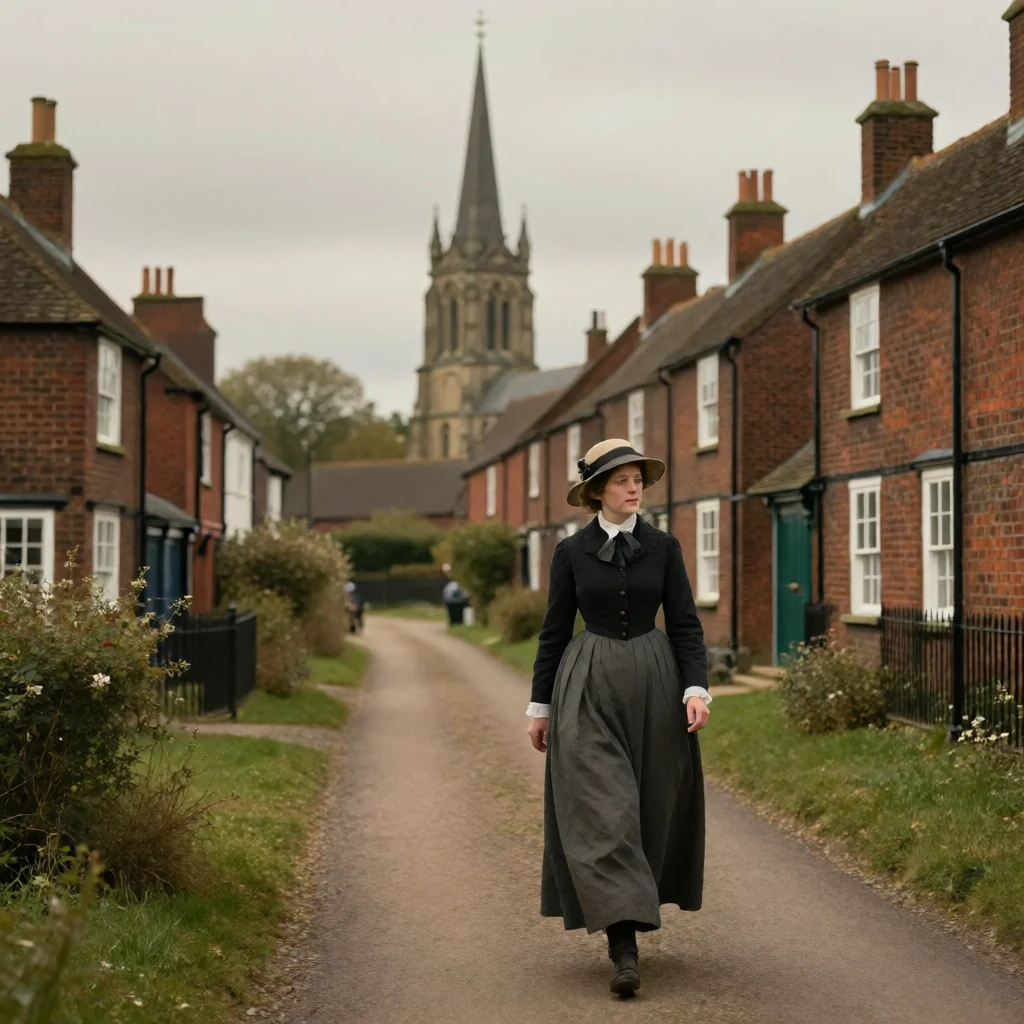
The scene at Freeman’s End is described with the eye of a painter—dormer-windows, ivy-choked chimneys, jasmine-grown shutters, an aged goat by the back door, pigs wandering in low spirits. But to Mr. Brooke, sore from the Trumpet’s attacks, the homestead looks uglier than it has ever done. He encounters a drunken and hostile Dagley, who announces that there is to be a Reform, that landlords who never did the right thing by their tenants shall be made to “scuttle off.” Mr. Brooke retreats, shaken by the novelty of being insulted on his own land.
The original text of this work is in the public domain. This page focuses on a guided summary article, reading notes, selected quotes, and visual learning materials for educational purposes.