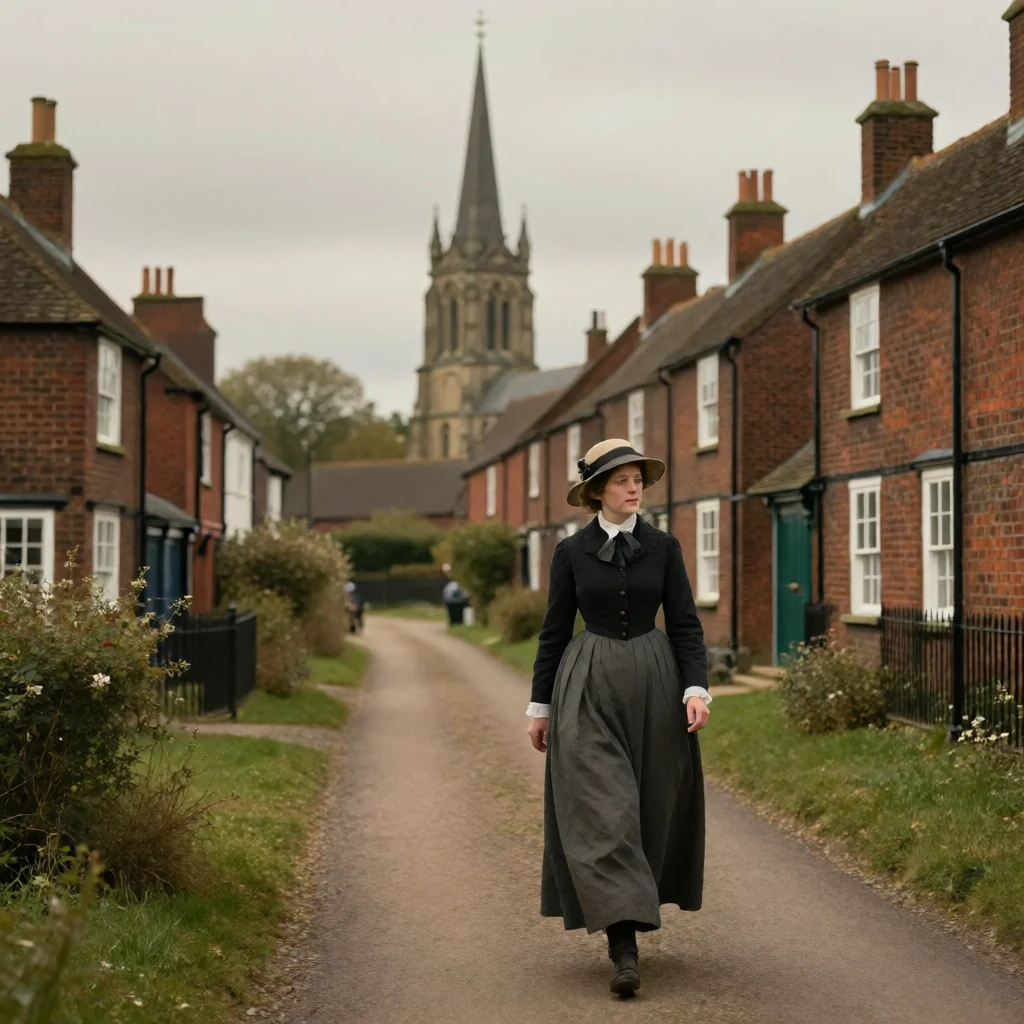
All eyes were turned on Mr. Bulstrode, who, since the first mention of his name, had been going through a crisis of feeling almost too violent for his delicate frame to support. The quick vision that his life was after all a failure, that he was a dishonored man, and must quail before the glance of those towards whom he had habitually assumed the attitude of a reprover, that God had disowned him before men and left him unscreened to the triumphant scorn of those who were glad to have their hatred justified, all this rushed through him like the agony of terror which fails to kill. Through all his bodily infirmity there ran a tenacious nerve of ambitious self-preserving will, which had continually leaped out like a flame. Before the last words were out of Mr. Hawley’s mouth, Bulstrode felt that he should answer, and that his answer would be a retort. He dared not get up and say I am not guilty, the whole story is false. He protested before them as a Christian minister against the sanction of proceedings towards him which were dictated by virulent hatred. After the word chicanery there was a growing noise, half of murmurs and half of hisses. Mr. Thesiger said it was due to his Christian profession that he should clear himself, and recommended him to quit the room. Bulstrode, after a moment’s hesitation, took his hat from the floor and slowly rose, but he grasped the corner of the chair so totteringly that Lydgate felt sure there was not strength enough in him to walk away without support. He rose and gave his arm to Bulstrode, and in that way led him out of the room; yet this act, which might have been one of gentle duty and pure compassion, was at this moment unspeakably bitter to him. He now felt the conviction that this man who was leaning tremblingly on his arm had given him the thousand pounds as a bribe, and that somehow the treatment of Raffles had been tampered with from an evil motive.
Meanwhile the business of the meeting was despatched, and fringed off into eager discussion. Mr. Brooke got himself fully informed, and felt some benevolent sadness in talking to Mr. Farebrother about the ugly light in which Lydgate had come to be regarded. Mr. Farebrother was deeply mournful; with a keen perception of human weakness, he could not be confident that under the pressure of humiliating needs Lydgate had not fallen below himself. When the carriage drove up to the gate of the Manor, Dorothea was out on the gravel, and came to greet them. Was Mr. Lydgate there? she said, who looked full of health and animation. I want to see him and have a great consultation with him about the Hospital. I have engaged with Mr. Bulstrode to do so. Oh, my dear, said Mr. Brooke, we have been hearing bad news. They walked through the garden, and Dorothea heard the whole sad story. She listened with deep interest, and begged to hear twice over the facts and impressions concerning Lydgate. After a short silence, pausing at the churchyard gate, she said energetically, you don’t believe that Mr. Lydgate is guilty of anything base? I will not believe it. Let us find out the truth and clear him!
BOOK VIII.
CHAPTER LXXII.
The book opens with the line that full souls are double mirrors, making still an endless vista of fair things before, repeating things behind. Dorothea’s impetuous generosity, which would have leaped at once to the vindication of Lydgate from the suspicion of having accepted money as a bribe, underwent a melancholy check when she came to consider all the circumstances by the light of Mr. Farebrother’s experience. It is a delicate matter to touch, he said. How can we begin to inquire into it? It must be either publicly by setting the magistrate and coroner to work, or privately by questioning Lydgate. As to the first proceeding there is no solid ground to go upon, else Hawley would have adopted it; and as to opening the subject with Lydgate, he confessed he should shrink from it. I feel convinced that his conduct has not been guilty, said Dorothea; I believe that people are almost always better than their neighbors think they are. Some of her intensest experience had set her mind strongly in opposition to any unfavorable construction of others.
Two days afterwards, he was dining at the Manor with her uncle and the Chettams. Dorothea returned to the subject with renewed vivacity. Mr. Lydgate would understand that if his friends hear a calumny about him their first wish must be to justify him. What do we live for, if it is not to make life less difficult to each other? I cannot be indifferent to the troubles of a man who advised me in my trouble, and attended me in my illness. Sir James Chettam was no longer the diffident and acquiescent suitor; he was the anxious brother-in-law, with a devout admiration for his sister, but with a constant alarm lest she should fall under some new illusion almost as bad as marrying Casaubon. He smiled much less; when he said Exactly it was more often an introduction to a dissentient opinion. But, Dorothea, he said remonstrantly, you can’t undertake to manage a man’s life for him in that way. Lydgate must know, at least he will soon come to know how he stands. If he can clear himself, he will. He must act for himself. Mr. Farebrother said he thought it would be better to wait.
Then it may be rescued and healed, said Dorothea. I should not be afraid of asking Mr. Lydgate to tell me the truth, that I might help him. There is the best opportunity in the world for me to ask for his confidence; and he would be able to tell me things which might make all the circumstances clear. People glorify all sorts of bravery except the bravery they might show on behalf of their nearest neighbors. Mr. Farebrother, almost converted by Dorothea’s ardor, said that a woman may venture on some efforts of sympathy which would hardly succeed if we men undertook them. Sir James said surely a woman is bound to be cautious and listen to those who know the world better than she does. Dorothea, submitting uneasily to this discouragement, went with Celia into the library. Now, Dodo, do listen to what James says, said Celia, else you will be getting into a scrape. You always did, and you always will, when you set about doing as you please. Dorothea laughed and forgot her tears.
The original text of this work is in the public domain. This page focuses on a guided summary article, reading notes, selected quotes, and visual learning materials for educational purposes.