CHAPTER XLVII.
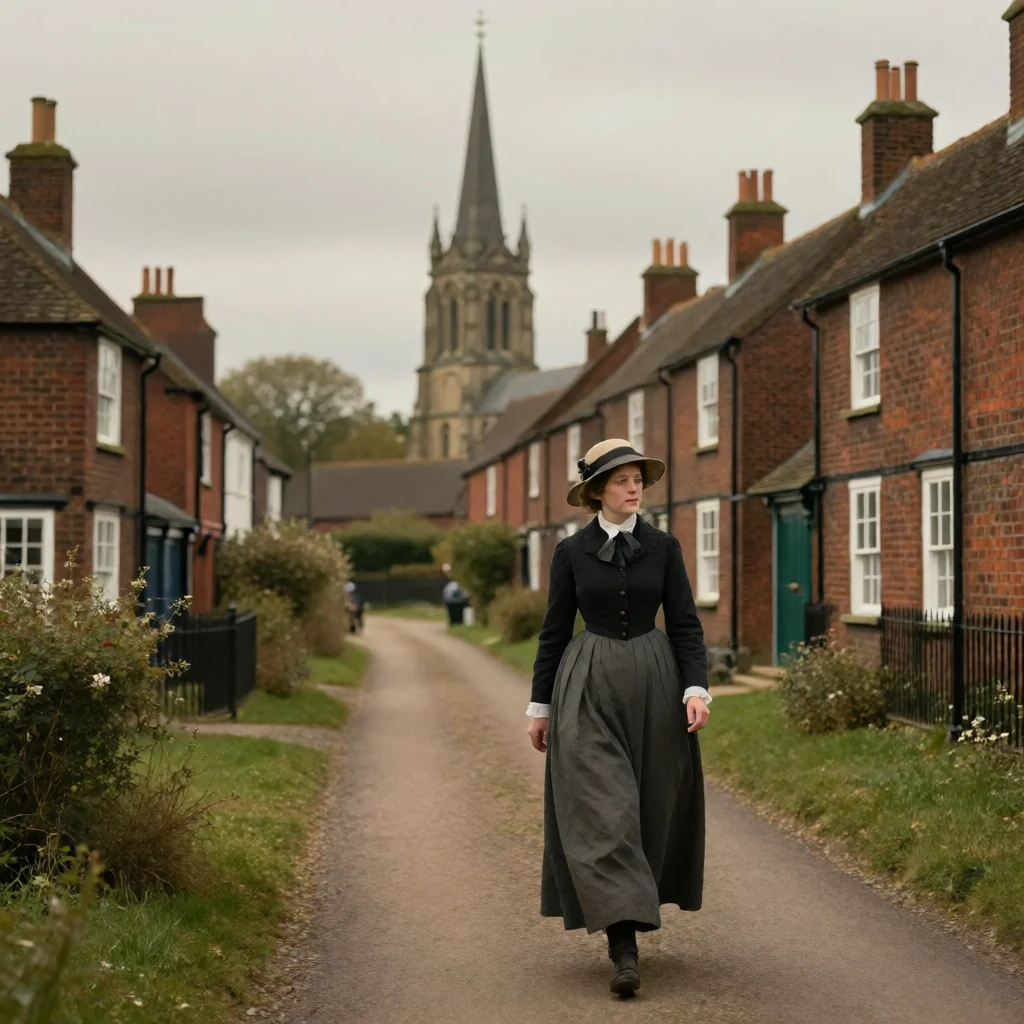
Will Ladislaw spends the Saturday night wrestling with doubts about his decision to remain in Middlemarch working for Mr. Brooke, yet his restless thoughts inevitably return to Dorothea, whom he loves not with the vulgar hope that her husband might die, but with a refined devotion that he compares to cherishing a rare treasure whose very inaccessibility makes it precious. On Sunday morning he resolves to attend Lowick Church despite knowing it defies Mr. Casaubon’s prohibition, and walks through the spring countryside to the quaint village congregation, singing to himself an improvised song about the meager fare of his love. Upon arriving, he finds himself alone in the curate’s pew opposite the rector’s pew where Mr. Casaubon and Dorothea soon appear, and his anticipated pleasure turns to paralysis as he cannot bring himself to look toward her while her husband is present. After the service, he catches Dorothea’s glance as she turns out of the pew and sees her bow with a look of agitation suggesting she is repressing tears, but she and Mr. Casaubon walk away toward the shrubbery without looking back, leaving Will to walk home alone in dejection.
Will Ladislaw’s Restless Night
After an evening discussion with Lydgate, Will Ladislaw returns to his rooms and spends half the night wrestling with doubts about his decision to settle in Middlemarch and work with Mr. Brooke. His earlier hesitations have transformed into heightened sensitivity to every criticism of his choice. The conversation with Lydgate has reignited his internal debate—Was he not making a fool of himself? Yet he recognizes that he is more than a fool. He questions the purpose of his sacrifice, finding no definite answer.
Visions of Dorothea
Will’s thoughts inevitably turn to Dorothea, and he examines the nature of his feelings for her with unusual clarity. He dismisses the “vulgar vision” others might suspect—that he hopes for Casaubon’s death and Dorothea’s subsequent acceptance of him as a husband. Such speculation has no power over him; he cannot long for change that must inevitably transform her. He compares his devotion to cherishing a rare treasure or exquisite melody—the very difficulty of access makes it precious. To Will, who cares little for solid things and greatly for subtler influences, this feeling for Dorothea is like inheriting a fortune. Her presence in his soul is enthroned beyond any woman’s reach.
The Worth of Devotion
Will reflects on what his devotion is actually worth to Dorothea. He cannot be certain of its value, yet he knows he will not leave her reach. He has observed that she speaks to no one else with the same simple confidence she shows him. She once said she would like him to stay, and stay he will, whatever obstacles hiss around her. Yet this conclusion is questioned—can he truly do anything for her?
A Resolve Tested
Will’s resolve faces contradiction even from himself. He frequently becomes irritated by outside demonstrations that his public exertions with Mr. Brooke cannot appear as heroic as he wishes. This irritation connects to another wound: despite his sacrifice of dignity for Dorothea’s sake, he can hardly ever see her. Unable to contradict these unpleasant facts, he contradicts his own strongest bias and says, “I am a fool.” Yet the inward debate only ends by giving him a livelier sense of what her presence would mean to him.
The Walk to Lowick Church
On Sunday morning, Will determines to go to Lowick Church and see Dorothea. He dresses and argues with his objections—the visit would defy Mr. Casaubon’s prohibition and might displease Dorothea. He silences these objections with irrational force: it would be monstrous for Casaubon to hinder him from visiting a pretty country church on a spring morning. He walks to Lowick as if traveling to Paradise, crossing Halsell Common and skirting woods where sunlight falls broadly under budding boughs. Everything seems to know it is Sunday and approves of his journey. He carries a small book but never reads, instead chanting words of his own devising as he imagines scenes at the church.
The original text of this work is in the public domain. This page focuses on a guided summary article, reading notes, selected quotes, and visual learning materials for educational purposes.