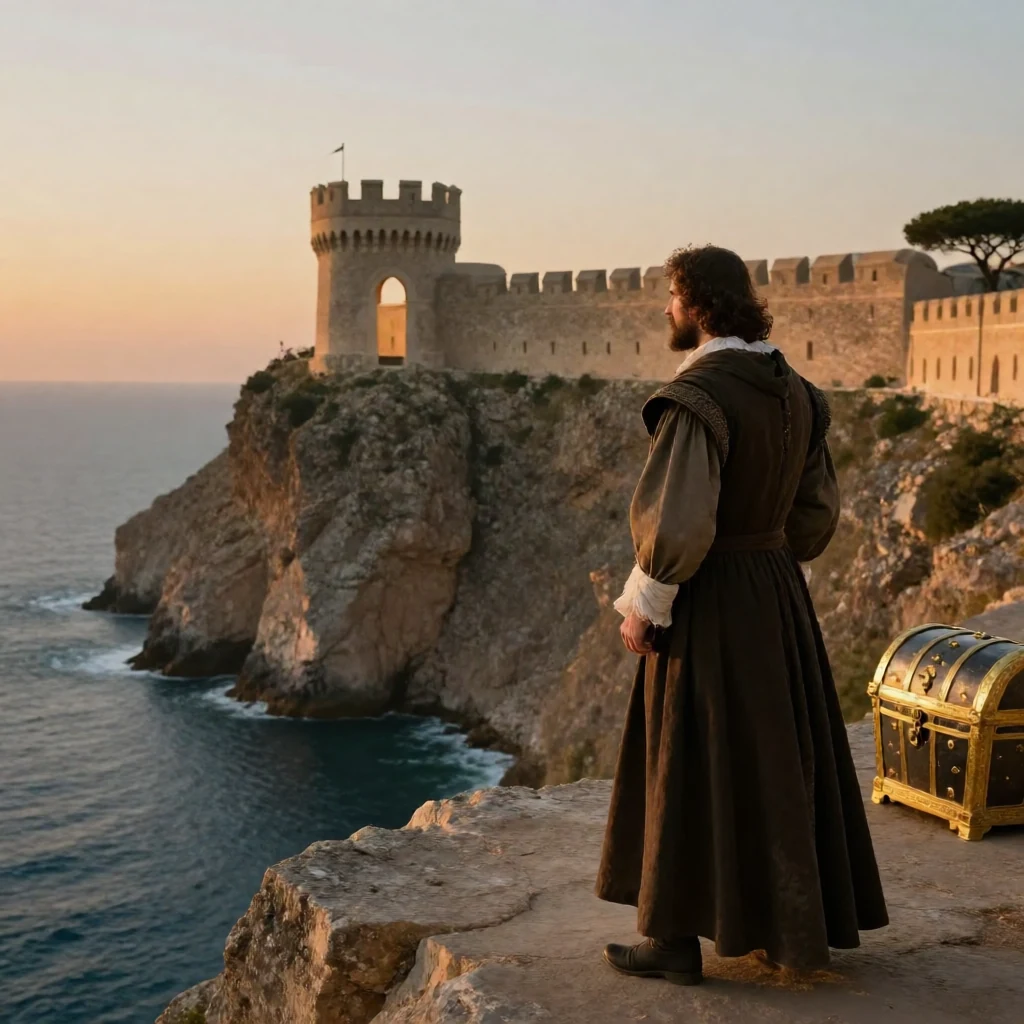
The Count of Monte Cristo by Dumas, Alexandre unfolds through 116 chapters. This chapter focuses on Edmond Dantès’s return home to his father and the revelations about his father’s difficult circumstances during his absence. Chapter 3 introduces the Catalans, a mysterious enclave outside Marseilles descended from Spanish settlers who long ago beached their small vessels on a barren promontory. The chapter shifts from the tavern scene into the village itself, where the love triangle at the heart of the story unfolds: Mercédès, a young Catalan woman of mixed heritage, is courted by her cousin Fernand but loves Edmond Dantès, the young sailor recently returned from the voyage of the Pharaon. Their reunion before the jealous Fernand sets the stage for the resentment that will follow. The chapter closes in a shady arbor, where Fernand, Caderousse, and Danglars drink together, their envy and wounded pride hinting at darker designs against the fortunate Dantès. Chapter 3 continues the scene in the Catalan village, where Danglars, Fernand, and Caderousse observe the engagement of Edmond Dantès and Mercédès. The chapter develops the jealous scheming of Danglars, the drunken intrusions of Caderousse, the restrained rage of Fernand, and the happy couple’s plans for an imminent wedding, culminating in Edmond’s announcement of a sacred Paris commission that sparks Danglars’ plotting. This chapter depicts the aftermath of Edmond Dantès and Mercédès’s departure from the tavern, revealing the jealousy and plotting of those left behind. The scene establishes the central conspiracy that will drive much of the novel’s plot, as three men—Fernand, Danglars, and Caderousse—react to the announcement of Dantès’s impending marriage and promotion to captain of the Pharaon.
Chapter 2. Father and Son
This chapter focuses on Edmond Dantès’s return home to his father and the revelations about his father’s difficult circumstances during his absence.
Edmond Returns Home
Edmond Dantès returns to Marseille after the death of Captain Leclere and makes his way to his father’s modest home. He climbs the dark staircase of a small house on the Rue de Noailles with a beating heart, eager to reunite with his father. Upon entering, he finds his elderly father training nasturtiums and clematis at the window, unaware of his son’s arrival. The emotional reunion sees the old man fall into Edmond’s arms, pale and trembling, overcome by the surprise and joy of seeing his son unexpectedly.
The Father’s Poverty Revealed
During their conversation, Edmond learns he may soon become captain of the Pharaon. However, he discovers his father has lived in poverty during his absence. When Edmond asks for wine, he finds the cupboards empty. The old man admits he paid a debt to neighbor Caderousse with most of the two hundred francs Edmond left him, leaving only sixty francs to live on for three months. Distressed by his father’s sacrifice, Edmond empties his pockets of gold and silver coins onto the table, promising to care for the old man and buy him a house with a garden.
Caderousse’s Visit
Neighbor Caderousse arrives to congratulate Edmond on his return. Though Edmond receives him civilly, he privately notes Caderousse’s duplicitous nature. Caderousse examines the money on the table with greedy eyes, but Edmond deflects his interest by claiming the money belongs to his father. The old man warmly defends Caderousse, praising him as an attached friend. However, Edmond remains guarded, offering only formal thanks for past assistance.
Discussion of Promotion and Mercédès
The conversation turns to Edmond’s expected promotion to captain. Edmond explains he declined M. Morrel’s dinner invitation to see his father sooner. When Caderousse suggests Edmond needs flattery to succeed, Edmond insists he will become captain on merit. Caderousse then hints that Mercédès, whom Edmond plans to marry, has many admirers. Edmond defends his beloved’s loyalty, expressing confidence she will remain faithful regardless of his status. With his father’s blessing, Edmond departs to visit the Catalans and see Mercédès.
Danglars and Caderousse Plot
After Edmond leaves, Caderousse joins Danglars at the corner of the Rue Senac. The two men discuss Edmond’s good fortune with evident jealousy. Danglars probes for information about Mercédès, and Caderousse reveals he has seen her accompanied by a tall Catalan cousin. The implication suggests romantic complications may await Edmond. The conspirators then proceed to La Réserve to await news while plotting against the young sailor.
The original text of this work is in the public domain. This page offers a compressed quick-read summary for educational purposes.