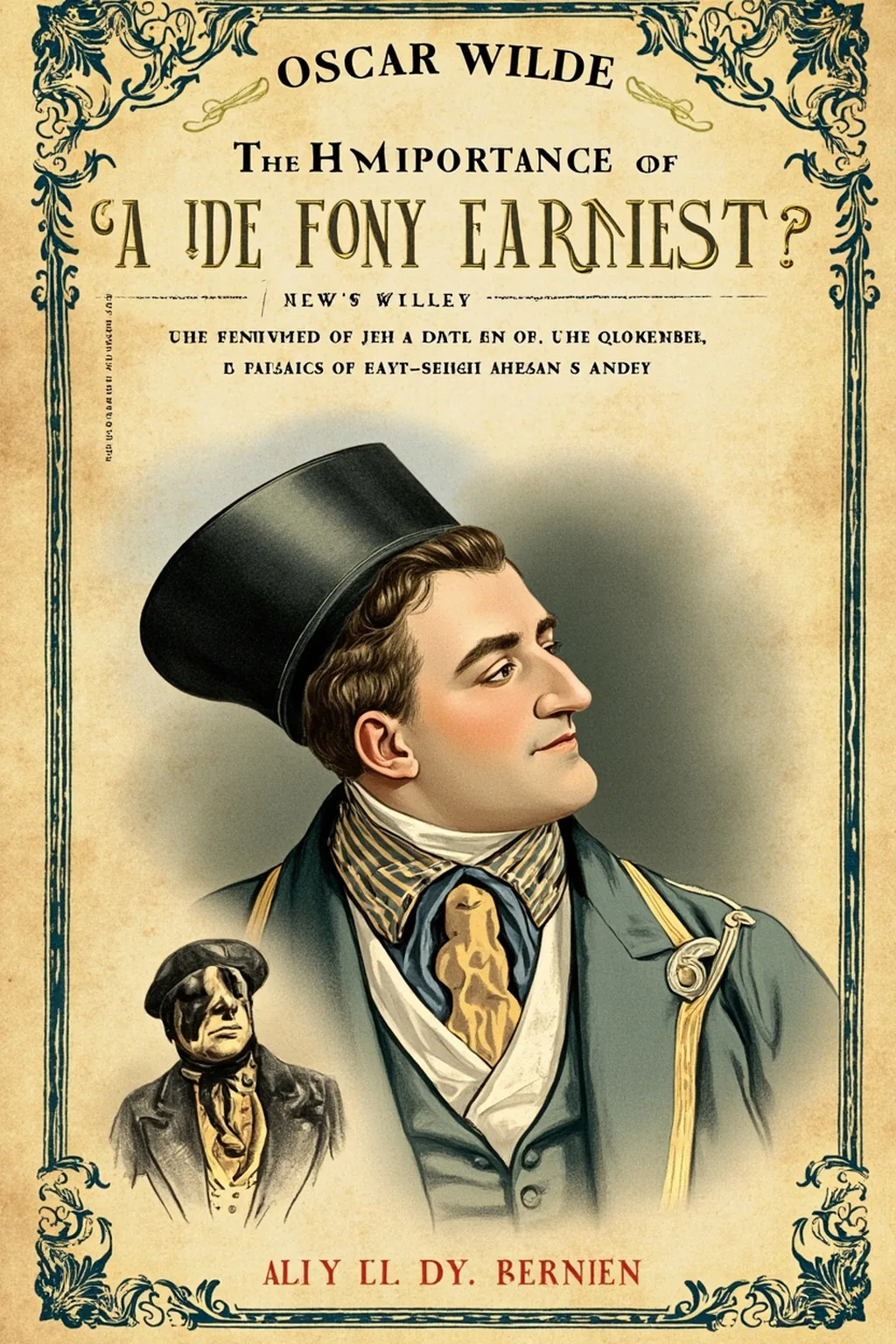
The Importance of Being Earnest: A Trivial Comedy for Serious People
A comedy of fabricated identities in which two bachelors maintain fictional alter egos to escape social obligations. Their deceptions entangle two women who love the name 'Ernest,' leading to exposure, reconciliation, and the improbable revelation that one suitor's fabricated identity was true all along—resolving the central absurdity that names and origins matter more than character in Victorian society.
Movement I: The Architecture of Deception
In London's drawing rooms, the play's central machinery is revealed: Jack Worthing's double life as 'Ernest' in town and Algernon's invented invalid 'Bunbury.' The movement builds from idle wit to romantic crisis as Jack's proposal to Gwendolen is destroyed by Lady Bracknell's interrogation, exposing the rigid class boundaries that make unknown parentage an insurmountable barrier to marriage.
Chapter 1: Part 1
The comedy's foundation is laid through the revelation of Jack's double identity. His cigarette case betrays the existence of 'little Cecily,' forcing him to confess the elaborate fiction of his brother 'Ernest'—a convenient excuse for escaping country responsibilities. Algernon counters with his own deception, the invalid 'Bunbury,' establishing the play's central theme: the liberating power of fictional personas in a society of suffocating propriety.
Chapter 2: Part 2
Jack's romantic triumph with Gwendolen collapses under Lady Bracknell's systematic interrogation. His unknown parentage—revealed as a handbag origin at Victoria Station—transforms him from eligible bachelor to social impossibility. The movement ends with Jack's hopes destroyed and the central problem established: how can a man with no name marry into a family obsessed with lineage?
Movement II: The Collision of Fictions
The action shifts from London to the Manor House in Hertfordshire, where the pastoral setting becomes a battleground of competing deceptions. Algernon infiltrates Jack's country home posing as the wicked brother 'Ernest,' while Jack arrives in mourning for the very brother he has just 'killed off.' The women—Cecily with her elaborate romantic fantasies and Gwendolen with her name-fixation—become entangled in deceptions neither man can sustain, leading to the devastating exposure that neither suitor is actually named Ernest.
Chapter 3: Part 3
The aftermath of rejection sees Jack planning to eliminate his fictional brother while Algernon secretly obtains the country address. The scene shifts to the Manor House where Cecily dreams of the mysterious Ernest, and Algernon arrives in disguise to claim that identity. The act ends with deceptions on a collision course: Jack plans to kill off Ernest while Algernon has just assumed the role.
Chapter 4: Part 4
Algernon woos Cecily with promises of reformation while Jack announces Ernest's death to the household. The absurdity peaks when Jack must confront his 'dead' brother in the flesh. Cecily's acceptance of Algernon's proposal reveals she has been engaged to 'Ernest' in her imagination for months, entangling both men in deceptions they cannot escape.
Chapter 5: Part 5
Gwendolen's arrival triggers a rivalry over 'Ernest' that dissolves into sisterhood when both women discover the truth: neither man bears the coveted name. The carefully constructed fictions collapse as diaries are produced, tea is weaponized, and the women realize they have been deceived by the same name-based fraud. The movement ends with both couples in crisis and both men facing the consequences of their inventions.
Movement III: The Unraveling and Resolution
The final movement brings all threads together in a cascade of revelations. The men confess their deceptions and plan christenings to legally become 'Ernest.' Lady Bracknell's intervention initially blocks both engagements, but her recognition of Miss Prism unlocks the play's central mystery: Jack's true identity as Algernon's elder brother, christened Ernest. The fabricated name becomes truth, the handbag origin becomes legitimate lineage, and the comedy resolves through the improbable logic that fiction has been fact all along.
Chapter 6: Part 6
The men confess their deceptions and arrange christenings to become 'Ernest,' winning provisional forgiveness from the women. Lady Bracknell's sudden arrival threatens to destroy both engagements, but her discovery of Cecily's fortune transforms her opposition into enthusiastic consent for Algernon. The movement builds toward the recognition scene that will resolve Jack's identity crisis.
Chapter 7: Part 7
The final confrontation centers on consent and identity. Jack withholds permission for Cecily's marriage as leverage, creating a stalemate broken only by Miss Prism's entrance. Her confession of the handbag mistake reveals Jack as Lady Bracknell's lost nephew, christened Ernest John. The fabricated name proves authentic, the handbag origin becomes legitimate birthright, and Jack declares the vital importance of being Earnest—now literally true.