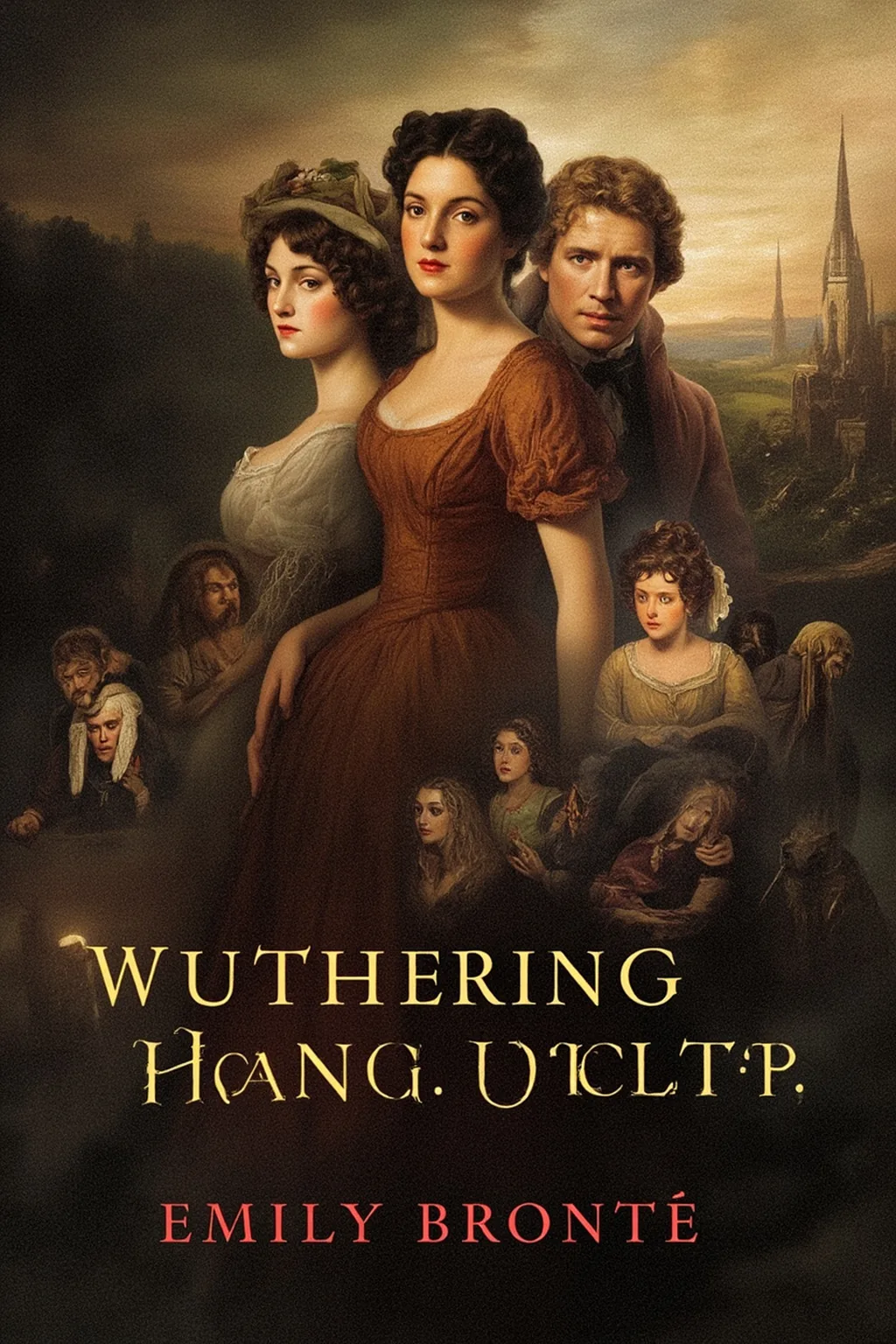
Mr. Lockwood, a new tenant at Thrushcross Grange, uncovers the turbulent history of his neighbors, the Earnshaws and Lintons, through the housekeeper Nelly Dean. Her tale recounts the orphan Heathcliff’s degradation and his fierce bond with Catherine Earnshaw, a connection severed by her marriage to Edgar Linton. Heathcliff returns years later to exact a brutal revenge on the families, corrupting the next generation and claiming the estates. Only after his death does the cycle of violence break, allowing the young Catherine and Hareton to heal the wounds of the past.
On the morning of a fine June day, the last of the ancient Earnshaw stock was born. A messenger came running across the meadow, breathless with news of the finest lad that ever breathed, but also with the doctor’s grim prognosis that the mistress was dying of consumption and would not see winter. Nelly hurried home to find Hindley standing at the door, putting on a brave smile and swearing that Frances was perfectly well, dismissing the doctor’s warnings as the talk of a croaker. He persisted in this denial even as Kenneth warned him that medicines were useless, retorting that her pulse was slow and her cheek cool. Frances seemed to believe him, maintaining a flighty, gay spirit until the very end. One night, while leaning on his shoulder and saying she thought she would rise the next day, a slight fit of coughing took her; she put her hands about his neck, her face changed, and she was dead.
With her death, the infant Hareton fell wholly into Nelly’s hands, for Hindley had room in his heart only for his wife and himself. His sorrow, however, was not lamentation but desperation. He neither wept nor prayed; he cursed God and man, giving himself up to reckless dissipation. The servants, unable to bear his tyrannical conduct, fled until only Joseph and Nelly remained. The master’s bad ways formed a pretty example for Catherine and Heathcliff. Heathcliff, now sixteen, had been degraded by hard labour and the loss of his early education. His curiosity was extinguished, his sense of superiority faded, and he sank into a slouching, moroseness that took a grim pleasure in exciting aversion. He ceased to express fondness for Catherine in words, recoiling from her caresses as if conscious they could bring no gratification.
Catherine, now fifteen and queen of the countryside, had adopted a double character. With the Lintons, she was ingenious and cordial, ashamed to show her rough side where she experienced courtesy; at home, she had no inclination to practise politeness that would only be laughed at. She had gained the heart of Edgar Linton, though she was full of ambition and found it difficult to reconcile her two worlds. One afternoon, Hindley being absent, Heathcliff presumed to give himself a holiday. He found Catherine dressing in a silk frock and learned she expected the Lintons. He refused to leave, pointing to an almanack on the wall where he had marked crosses for the evenings she spent with the Lintons and dots for those spent with him, demanding to know if she always intended to sit with him. Catherine, irritated, retorted that it was no company at all when people knew nothing and said nothing.
The original text of this work is in the public domain. This page focuses on a guided summary article, reading notes, selected quotes, and visual learning materials for educational purposes.