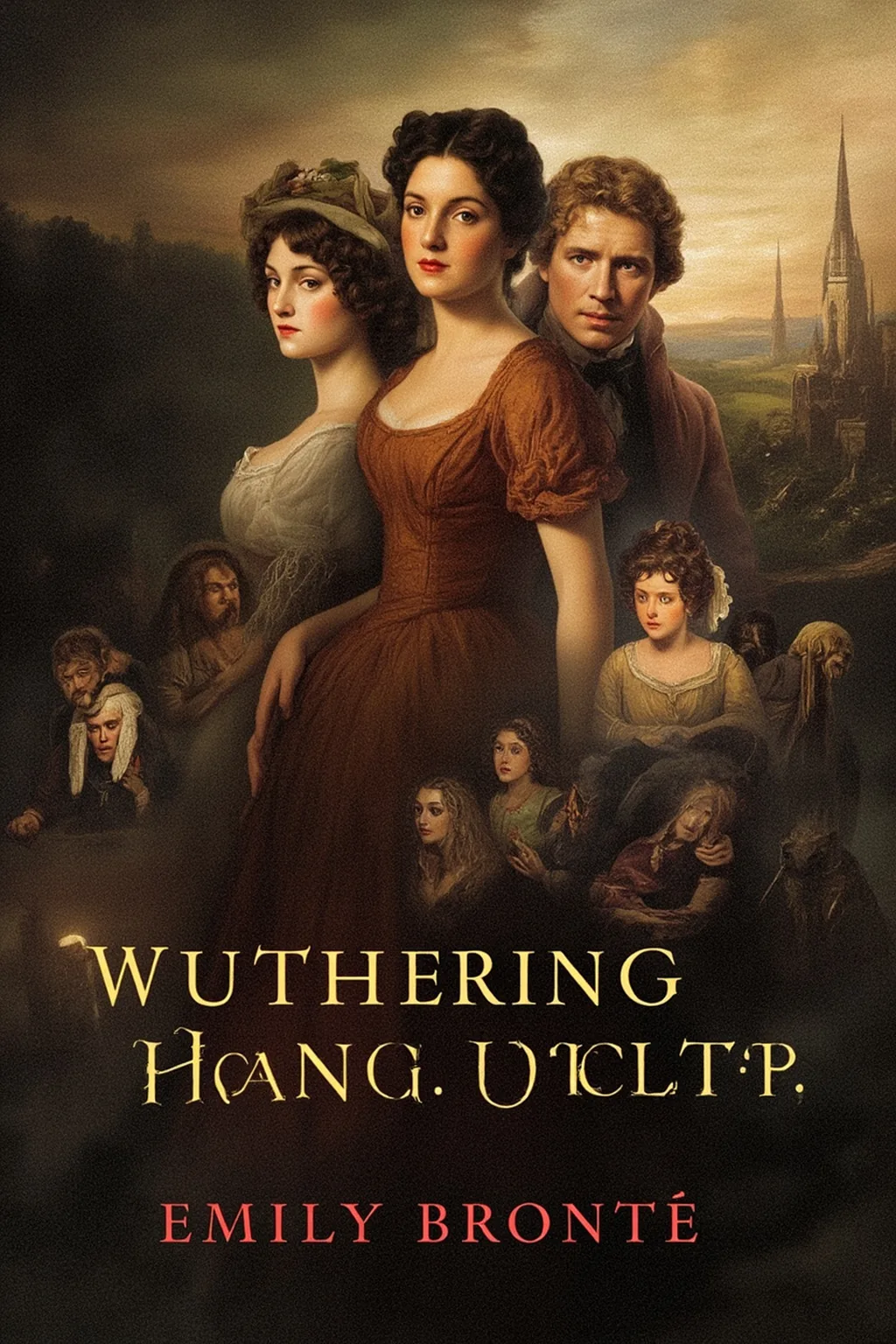
Wuthering Heights cover
Revenge Notable Quotes

Wuthering Heights

Passages worth revisiting from classic literature.

Brontë, Emily 1996 111 min

The Landscape of the Soul

Quotes

“Wuthering” being a significant provincial adjective, descriptive of the atmospheric tumult to which its station is exposed in stormy weather. Pure, bracing ventilation they must have up there at all times, indeed: one may guess the power of the north wind, blowing over the edge, by the excessive slant of a few stunted firs at the end of the house; and by a range of gaunt thorns all stretching their limbs one way, as if craving alms of the sun.

Read interpretation

The etymology of the house’s name serves as a metaphor for the turbulent passions that will drive the narrative. The description of the landscape—stunted, gaunt, and desperate—mirrors the emotional stuntedness and harshness of the inhabitants within.

Quotes

He is a dark-skinned gipsy in aspect, in dress and manners a gentleman: that is, as much a gentleman as many a country squire: rather slovenly, perhaps, yet not looking amiss with his negligence, because he has an erect and handsome figure; and rather morose. Possibly, some people might suspect him of a degree of under-bred pride; I have a sympathetic chord within that tells me it is nothing of the sort: I know, by instinct, his reserve springs from an aversion to showy displays of feeling—to manifestations of mutual kindliness. He’ll love and hate equally under cover, and esteem it a species of impertinence to be loved or hated again.

Read interpretation

Lockwood provides a crucial physical and psychological sketch of the Byronic anti-hero. The observation that Heathcliff loves and hates “under cover” and resists mutual kindliness foreshadows the intense, hidden relationships that form the core of the tragedy.

The Ghost and the Wound

Quotes

This writing, however, was nothing but a name repeated in all kinds of characters, large and small—Catherine Earnshaw, here and there varied to Catherine Heathcliff, and then again to Catherine Linton.

Read interpretation

The repetition of Catherine’s name in its three variations serves as a spectral roadmap to the novel’s central romantic and genealogical conflicts. It immediately establishes the room as a haunted shrine to the past, foreshadowing the shifting identities and loyalties that define the tragedy.

Quotes

“Let me in—let me in!” … “Catherine Linton,” it replied, shiveringly … “I’m come home: I’d lost my way on the moor!”

Read interpretation

The ghost’s desperate plea to enter the house is one of the most iconic and terrifying moments in Gothic literature. It shatters the barrier between the living and the dead, revealing that Catherine’s spirit is restless and that her “home” is still Wuthering Heights, despite her marriage and death.

Quotes

He got on to the bed, and wrenched open the lattice, bursting, as he pulled at it, into an uncontrollable passion of tears. “Come in! come in!” he sobbed. “Cathy, do come. Oh, do—once more! Oh! my heart’s darling! hear me this time, Catherine, at last!”

Read interpretation

Heathcliff’s collapse from stoic landlord to a sobbing, desperate man exposes the raw wound at his center. This reaction completely recontextualizes his character for Lockwood—and the reader—transforming him from a mere misanthrope into a figure of tragic, almost supernatural, love and loss.

The Indivisible Self

Quotes

“It would degrade me to marry Heathcliff now; so he shall never know how I love him: and that, not because he’s handsome, Nelly, but because he’s more myself than I am. Whatever our souls are made of, his and mine are the same; and Linton’s is as different as a moonbeam from lightning, or frost from fire.”

Read interpretation

Catherine’s confession to Nelly is the emotional fulcrum of the novel. She acknowledges a spiritual unity with Heathcliff that transcends social class, yet she cruelly dismisses the idea of marrying him because of his degradation. This declaration of shared souls versus the superficial differences of Edgar Linton sets the stage for the tragic misunderstanding that follows.

Quotes

“My love for Linton is like the foliage in the woods: time will change it, I’m well aware, as winter changes the trees. My love for Heathcliff resembles the eternal rocks beneath: a source of little visible delight, but necessary. Nelly, I am Heathcliff! He’s always, always in my mind: not as a pleasure, any more than I am always a pleasure to myself, but as my own being.”

Read interpretation

Catherine articulates the essential duality of her nature. Her love for Edgar is temporary and decorative, like foliage, while her love for Heathcliff is elemental and unchanging, like the bedrock of the earth. By claiming “I am Heathcliff,” she expresses an identity so intertwined with his that separation feels like an annihilation of the self.

Quotes

“Ere this speech ended I became sensible of Heathcliff’s presence. Having noticed a slight movement, I turned my head, and saw him rise from the bench, and steal out noiselessly. He had listened till he heard Catherine say it would degrade her to marry him, and then he stayed to hear no further.”

Read interpretation

The tragedy of the chapter hinges on this silent exit. Heathcliff hears only the rejection—that marrying him would degrade her—and misses the subsequent passionate declaration of her eternal love. His departure at this precise moment ensures that the misunderstanding becomes irreversible, driving him to vanish and setting the course for the future suffering of all involved.

The Anatomy of Revenge

Quotes

“I have no pity! I have no pity! The more the worms writhe, the more I yearn to crush out their entrails! It is a moral teething; and I grind with greater energy in proportion to the increase of pain.”

Read interpretation

Heathcliff explicitly rejects the concept of pity, revealing a philosophy where the pain of others is fuel for his own resolve. This metaphor of “moral teething” suggests a sadistic developmental stage where he feeds on suffering, highlighting the monstrous transformation of his character.

Quotes

“The tyrant grinds down his slaves and they don’t turn against him; they crush those beneath them.”

Read interpretation

This chilling metaphor reveals Heathcliff’s specific strategy for retribution. Instead of directly harming Catherine, whom he still loves, he intends to inflict pain by destroying those weaker and connected to her—Edgar and Isabella—thereby punishing her through their suffering.

Quotes

“Now, my bonny lad, you are mine! And we’ll see if one tree won’t grow as crooked as another, with the same wind to twist it!”

Read interpretation

With Hindley dead, Heathcliff claims his ultimate victory over the Earnshaw line by seizing Hareton. This quote is chilling in its metaphorical implication; Heathcliff intends to warp the boy just as he was warped, using the child as an instrument of vengeance against the dead.

The Death of Love

Quotes

“You teach me now how cruel you’ve been—cruel and false. Why did you despise me? Why did you betray your own heart, Cathy? I have not one word of comfort. You deserve this. You have killed yourself. Yes, you may kiss me, and cry; and wring out my kisses and tears: they’ll blight you—they’ll damn you. You loved me—then what right had you to leave me? What right—answer me—for the poor fancy you felt for Linton? Because misery and degradation, and death, and nothing that God or Satan could inflict would have parted us, you, of your own will, did it. I have not broken your heart—you have broken it; and in breaking it, you have broken mine. So much the worse for me that I am strong. Do I want to live? What kind of living will it be when you—oh, God! would you like to live with your soul in the grave?”

Read interpretation

This is the emotional climax of the chapter, where Heathcliff articulates the core tragedy of the novel: that their separation was a choice, not a fate inflicted by outside forces. He accuses her of breaking her own heart by choosing Edgar and, by extension, breaking his soul. The rhetorical question about living with his soul in the grave foreshadows his existence after her death.

Quotes

“May she wake in torment!” he cried, with frightful vehemence, stamping his foot, and groaning in a sudden paroxysm of ungovernable passion. “Why, she’s a liar to the end! Where is she? Not there—not in heaven—not perished—where? Oh! you said you cared nothing for my sufferings! And I pray one prayer—I repeat it till my tongue stiffens—Catherine Earnshaw, may you not rest as long as I am living; you said I killed you—haunt me, then! The murdered do haunt their murderers, I believe. I know that ghosts have wandered on earth. Be with me always—take any form—drive me mad! only do not leave me in this abyss, where I cannot find you! Oh, God! it is unutterable! I cannot live without my life! I cannot live without my soul!”

Read interpretation

This is the emotional climax of the novel, where Heathcliff rejects the consolation of heaven to demand a haunting. His curse defines the rest of his existence, transforming his grief into a supernatural bond that refuses to accept the finality of death. It illustrates the terrifying depth of his obsession, where he prefers eternal torment over separation.

The Corruption of the Next Generation

Quotes

“Yes, Nell,” he added, when they had departed, “my son is prospective owner of your place, and I should not wish him to die till I was certain of being his successor. Besides, he’s mine, and I want the triumph of seeing my descendant (fairly) lord of their estates; my child hiring their children to till their fathers’ lands for wages. That is the sole consideration which can make me endure the whelp: I despise him for himself, and hate him for the memories he revives!”

Read interpretation

This declaration lays bare Heathcliff’s twisted motivation. He openly admits he despises his son and only keeps him alive to use him as a tool to inherit the Linton and Earnshaw estates. It is a chilling blueprint of revenge that reduces human life to a mere pawn in a property dispute.

Quotes

“I wish she felt as I do,” he replied: “spiteful, cruel thing! Hareton never touches me: he never struck me in his life. And I was better to-day: and there—” his voice died in a whimper.

Read interpretation

Linton brands Catherine as a tormentor, contrasting her actions with Hareton’s to maximize her remorse and bind her to him through pity.

Quotes

“I can’t do with that,” he said; “it’s not high enough.” […] “That’s too high,” murmured the provoking thing.

Read interpretation

Rejecting her attempts to comfort him with a cushion, Linton forces Catherine to struggle to please him, asserting control through petty dissatisfaction.

The Unravelling of the Plot

Quotes

“I get levers and mattocks to demolish the two houses, and train myself to be capable of working like Hercules, and when everything is ready and in my power, I find the will to lift a slate off either roof has vanished! My old enemies have not beaten me; now would be the precise time to revenge myself on their representatives: I could do it; and none could hinder me. But where is the use? I don’t care for striking: I can’t take the trouble to raise my hand!”

Read interpretation

Heathcliff admits the total collapse of his life’s driving force: revenge. After years of plotting and “labouring like Hercules,” he realizes he has no desire left to execute his plans. This confession reveals the hollowness of his triumph and the strange exhaustion that has overtaken his spirit.

Quotes

“I have to remind myself to breathe—almost to remind my heart to beat! And it is like bending back a stiff spring: it is by compulsion that I do the slightest act not prompted by one thought; and by compulsion that I notice anything alive or dead, which is not associated with one universal idea. I have a single wish, and my whole being and faculties are yearning to attain it.”

Read interpretation

This passage captures the supernatural intensity of Heathcliff’s anticipation of death. He describes a state of existence where life itself is a burden, maintained only by compulsion, while his entire being is consumed by a “single wish”—the fulfillment of his desire to be reunited with Catherine beyond the grave.

The Quiet Earth

Quotes

I sought, and soon discovered, the three headstones on the slope next the moor: the middle one grey, and half buried in heath; Edgar Linton’s only harmonized by the turf and moss creeping up its foot; Heathcliff’s still bare.

Read interpretation

Lockwood visits the churchyard to find the three graves lying side by side, each differing in their state of preservation and integration with the earth.

Quotes

I lingered round them, under that benign sky: watched the moths fluttering among the heath and harebells, listened to the soft wind breathing through the grass, and wondered how any one could ever imagine unquiet slumbers for the sleepers in that quiet earth.

Read interpretation

The novel concludes with an image of profound peace, as the natural beauty of the graveyard suggests that the turbulent spirits have finally found rest.