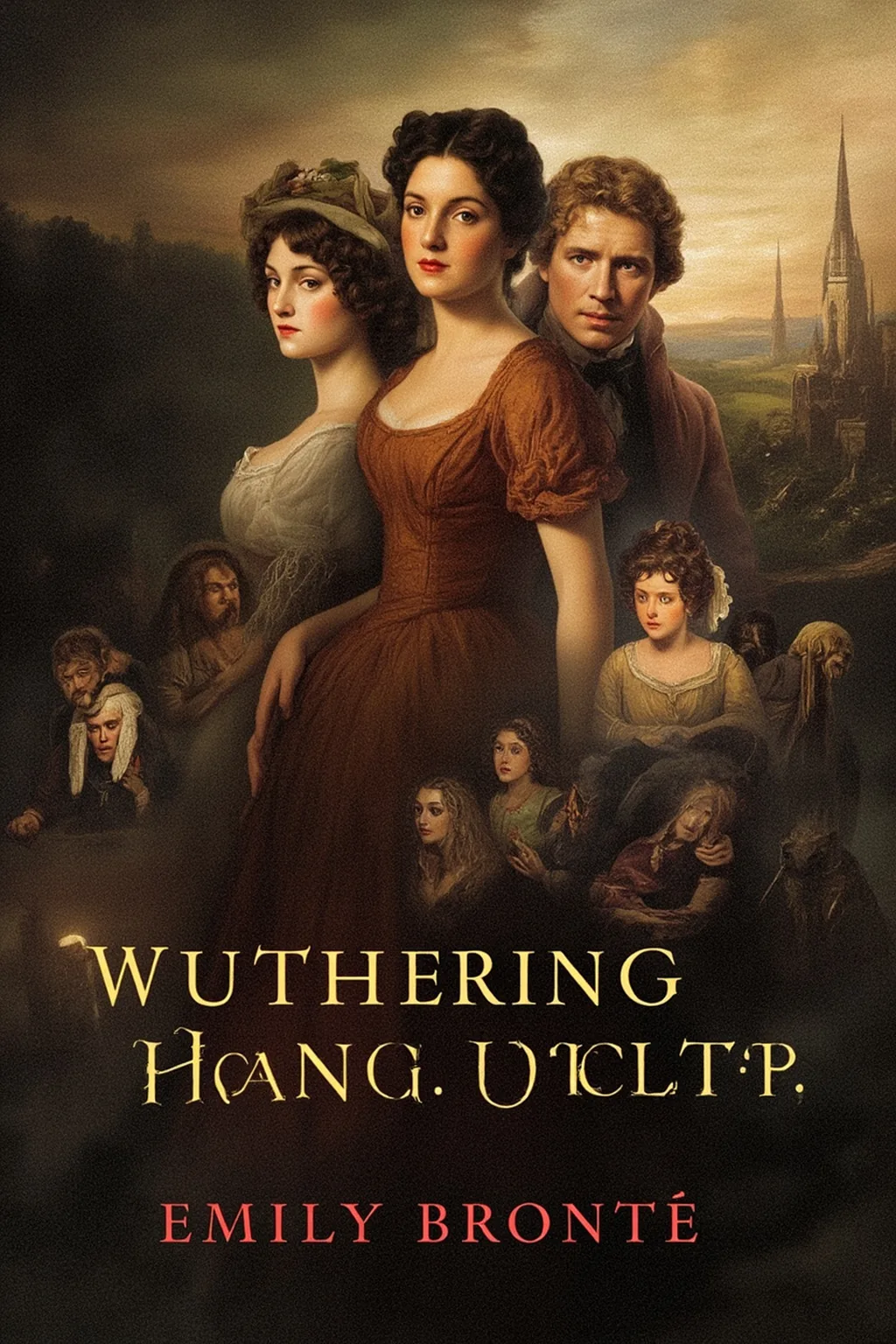
Study Guide: Wuthering Heights by Emily Brontë
Core Book Information
- Title: Wuthering Heights
- Author: Emily Brontë (1818–1848), English novelist and poet, part of the Brontë literary family
- Genre: Gothic fiction, domestic fiction, psychological fiction, romance
- Setting: The isolated Yorkshire moors, spanning the 1770s to 1801
- Narrative Structure: Frame narrative: outer story told by tenant Mr. Lockwood in 1801, inner story narrated by housekeeper Nelly Dean, recounting events from the 1770s onward
- Key Context: Brontë’s only novel, published in 1847 under the pseudonym Ellis Bell, initially criticized for its dark, violent themes but later recognized as a classic of English literature.
Key Characters
- Mr. Lockwood: Frame narrator, a wealthy young man who rents Thrushcross Grange from Heathcliff and learns the history of Wuthering Heights from Nelly Dean.
- Nelly Dean (Ellen Dean): Housekeeper at Thrushcross Grange, grew up at Wuthering Heights, primary narrator of the inner story, witness to most of the novel’s central events.
- Heathcliff: A dark-skinned foundling adopted by Mr. Earnshaw as a child, Catherine Earnshaw’s childhood friend and lifelong obsession, driven by vengeance after Catherine marries Edgar Linton, eventually becomes owner of Wuthering Heights.
- Catherine Earnshaw (first generation): Daughter of Mr. Earnshaw, fiery, wild, and passionate, bonded to Heathcliff from childhood but marries Edgar Linton for social status, dies shortly after giving birth to her daughter.
- Hindley Earnshaw: Mr. Earnshaw’s son, Catherine’s brother, resents Heathcliff as a rival for his father’s affection, abuses Heathcliff after his father’s death, descends into alcoholism and debt, dies leaving his son Hareton penniless.
- Edgar Linton: Gentle, refined owner of Thrushcross Grange, marries Catherine Earnshaw, father of young Catherine (Cathy), dies of illness after his daughter is forcibly married to Linton Heathcliff.
- Isabella Linton: Edgar’s sister, infatuated with Heathcliff, marries him out of naive passion, escapes his abuse to London, raises their son Linton alone, dies there.
- Hareton Earnshaw: Hindley’s son, raised by Heathcliff to be uneducated and rough, initially clashes with young Catherine but eventually befriends and falls in love with her, breaking the cycle of abuse.
- Young Catherine Linton (Cathy): Daughter of Catherine Earnshaw and Edgar Linton, spirited and curious, initially forced to marry Linton Heathcliff, eventually pairs with Hareton Earnshaw.
- Linton Heathcliff: Frail, spoiled son of Heathcliff and Isabella, used by his father as a pawn to trap young Catherine into marriage so Heathcliff can gain control of Thrushcross Grange, dies shortly after the wedding.
- Joseph: Pious, harsh, self-righteous servant at Wuthering Heights, favors the Earnshaw family, despises Heathcliff and the Lintons.
- Zillah: Servant at Wuthering Heights, kind to Lockwood and young Catherine, one of the few compassionate figures at the Heights.
Central Themes
- Revenge: Heathcliff’s entire adult life is driven by a desire for vengeance against Hindley for abusing him and Catherine for marrying Edgar, leading him to ruin the lives of the next generation.
- Class and Social Mobility: Heathcliff’s status as an unknown foundling marks him as an outsider, leading to his abuse by Hindley; his later unexplained wealth lets him turn the tables on the Earnshaws and Lintons, exposing the arbitrary nature of class hierarchies.
- Love and Obsession: The bond between Catherine and Heathcliff is framed as elemental and transcendent (Catherine declares “I am Heathcliff”), but it is also destructive, rooted in violence and rejection, and extends beyond Catherine’s death to haunt Heathcliff for 18 years.
- The Supernatural: Gothic elements including the ghost of Catherine that Lockwood encounters, rumors of Heathcliff’s ghost after his death, and the haunted upper chamber at Wuthering Heights blur the line between the living and the dead, emphasizing the lingering power of the past.
- Nature vs. Civilization: The wild, untamed Yorkshire moors represent the raw, passionate nature of the Earnshaw family, while the refined, sheltered Thrushcross Grange represents the gentle, restrained Linton family; Catherine’s split identity between the two spaces mirrors her internal conflict.
- The Cycle of Abuse: Violence and cruelty are passed down through generations: Hindley abuses Heathcliff, Heathcliff abuses Hareton and Isabella, Catherine mocks Hareton’s illiteracy before their reconciliation breaks the pattern.
- Inheritance and Legacy: The novel is deeply concerned with property, lineage, and the transfer of wealth and status across generations, with Heathcliff’s quest for revenge tied directly to his desire to seize control of both the Earnshaw and Linton estates.
Plot Summary
Frame Narrative (1801)
- Mr. Lockwood, a tenant at Thrushcross Grange, makes his first visit to his landlord Heathcliff at Wuthering Heights during a snowstorm. He is attacked by the Heights’ dogs, forced to stay overnight, and experiences two terrifying nightmares: one about an interminable sermon by Reverend Jabez Branderham, and another about a ghostly child named Catherine Linton who begs to be let in. He discovers Catherine Earnshaw’s old diary and inscribed books in the forbidden upper chamber, and the next morning flees back to the Grange.
- Recovering from a cold, Lockwood asks Nelly Dean to tell him the history of Wuthering Heights and its inhabitants.
First Generation (1771–1784)
- Heathcliff’s Arrival: As a child, Mr. Earnshaw brings home a starving foundling from Liverpool, names him Heathcliff. Hindley, Mr. Earnshaw’s son, resents the boy as a rival for his father’s affection, while Catherine Earnshaw and Heathcliff become inseparable.
- Mr. Earnshaw’s Death: After Mr. Earnshaw dies, Hindley inherits Wuthering Heights, demotes Heathcliff to servant status, and subjects him to brutal abuse. Catherine grows close to the Linton family at Thrushcross Grange, learning etiquette and refinement, but remains bonded to Heathcliff.
- Catherine’s Choice: Edgar Linton proposes to Catherine. She confesses to Nelly that she loves Heathcliff but would degrade herself by marrying him, so she accepts Edgar. Heathcliff overhears this, leaves Wuthering Heights for three years.
- Heathcliff’s Return: He returns as a wealthy, refined gentleman, resumes his bond with Catherine, who is now married to Edgar. Isabella Linton falls in love with Heathcliff, who marries her only to get revenge on Edgar and Catherine. Catherine has a violent, emotional reunion with Heathcliff, collapses into a brain fever, and gives birth to a premature daughter, young Catherine (Cathy), before dying.
- Aftermath: Heathcliff is devastated, desecrates Catherine’s grave, and vows to haunt her. Isabella escapes Heathcliff’s abuse to London, where she raises their son Linton alone before dying. Hindley dies in debt, and Heathcliff uses the mortgages Hindley took out to fund his gambling to claim full ownership of Wuthering Heights, raising Hindley’s son Hareton as an uneducated servant to get revenge on Hindley.
Second Generation (1784–1802)
- Young Cathy’s Childhood: Raised by Edgar at Thrushcross Grange, sheltered from the history of Wuthering Heights, curious about the moors and the mysterious inhabitants of the Heights.
- Linton’s Arrival: After Isabella’s death, Edgar brings his frail nephew Linton to Thrushcross Grange. Heathcliff demands Linton be returned to Wuthering Heights, where he raises him to be sickly and dependent.
- Forced Marriage: Heathcliff schemes to have young Cathy marry Linton so he can gain control of Thrushcross Grange. He imprisons Cathy and Nelly at Wuthering Heights, forces Cathy to marry Linton, and keeps her there even after Edgar falls ill.
- Edgar’s Death: Edgar dies shortly after Cathy is allowed to return to the Grange, leaving her destitute as Linton inherits his property. Linton dies soon after the wedding, leaving Cathy at Heathcliff’s mercy.
- Reconciliation: At Wuthering Heights, Cathy initially clashes with Hareton, mocking his illiteracy, but soon recognizes his good nature and the abuse he has suffered at Heathcliff’s hands. They reconcile, become friends, and fall in love, breaking the cycle of violence that defined the first generation.
- Heathcliff’s Death: Heathcliff, who has been haunted by visions of Catherine for 18 years, gradually loses his will for revenge, stops eating, and dies. He is buried next to Catherine Earnshaw in the moorside graveyard, as he requested.
Frame Narrative Conclusion
- Lockwood returns to the area a year later, finds that Hareton and Cathy plan to marry on New Year’s Day and move to Thrushcross Grange, leaving Wuthering Heights to Joseph and a servant. He visits the graves of Catherine Earnshaw, Edgar Linton, and Heathcliff, and reflects on the peace of the moors, wondering how anyone could imagine the sleepers there are not at rest.
Key Symbols and Motifs
- The Yorkshire Moors: Represent wild, untamed emotion, freedom, and the elemental bond between Catherine and Heathcliff, contrasting with the confinement and artificiality of the two households.
- Wuthering Heights vs. Thrushcross Grange: The Heights, rough, chaotic, and passionate, reflects the Earnshaw family’s values; the Grange, refined, sheltered, and gentle, reflects the Linton family’s values. The two spaces mirror the split between Catherine’s two identities.
- Catherine’s Ghost: Represents Heathcliff’s obsessive, undying love, the lingering power of past trauma, and the Gothic theme of the supernatural invading the present.
- Books and Education: Represent social refinement, opportunity, and the possibility of breaking cycles of abuse: Hareton is denied education by Heathcliff, but later learns to read with Cathy’s help, symbolizing his ability to escape his father’s legacy.
- Weather and Storms: Mirror the emotional states of the characters: the snowstorm that traps Lockwood at the Heights mirrors the hostility of the household, the storm the night Catherine dies mirrors her inner turmoil, the rain at Heathcliff’s death mirrors the release of his long-held anguish.
Critical Discussion Questions
- How does Brontë’s use of a frame narrative shape the reader’s perception of the events of the novel? What is the effect of having the story filtered through Nelly Dean’s perspective?
- What does Catherine mean when she declares “I am Heathcliff”? How does this statement define her relationship with Heathcliff, and how does it conflict with her choice to marry Edgar Linton?
- How does class and social status shape the lives of the novel’s main characters? Consider Heathcliff’s treatment as a foundling, Hindley’s abuse of him, and Heathcliff’s later use of his wealth to exact revenge.
- What role does the supernatural play in the novel? How do the ghostly appearances of Catherine Earnshaw affect the other characters, particularly Heathcliff?
- Does the marriage of Hareton and Cathy represent a true break from the cycle of abuse and revenge that defines the first generation of characters? Why or why not?
- How do the settings of Wuthering Heights and Thrushcross Grange reflect the values and conflicts of the families who live there? What does the novel suggest about the relationship between environment and identity?
- Is Heathcliff a villain, a victim, or both? How does Brontë complicate the reader’s sympathy for him across the course of the novel? This study guide covers the core narrative, characters, themes, and symbolic elements of Wuthering Heights to support thorough analysis and discussion of Emily Brontë’s seminal Gothic novel.