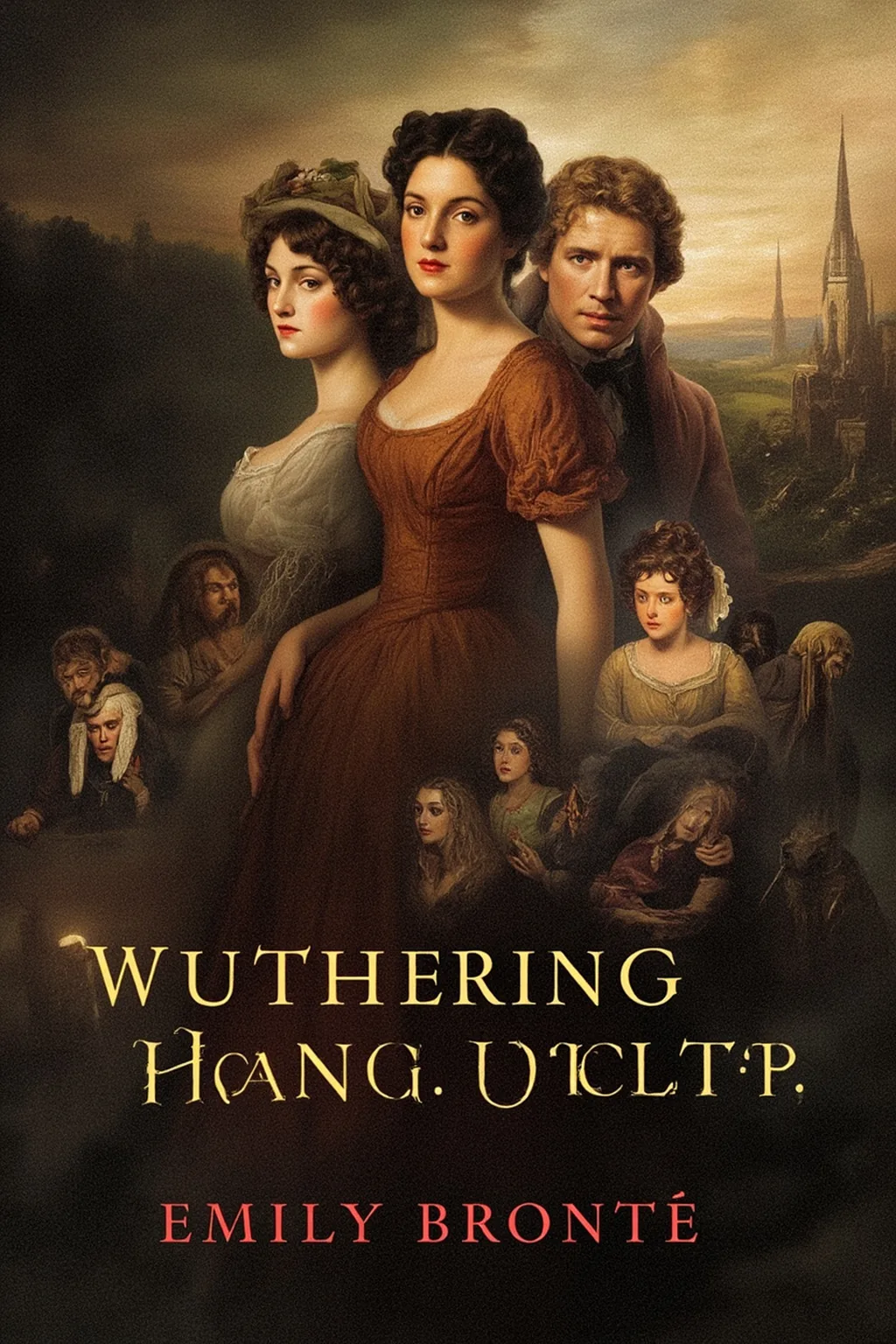
Wuthering Heights cover
Revenge

Wuthering Heights

On the desolate Yorkshire moors, the savage, all-consuming love between the foundling Heathcliff and Catherine Earnshaw ignites a cycle of vengeance that engulfs two generations, destroying the old houses and their heirs before finding a fragile, redemptive peace.

Brontë, Emily 1996 111 min

Mr. Lockwood, a new tenant at Thrushcross Grange, uncovers the turbulent history of his neighbors, the Earnshaws and Lintons, through the housekeeper Nelly Dean. Her tale recounts the orphan Heathcliff’s degradation and his fierce bond with Catherine Earnshaw, a connection severed by her marriage to Edgar Linton. Heathcliff returns years later to exact a brutal revenge on the families, corrupting the next generation and claiming the estates. Only after his death does the cycle of violence break, allowing the young Catherine and Hareton to heal the wounds of the past.

While Catherine lies delirious, convinced she is dying and longing for the freedom of the moors, Nelly discovers that Isabella has eloped with Heathcliff. Edgar, absorbed in caring for his wife, reacts to the news of his sister’s departure by coldly severing his ties with her.

While Miss Isabella moped about the park in silent tears and Edgar shut himself away among his unopened books, Catherine fasted pertinaciously in her locked room, convinced that her absence was choking Edgar and that only pride kept him from her feet. Nelly Dean, convinced the Grange possessed but one sensible soul, went about her duties with a grim detachment, waiting for the stalemate to break. On the third day, Catherine unbarred her door, demanding water and gruel because she believed she was dying. Nelly, skeptical of the dramatics but mindful of her duty, brought tea and toast instead. Catherine ate and drank eagerly but soon sank back, groaning that she would die since no one cared. She interrogated Nelly about Edgar’s indifference, horrified to learn he was merely reading while she suffered. She declared that if she were certain it would kill him, she would kill herself directly, and vowed to either starve or leave the country to escape him.

Nelly’s attempt to reason with her only inflamed Catherine’s feverish bewilderment. She began to rave, tearing her pillow with her teeth and then, in a strange, childish diversion, pulling out the feathers and sorting them on the sheet. She murmured about turkeys, wild ducks, and lapwings, associating the feathers with memories of the moors and Heathcliff. She recalled how Heathcliff had set a trap over a lapwing’s nest, and she had made him promise never to shoot one. When Nelly tried to stop her, Catherine’s delirium shifted; she saw Nelly as an old woman gathering elf-bolts and claimed to see a black press against the wall with a face in it. Nelly covered the mirror, but Catherine shrieked that the face remained behind the glass. Terrified, she clutched Nelly, insisting the room was haunted, until the horror gradually gave way to shame and the realization that she had been looking at her own reflection.

The original text of this work is in the public domain. This page focuses on a guided summary article, reading notes, selected quotes, and visual learning materials for educational purposes.

Project Gutenberg