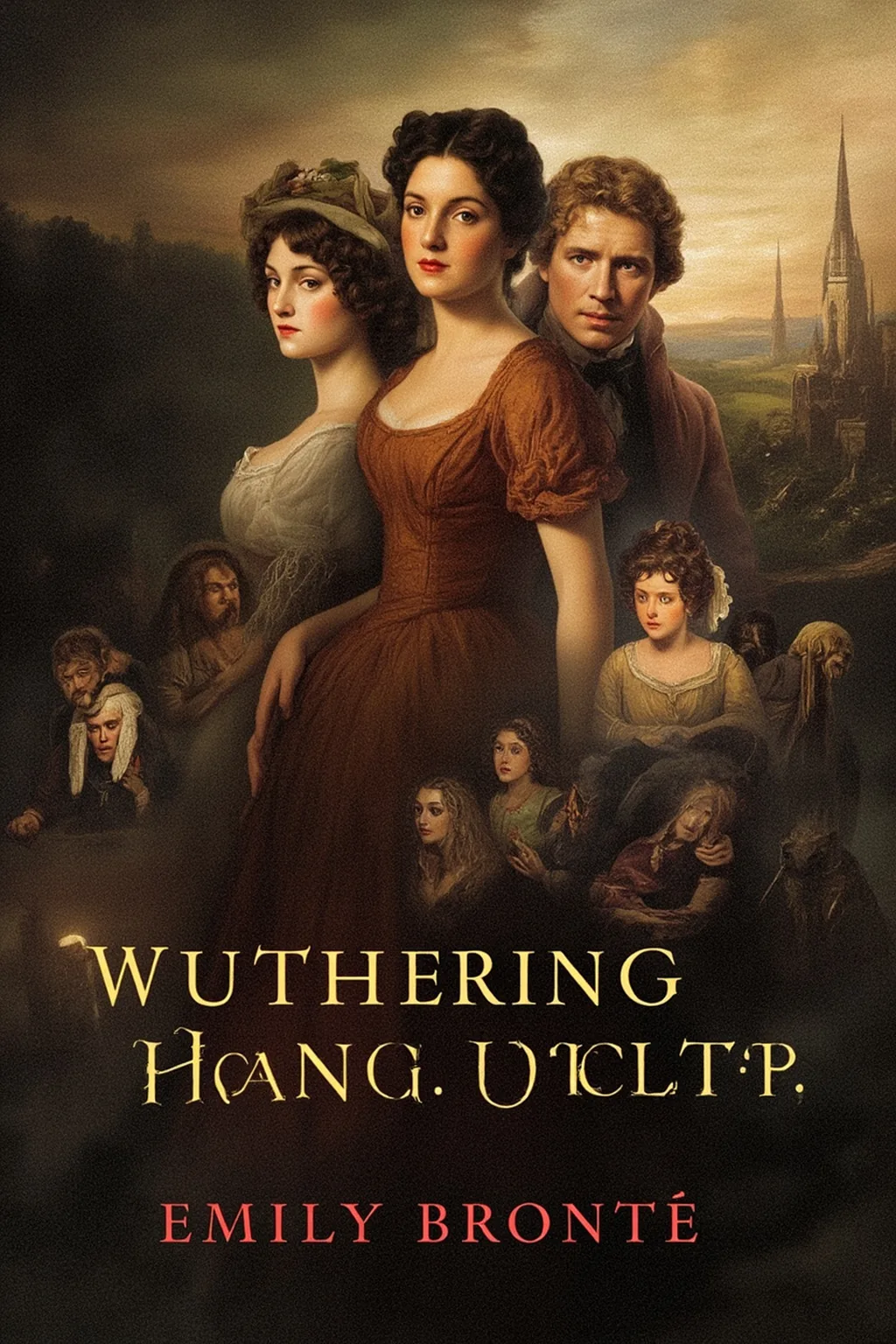
Mr. Lockwood, a new tenant at Thrushcross Grange, uncovers the turbulent history of his neighbors, the Earnshaws and Lintons, through the housekeeper Nelly Dean. Her tale recounts the orphan Heathcliff’s degradation and his fierce bond with Catherine Earnshaw, a connection severed by her marriage to Edgar Linton. Heathcliff returns years later to exact a brutal revenge on the families, corrupting the next generation and claiming the estates. Only after his death does the cycle of violence break, allowing the young Catherine and Hareton to heal the wounds of the past.
Edgar, realizing his vague warnings were insufficient, drew her close and explained the true depth of his hatred. He described Heathcliff as a diabolical man who delighted in ruining those he hated. He sketched Heathcliff’s abuse of Isabella and how he had acquired Wuthering Heights, emphasizing that he would detest Cathy on Edgar’s account. Cathy, whose experience of evil was limited, was shocked by the capacity for such enduring, calculated malice. Edgar deemed it unnecessary to say more, kissing her and asking her to avoid the Heights.
Cathy obeyed outwardly, but that night, Nelly found her weeping by her bed. Cathy claimed she cried for Linton, who would be disappointed by her absence. She begged to write a note explaining why she could not come and to send the books she had promised. Nelly refused sternly, forbidding any correspondence. Cathy, defiant, tried to write anyway, but Nelly extinguished her candle and left her in a peevish mood. Despite this, the letter was finished and sent by a milk-fetcher.
Weeks passed, and Cathy’s behavior grew secretive. She often hid books when Nelly approached and lingered in the kitchen expecting arrivals. Nelly discovered a small drawer in the library which Cathy guarded zealously. Suspecting treachery, Nelly searched the drawer one night and found a mass of letters from Linton. The correspondence ranged from embarrassed notes to copious, foolish love-letters, filled with ardour and flatness. Nelly tied them up and relocked the empty drawer.
Later, Nelly caught Cathy passing a letter to a milk-boy and intercepted it. The note was simple and eloquent, but Nelly was determined to end the intrigue. When Cathy later opened the drawer to find her treasures gone, she let out a cry of despair. She dragged Nelly upstairs, begging for the letters and promising never to write again. Nelly scolded her severely, threatening to show the “trash” to Edgar. Cathy, frantic, implored Nelly to burn them instead. Nelly agreed, on condition that Cathy promise never to send or receive a letter, book, or token again.
Cathy swore she would stop, but as Nelly began to burn the letters, the pain was too great. Cathy tried to snatch a few from the flames, burning her fingers in the process. Nelly took the remaining bundle to show Edgar, forcing Cathy to sacrifice the rest. The letters were consumed by the fire, and Cathy retired to her room with a sense of intense injury. The next morning, Nelly sent a formal note to Linton demanding he cease writing, and thereafter, the little boy came with empty pockets.
The original text of this work is in the public domain. This page focuses on a guided summary article, reading notes, selected quotes, and visual learning materials for educational purposes.