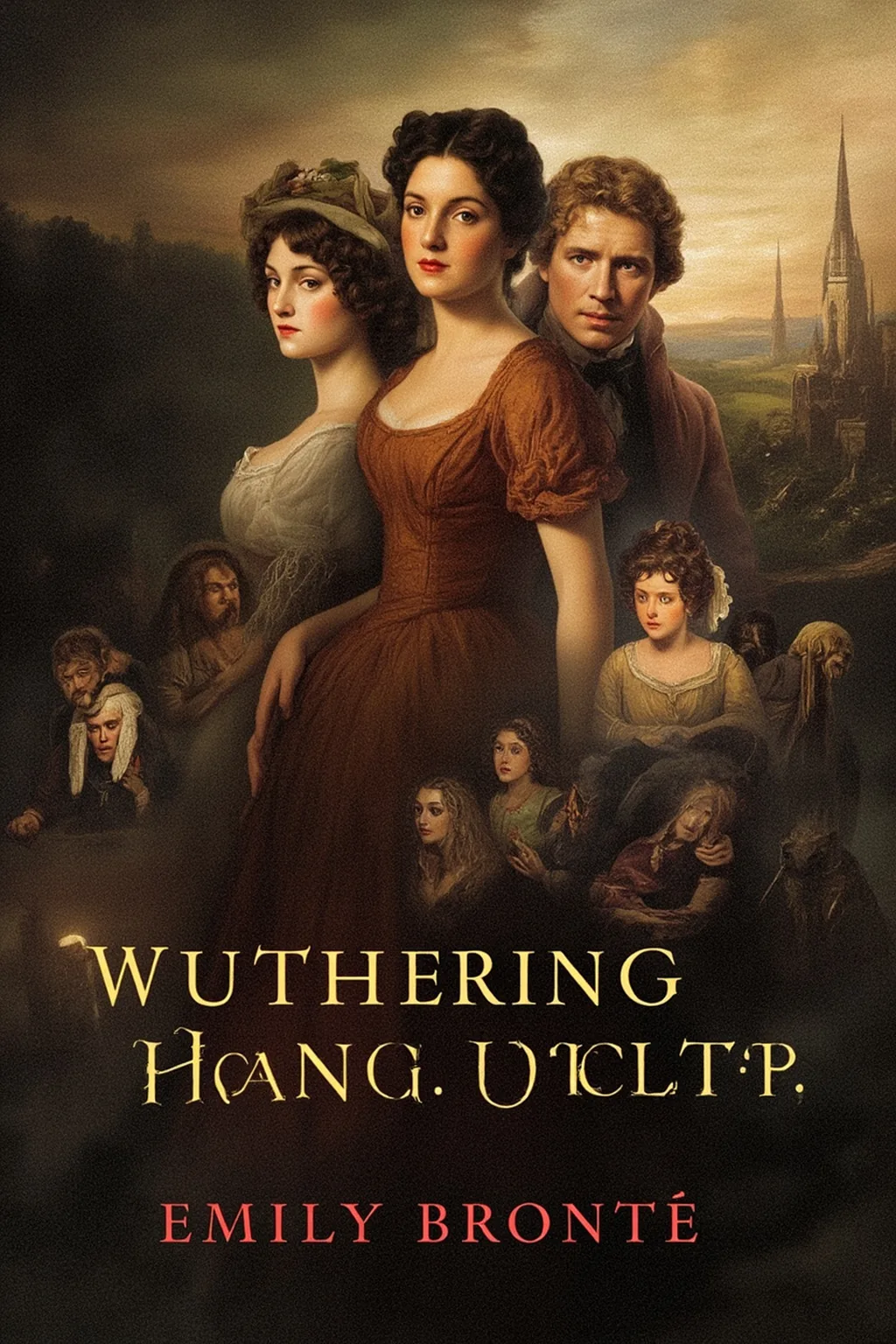
Mr. Lockwood, a new tenant at Thrushcross Grange, uncovers the turbulent history of his neighbors, the Earnshaws and Lintons, through the housekeeper Nelly Dean. Her tale recounts the orphan Heathcliff’s degradation and his fierce bond with Catherine Earnshaw, a connection severed by her marriage to Edgar Linton. Heathcliff returns years later to exact a brutal revenge on the families, corrupting the next generation and claiming the estates. Only after his death does the cycle of violence break, allowing the young Catherine and Hareton to heal the wounds of the past.
On the morning following a Monday of idleness, Catherine found Hareton resting in the garden and persuaded him to uproot Joseph’s beloved currant and gooseberry bushes to make space for a flower bed. Nelly Dean, horrified by the devastation wrought on the old servant’s prized plants, warned them that Joseph’s fury would be explosive. Despite the impending trouble, the cousins bonded over their plan to import flowers from the Grange, disregarding the consequences. When they gathered for breakfast, the atmosphere grew tense. Catherine playfully stuck primroses in Hareton’s porridge, teasing him until he nearly laughed. Heathcliff, occupied with his own dark thoughts, noticed the commotion and demanded silence, irritated by Catherine’s defiant stare.
The peace was shattered when Joseph discovered the ruined garden. He burst into the room, quivering with rage, and declared he could no longer serve a household where a “witch” had turned Hareton against him and destroyed his labor. Heathcliff demanded an explanation, and Hareton admitted to pulling up the bushes, though Catherine claimed full responsibility, asserting her right to beautify the land Heathcliff had stolen from her family. She taunted Heathcliff about her new alliance with Hareton, warning that her cousin would defend her. Enraged, Heathcliff ordered Hareton to throw her out and threatened to kill her. When Hareton hesitated, Catherine goaded the master further, insisting that striking her would only bring Hareton’s wrath upon him.
Heathcliff seized Catherine by the hair, seemingly ready to murder her, while Hareton attempted to intervene and begged for her safety. Just as the violence seemed imminent, Heathcliff’s rage abruptly vanished. He stared intently into Catherine’s face, his grip relaxing from her hair to her arm. Covering his eyes, he composed himself and spoke with a strange, assumed calmness. He banished Catherine to the kitchen and warned Hareton that associating with her would reduce him to beggary, then ordered everyone to leave him alone.
In Heathcliff’s absence, the young couple deepened their bond. Hareton sternly forbade Catherine from speaking ill of Heathcliff, comparing such insults to speaking ill of her own father. Catherine, recognizing the depth of Hareton’s ingrained loyalty, ceased her complaints. They spent the afternoon studying together by the fire, and Nelly observed with relief as Hareton’s appearance and intelligence improved under Catherine’s guidance, creating a scene of domestic happiness.
The original text of this work is in the public domain. This page focuses on a guided summary article, reading notes, selected quotes, and visual learning materials for educational purposes.