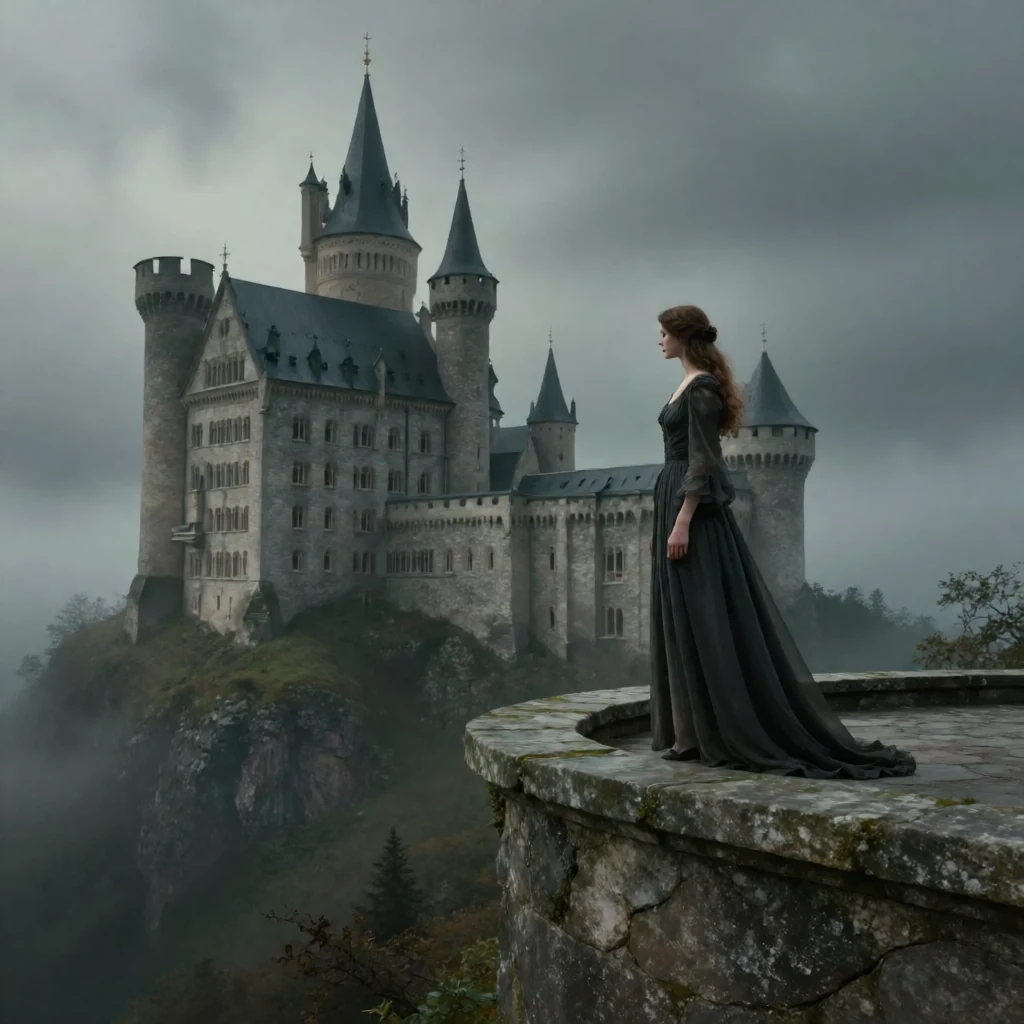
Hearing a Lamentation in the Great Hall
As they stepped along the passage, leading into the great hall, a sound of lamentation was heard, which seemed to come from the hall itself, and they stopped in new alarm to listen, when Emily presently distinguished the voice of Annette, whom she found crossing the hall, with another female servant, and so terrified by the report, which the other maids had spread, that, believing she could be safe only where her lady was, she was going for refuge to her apartment.
Annette Remains with Emily for the Night
Emily’s endeavours to laugh, or to argue her out of these terrors, were equally vain, and, in compassion to her distress, she consented that she should remain in her room during the night.
CHAPITRE V.
This chapter continues the Gothic narrative with Emily at the château, featuring supernatural hauntings, social visits, and evening concerts. The opening presents Thomson’s poem on solitude, followed by the spread of servant superstitions about a haunted north side of the castle.
Thomson’s Solitude Poem
The chapter opens with Thomson’s poem “Hail, mildly-pleasing Solitude,” praising the quiet hours and particularly evening’s gentle decline as ideal for contemplation and musing.
Emily’s Terror and the Haunted Château Rumor
Emily’s attempts to silence Annette about her previous terror fail, and reports of unaccountable noises in the north side of the château spread among the servants. When this reaches the Count, he initially dismisses it with ridicule, but soon forbids anyone from repeating such tales on pain of punishment, concerned about the disorder it creates in his household.
Servants’ Evening Ghost Stories in the Hall
After the arrival of visitors distracts the Count, the servants continue their evening gatherings in the hall, where they share ghost stories until they fear to look around the room. Any sound—an echo of a closing door along the passage—sends them into alarm, and they refuse to go singly to any part of the castle.
Annette’s Udolpho and Laurentini Tales
At these gatherings, Annette distinguishes herself by recounting wonders from the Castle of Udolpho and the strange disappearance of Signora Laurentini, making a considerable impression on her listeners. Ludovico, now serving the Count, prudently restrains her whenever her loquacity threatens to extend to subjects involving Montoni.
Baron and Chevalier de Saint Foix’s Visit
The Baron de Saint Foix, an old friend of the Count, arrives with his son, the Chevalier de Saint Foix. The younger Chevalier, having seen and admired Lady Blanche the previous year in Paris, comes to press his suit. Though the Count secretly approves of the match due to their long friendship and equal circumstances, he rejects the proposal for the present, considering Blanche too young to choose for life, yet without extinguishing the Chevalier’s future hopes.
Château Gaiety and Evening Concerts
The visitors transform the château into a scene of gaiety and splendor. The woods pavilion becomes a supper-room on fine evenings, followed by concerts where the Count and Countess perform skillfully alongside the Chevaliers Henri and Saint Foix, with Lady Blanche and Emily contributing their fine voices and taste. Several servants play horns and other instruments placed among the distant woods, answering the pavilion’s harmony with sweet response.
Emily’s Melancholy and Wooded Promontory Walks
Despite the festive atmosphere, Emily’s spirits remain oppressed by melancholy that no amusement can dispel. She finds particular solace walking in the woods that crown a promontory overlooking the sea, where the luxuriant shade and partial views of the Mediterranean—with its winding shores and passing sails—unite tranquil beauty with grandeur. The paths remain deliberately rude and overgrown, as their tasteful owner permits little cultivation of the venerable trees.
Rustic Seat and Ruined Mediterranean Watch-Tower
In a sequestered part of the woods, a rustic seat fashioned from a decayed oak’s trunk sits beneath the deep shade of flourishing branches. From this spot, the eye passes over forest canopy to the Mediterranean, and through an opening to the left, a ruined watch-tower stands on a rocky point near the sea, rising from among tufted foliage.
The original text of this work is in the public domain. This page focuses on a guided summary article, reading notes, selected quotes, and visual learning materials for educational purposes.