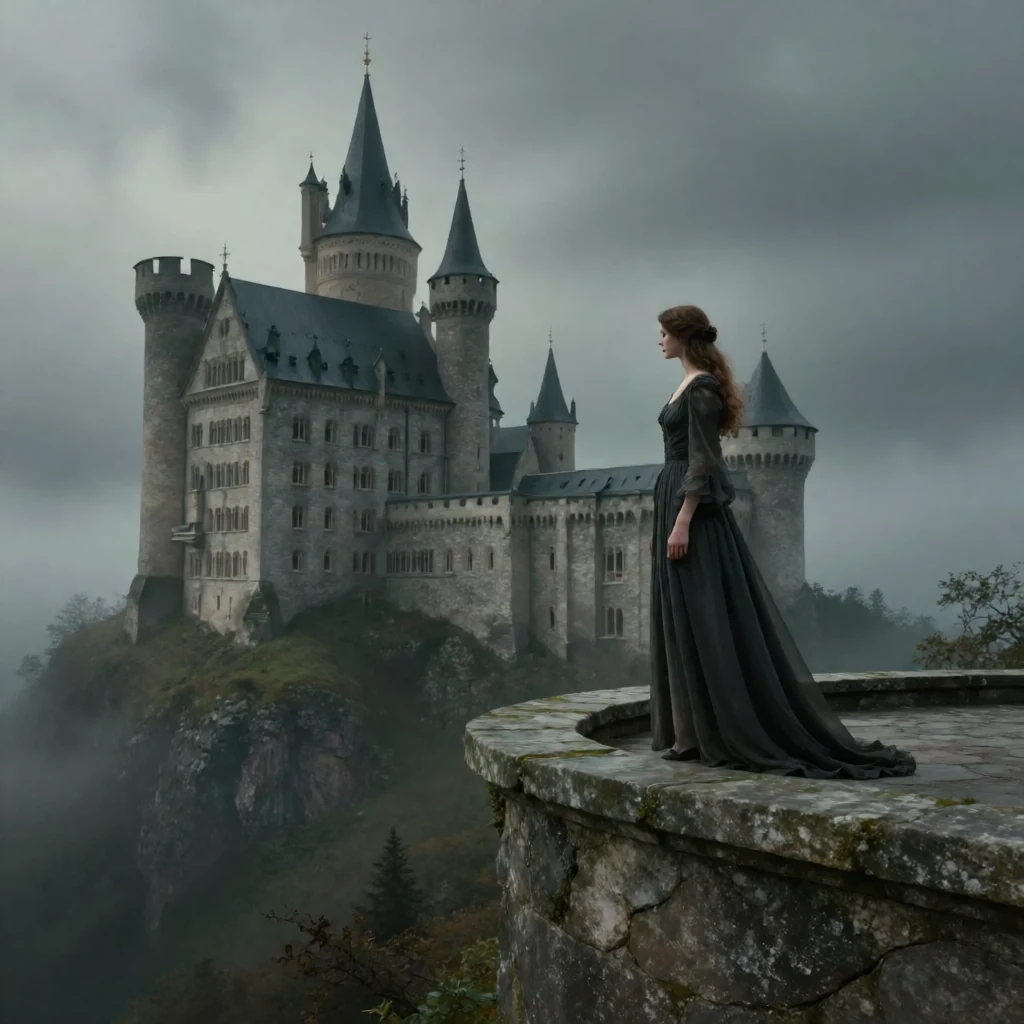
M. Barreaux’s Visit
Soon after arriving at La Vallée, Emily is surprised by a visit from her father’s old friend M. Barreaux, who has come to welcome her back to her family’s former home. The pair spend a pleasant hour reminiscing about their shared past and catching each other up on the events that have occurred in their lives since they last met, before M. Barreaux departs as evening falls.
To Autumn
The morning after M. Barreaux’s visit, Emily walks through the garden her father planted, and the familiar autumnal landscapes and memories of spending the season with him stir deep emotion. As she wanders pensively through the woods, she composes a poem addressed to Autumn, meditating on the season’s melancholy beauty, the way it evokes memories of loved ones lost, and the way shifting autumnal light and changing landscapes mirror the mixed, unpredictable nature of human joy and grief.
Theresa’s Revelation
One of Emily’s first priorities after arriving at La Vallée is to find her father’s former servant Theresa, who was dismissed from the family home by M. Quesnel with no financial support. Emily locates Theresa living comfortably in a small cottage nearby, and the two speak fondly of Emily’s father. Theresa mentions Valancourt, whom Emily had previously asked her not to name, and reveals that Valancourt visited the La Vallée château frequently after Emily left, spending hours in the rooms and garden she had occupied, speaking and sighing about her. Emily grows visibly distressed and asks Theresa to stop speaking of Valancourt.
Valancourt’s Generosity
Theresa reveals that the kind friend who provided her with the cottage and financial support after her dismissal is Valancourt, who had extracted a promise from her to keep his generosity a secret. She explains that Valancourt paid for the cottage’s furnishings and her ongoing upkeep out of his own funds, arranging for his brother’s steward to pay her quarterly; however, her most recent payment has not arrived, leading her to fear something may have happened to him. Emily is deeply moved by the news, weeps, and resolves to send a messenger to enquire about Valancourt’s welfare, while keeping her own involvement in the matter secret from Theresa.
CHAPITRE XII.
Chapter XII follows Count De Villefort, Lady Blanche, and their party as they depart the Château de St. Foix and begin a perilous journey through the Pyrenees toward La Vallée and Château-le-Blanc. Over the course of the chapter, the travellers encounter a pastoral dance of mountaineers, traverse the sublime and frightening landscapes of twilight, discover a memorial cross marking a nobleman’s murder, take shelter in a cave during a storm, and ultimately lose their path when a distant watch-dog’s bark leads them astray into a treacherous mountain chasm.
Departure from St. Foix
Departure from St. Foix. Count De Villefort and Lady Blanche conclude a pleasant fortnight at the Château de St. Foix, where a marriage between M. St. Foix and Blanche has been arranged to take place upon their arrival at Château-le-Blanc. Because the road to La Vallée crosses some of the wildest terrain in the Pyrenees—never before traveled by a carriage-wheel—the Count hires mules for his family and engages two armed guides whose extensive knowledge of the passes, peaks, forests, and torrents is described in detail. Leaving early in the morning, the Count intends to overnight at a modest mountain inn frequented chiefly by Spanish muleteers, the only inn-like lodging on the route.
The Mountaineers’ Dance
The Mountaineers’ Dance. After a day of admiration and fatigue, the travelers at sunset enter a wooded valley surrounded by abrupt heights and hear merry music from a little green recess among the rocks. The Count halts to observe a group of French and Spanish peasants from a neighboring hamlet dancing to a lute and tambourine, the women playing castanets, until the brisk French melody softens into a slow movement for two female peasants performing a Spanish Pavan. The Count reflects on the contrast between this simple, natural happiness and the artificial gaiety of Parisian society, sighing that natural graces and innocent pleasures flourish in solitude while drooping amidst polished society. The lengthening shadows finally remind the party to press on toward the inn.
The original text of this work is in the public domain. This page focuses on a guided summary article, reading notes, selected quotes, and visual learning materials for educational purposes.