To the Winds
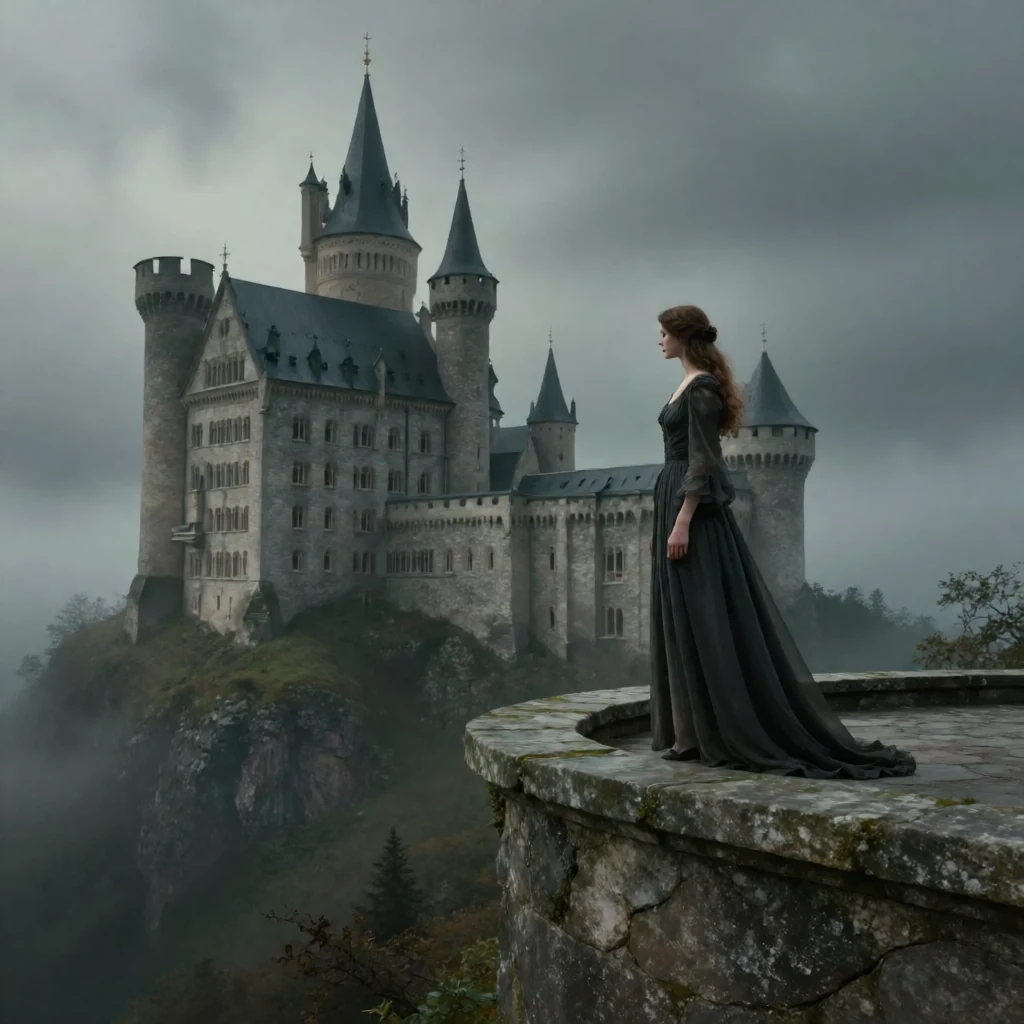
As Emily walks back to the château, the wind rises high and sweeps over the sea and woods with an awesome sound. Resting on a cliff near the château as twilight fades, she gazes upon the waters and composes a poetic address to the winds. The verses describe the mysterious, unseen powers of the wind—sometimes gentle with midnight voices and soothing notes like spirits mourning, yet capable of terrible storms that bring destruction and the cries of drowning men. She asks the winds for only the elemental beauty of nature’s conflict and the melancholic beauty of tears shed by listening Fancy, rather than the devastation of ships and desperate cries.
CHAPITRE XVI.
Chapter XVI opens with a Macbeth epigraph on unnatural deeds breeding unnatural troubles, then shifts to the convent where Emily arrives to find Sister Agnes, the dying nun, and uncovers her true identity as the missing Lady Laurentini of Udolpho. Through Agnes’s delirium and revelations, Emily learns she is linked to the Marchioness de Villeroi, while Agnes/Laurentini convulses at the mention of past horrors and confesses long-held guilt over murder.
Macbeth Epigraph on Unnatural Troubles
The chapter opens with a four-line epigraph drawn from Shakespeare’s Macbeth: “Unnatural deeds / Do breed unnatural troubles: infected minds / To their deaf pillows will discharge their secrets. / More needs she the divine, than the physician.” The quotation foreshadows the chapter’s themes of concealed guilt, confession, and the inability of medicine alone to heal a conscience burdened by past crimes.
Emily Visits Dying Agnes at the Convent
On the following evening, the view of the convent towers amid shadowy woods reminds Emily of the dying nun Agnes. She and Lady Blanche extend their walk to the monastery, where a carriage that has just arrived stands at the gate and an unusual stillness pervades the court. A nun in the great hall tells Emily that Sister Agnes is still sensible but is not expected to survive the night. The boarders in the parlour greet Emily warmly and share small happenings since her departure, before the abbess enters with an unusually solemn manner and dejected countenance.
Abbess’s Exhortation on Mortality and Conscience
The abbess tells Emily that their house is truly one of mourning because Agnes is dying, and exhorts her to read the scene as a great and awful lesson. She urges Emily to prepare for the change that awaits all, to secure the peace of conscience in youth because the good deeds of later years are vain if early life has been evil. She reports that Agnes’s latter days have been exemplary and that her sufferings may make her peace hereafter, having left her with her confessor and a gentleman just arrived from Paris whom Agnes has long wished to see. She further notes that Agnes has sometimes named Emily and proposes a visit to the chamber after the present visitors leave, framing such painful scenes as salutary to the soul.
Emily Recalls Her Father’s Final Days
Emily grows grave and thoughtful as the conversation recalls the dying moments of her beloved father. During the silence, minute circumstances of his last hours return to her: his emotion on finding himself near Château-le-Blanc, his request to be interred in a particular spot in the monastery church, and his solemn charge to destroy certain papers without examining them. She also recollects the mysterious and horrible words in those manuscripts that her eye had involuntarily glanced upon, and though painful curiosity about their full import still revives, she takes consolation in having strictly obeyed her father’s command.
Monsieur Bonnac’s Private Meeting with the Abbess
The general reverie is broken by the entrance of a stranger, Monsieur Bonnac, who has just quit Sister Agnes’s chamber. His countenance shows more of horror than of grief, and he draws the abbess to a distant part of the room, conversing with her in evident caution and earnest interest, while she listens with equal attention. After he concludes, he bows silently and quits, and the abbess soon after proposes going to Agnes’s chamber, with Emily consenting and Lady Blanche remaining below with the boarders. At the door they meet the confessor, whom Emily recognises as the priest who attended her dying father; he passes on without noticing her.
The original text of this work is in the public domain. This page focuses on a guided summary article, reading notes, selected quotes, and visual learning materials for educational purposes.