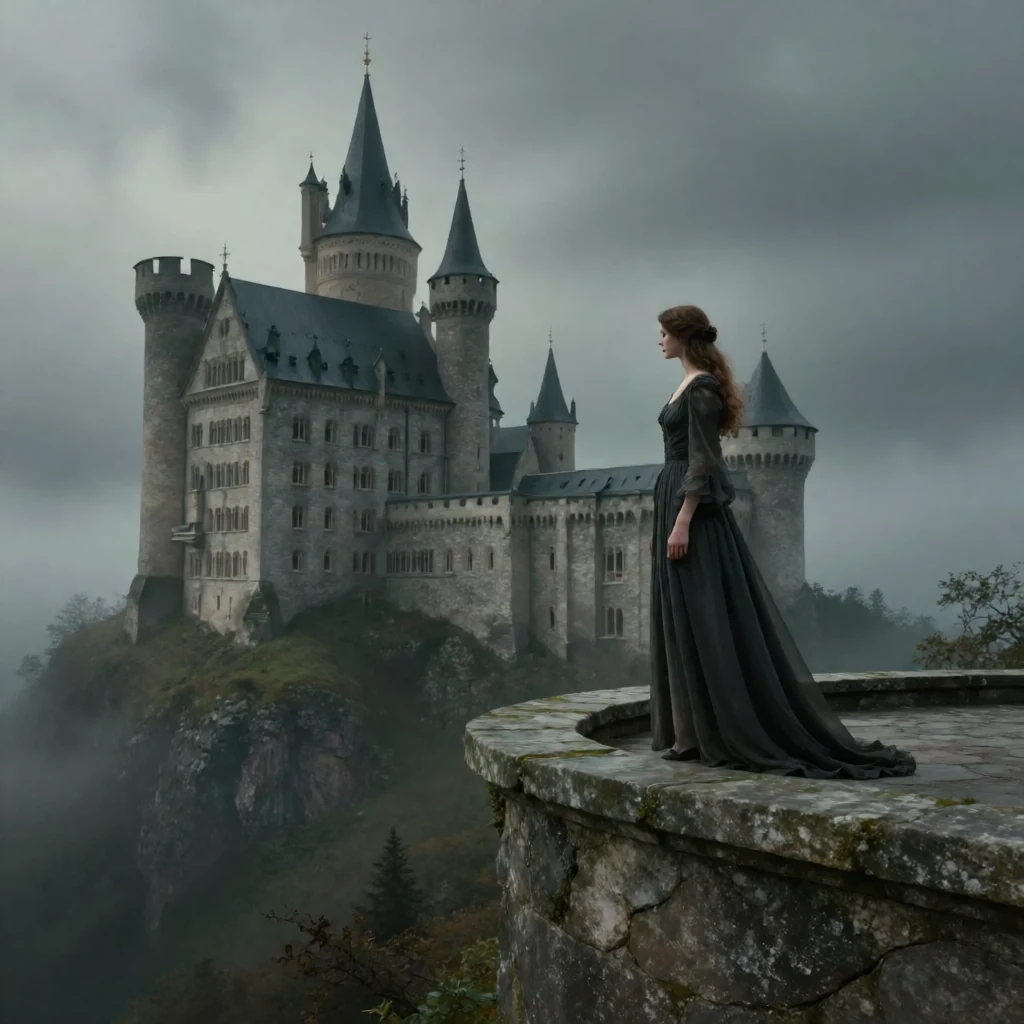
Arrival at Pisa
Approaching Pisa, the vale opens into a plain of vineyards, corn, olives, and mulberry groves, and they reach the gates late at night to find the streets lively with footsteps, music, and groups of people — a scene that briefly reminds Emily of Venice, though here there is no moonlit sea or Palladian palaces. After failing to procure passage to France from Pisa, Du Pont learns that his regiment has already embarked for France, freeing him to accompany Emily without qualm.
From Pisa to Leghorn
Rising early, the travellers decline to linger over Pisa’s antiquities or hanging tower and press on through the cooler hours, moving through a country rich in wine, corn, and oil. The Apennines, softened from grandeur into sylvan and pastoral beauty, give way to a view of Leghorn’s spacious bay, filled with vessels and crowned with hills. Emily is struck by the cosmopolitan bustle of the port, which resembles a Venetian masquerade but lacks its gaiety or music.
Finding Passage to France
At the Leghorn quay, Du Pont finds several French vessels and engages passage on one sailing in a few days for Marseilles, whence another vessel will carry them across the Gulf of Lyons toward Narbonne and the Languedoc convent. Emily is overjoyed that her passage home is secured and that she may soon see her native country and Valancourt; Du Pont, scrupulously avoiding any mention of his own passion, amuses her with walks along the shore and the quays, where she mingles in the arrivals and partings of others.
The Mariner
Having watched a sorrowful farewell on the quay, Emily composes a set of stanzas titled “The Mariner.” The poem describes a spring departure watched by anxious friends, a young sailor hiding his tears as he vows eternal constancy to his bride, the diminishing shore seen from the stern, the deepening twilight over the crimsoned west, and the sailor climbing the mast for one last glimpse of the coast where all his wishes rest.
CHAPITRE IX.
This chapter presents a narrative poem tracing the tragic final voyage of sailor Henry, his love for his partner Ellen, the fatal shipwreck that claims his life, and the enduring local legend of the lovers’ spirits guarding their shared resting place.
Visions of Home
While standing on the ship’s deck, the sailor gazes at the dark line of the distant horizon, and his imagination carries him to his small home. He envisions his weeping lover Ellen, hears her sighs, soothes her griefs, and speaks of the joyful reunion they will share in the future.
The Approaching Gale
As evening gives way to night, gentle breezes shift to harsh winter gales, and both the sea and shore are swallowed by a single vast shade of darkness. The sailor turns his aching eyes away from the shore, his spirit wavers, a cold tear falls, and he walks sorrowfully back to the ship’s deck.
Tempest at Midnight
The midnight storm intensifies: sails are furled, the lead is cast to search for safe shore but finds none, and the ship is hurled wildly across the waves. The sailor cries out in despair for Ellen, lamenting they will never meet again. Lightning flashes over the vast, foamy deep, rolling thunder rumbles onward, and fierce winds sweep over the billows, shaking the nerves of even the bravest sailors.
The Shipwreck
All the sailors’ desperate toiling to save the ship is for nothing: straining cordage bursts, the mast is shattered, and the sounds of terror groan through the air before fading as the ship is driven onto rocks. Fierce waters crash over the wreck, and the helpless crew sinks into the roaring sea.
The Final Farewell
As the wreck founders, Henry’s faint final words tremble in the howling wind: “Farewell, my love!—we ne’er shall meet again!” marking his last goodbye to Ellen before his death.
The Lovers’ Dirge
Following their deaths, a local legend takes hold: on calm, silent summer evenings, a melancholy voice is heard singing its lonely sweetness over Henry’s grave, and at midnight, soft airy strains play around the grove where Ellen is buried. The dirge is not feared by village maidens, as the spirits of the two lovers are believed to guard the sacred shade of their resting place.
The original text of this work is in the public domain. This page focuses on a guided summary article, reading notes, selected quotes, and visual learning materials for educational purposes.