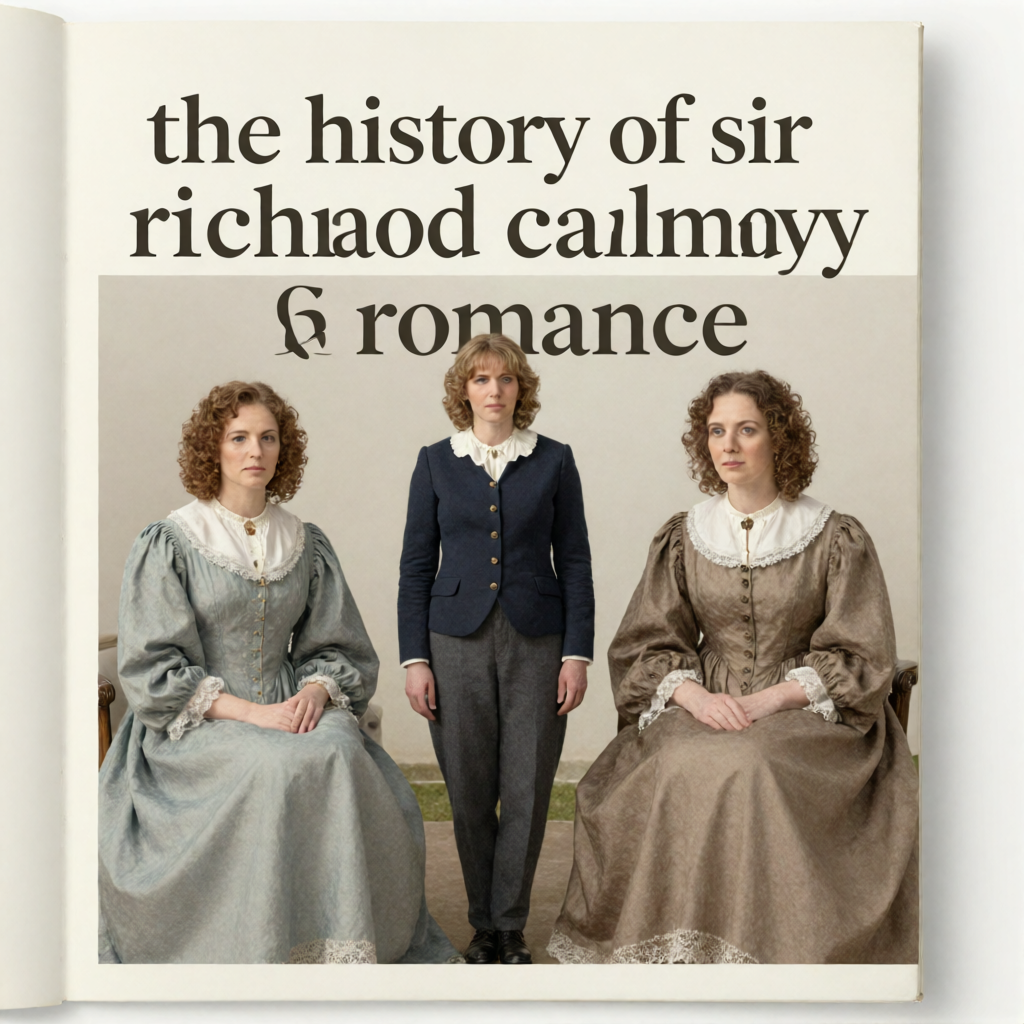
What matters historically in this segment is the rupture of the marriage project, the public exposure of the family’s calculations, and Richard’s decisive turn from self-restrained pride to open defiance of the moral order, together with Katherine’s spiritual consolidation, which sets her on the path of solitary stewardship of the estate through the coming scandal.
第一章 – CHAPTER V
Set in the early spring of 1871, four years after the events of the preceding volume, the narrative opens at the Villa Vallorbes overlooking the Bay of Naples. Helen de Vallorbes, a woman of some eight-and-twenty years, contemplates the panorama of the city—its domes, palms, palaces, and quays—while reflecting on the recent privations of the siege of Paris. During that crisis, she had turned religious, frequenting the Sacré Coeur and undergoing formal readmission to the Catholic Church, though her piety was of a pragmatic, self-protective kind, as she herself half-acknowledged. She had also conducted an affair with the French poet and novelist M. Paul Destournelle, joining him at a wayside station outside Paris and traveling south under the pretext of requiring protection. At Pisa, after a scene of increasing intensity, she dismissed him, finding his transports, suspicions, and literary vanity intolerable. She had subsequently endured a miserable winter in the gray Etruscan city of Perugia, where her self-sufficiency atrophied and her thoughts turned, with mingled resentment and longing, to Richard Calmady of Brockhurst, her English cousin by marriage. The memory of Brockhurst, she reflected, lay upon her heart as the word “Calais” lay upon Queen Mary’s.
Recalling that Richard had taken her husband’s Naples villa on a two-year lease—restoring and refurnishing it at great expense—she resolved to travel south, dispatching a telegram and receiving, after four days, a courteous letter from his steward, Bates, offering her the full run of the house in Richard’s absence. She arrived to find everything prepared and breakfasted in luxuriant spirits beneath the pavilion, gazing out at the purple cone of Vesuvius. The volcano stirred in her pagan, anarchic instincts; she felt, as she afterwards admitted, the insolence of a great lady and the dangerously primitive instincts of a great courtesan. Turning, she saw Richard Calmady himself leaning on the terrace balustrade, and a vital sensation ran through her. “Mercy of heaven! Is it conceivable that now, at this time of day, I am capable of the egregious folly of losing my head?”
The original text of this work is in the public domain. This page focuses on a guided summary article, reading notes, selected quotes, and visual learning materials for educational purposes.