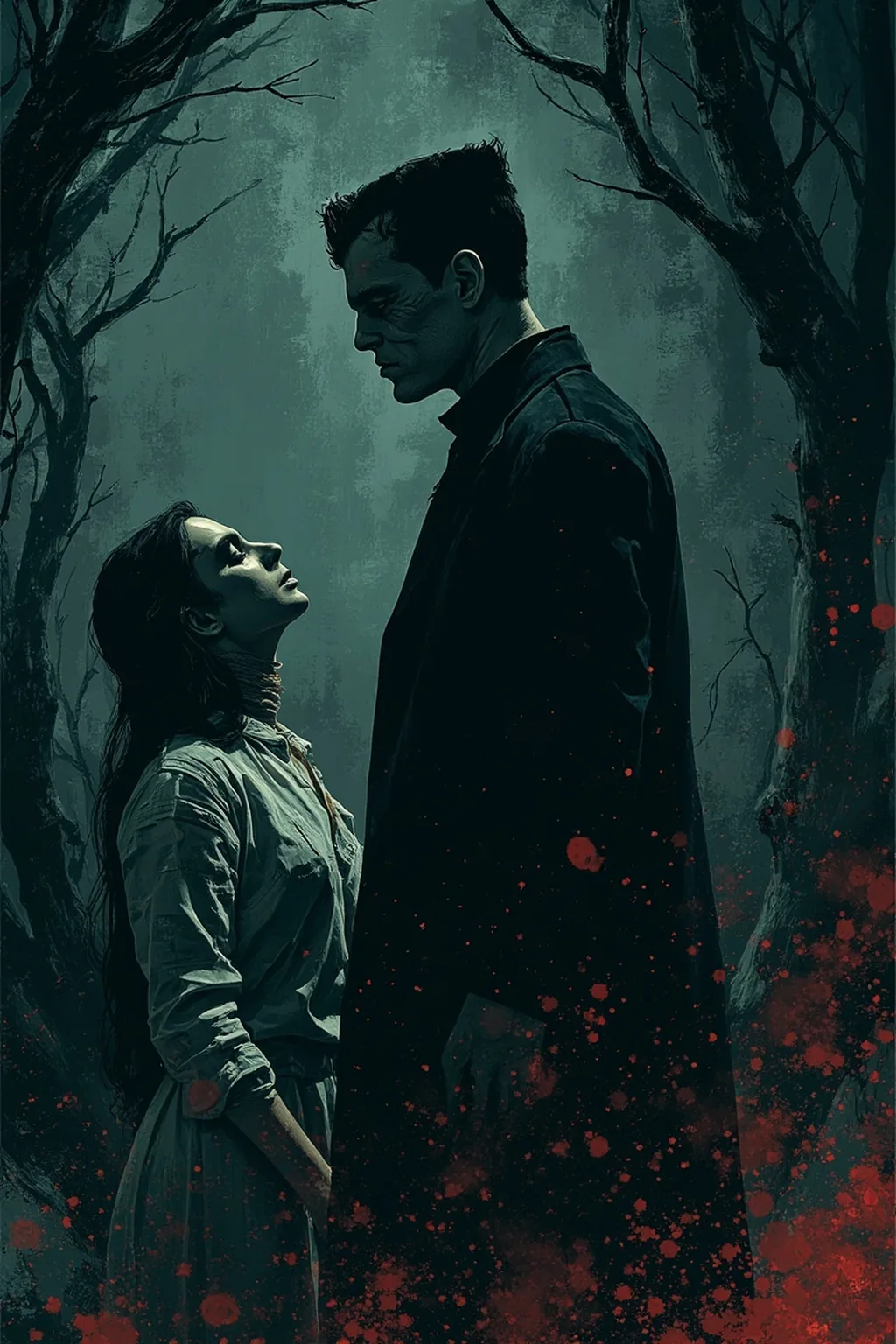
Study Guide: Frankenstein; or, The Modern Prometheus
Book Overview
Mary Wollstonecraft Shelley’s Frankenstein (1818) stands as one of the foundational works of science fiction and Gothic literature. Written when Shelley was just twenty years old, the novel explores the perilous consequences of unchecked scientific ambition and the necessity of empathy through its intricate epistolary structure. The narrative unfolds through a series of letters from explorer Robert Walton to his sister Margaret Saville, within which the scientist Victor Frankenstein recounts his tragic tale.
The novel’s subtitle, “The Modern Prometheus,” immediately establishes its thematic ambitions. Like the Greek Titan who stole fire from the gods and gave it to humanity, Victor Frankenstein attempts to grant the spark of life—but his creation brings destruction rather than enlightenment. This parallel invites readers to consider the responsibilities that accompany the gift of knowledge and the dangers of playing god without moral restraint.
Major Themes
The Dangers of Unchecked Ambition
Victor Frankenstein’s intellectual ambitions consume him utterly. From his earliest studies of alchemy at thirteen to his breakthrough discoveries at Ingolstadt, Victor pursues knowledge with a passion that blinds him to all other considerations. He abandons his family, neglects his health, and ultimately creates life only to flee from it in horror. The novel serves as a cautionary tale about the dangers of allowing scientific curiosity to override human relationships and moral judgment. Victor’s famous declaration—that he will pioneer a new way and explore unknown powers—ultimately leads to the destruction of everyone he loves.
Creation, Responsibility, and Abandonment
The relationship between Victor and his Creature forms the moral core of the novel. Victor brings his creation to life but immediately abandons him, refusing to accept responsibility for the being he has made. This abandonment initiates a cascade of tragedy that spans the remainder of the novel. The Creature, initially innocent and eager for connection, becomes monstrous precisely because he is denied the love and acceptance every creature craves. The novel poses fundamental questions about the responsibilities creators bear toward their creations and the consequences of parental abandonment.
The Nature of Humanity and Monstrosity
Shelley compellingly inverts conventional notions of monster and victim. The Creature possesses sensitivity, intelligence, and a deep capacity for love and suffering. He learns language, develops aesthetic appreciation, and yearns for companionship. Victor, by contrast, exhibits cruelty, cowardice, and moral weakness. This inversion challenges readers to question what truly constitutes humanity—whether it lies in appearance, in actions, or in the capacity for empathy and moral reflection.
The Power and Limitations of Knowledge
Throughout the novel, various texts shape the fates of key characters. Victor’s early obsession with Cornelius Agrippa, Paracelsus, and Albertus Magnus sets him on his destructive path. The Creature learns language and history through observation and through the books he discovers—a leather portmanteau containing Paradise Lost, Plutarch’s Lives, and The Sorrows of Werther. These works inform his understanding of humanity and his place within it. Yet knowledge alone cannot grant the Creature acceptance, and Victor’s pursuit of scientific discovery ultimately brings him only misery. The novel suggests that knowledge without wisdom, and ambition without empathy, leads to catastrophe.
Isolation and Its Consequences
Nearly every major character in Frankenstein suffers from isolation in some form. Victor’s two years of secret work in his Ingolstadt laboratory cut him off from family and friends. The Creature’s physical appearance condemns him to permanent exclusion from human society. Elizabeth, though surrounded by family, bears a melancholy rooted in her uncertain place within it. Even Walton, surrounded by his crew, writes of his desperate need for “a true friend.” The novel suggests that human beings require connection to thrive and that isolation, whether chosen or imposed, leads to suffering and moral degradation.
Character Analysis
Victor Frankenstein
Victor Frankenstein represents the dangers of the Romantic individual who prioritizes personal glory over communal responsibility. Born into a distinguished Genevan family, he enjoys a happy childhood surrounded by loving parents, his cousin Elizabeth, and his friend Henry Clerval. Yet his violent passions and insatiable curiosity drive him toward studies that ultimately consume him. Victor’s fatal flaw lies not in his intellectual ambitions alone but in his inability to accept the consequences of his actions. He creates life and immediately abandons his creation, then spends the remainder of the novel fleeing from the problems he has authored rather than confronting them directly.
Victor’s character development traces a tragic arc from scientific enthusiasm to broken survivor. His initial passion for discovery gives way to horror and guilt, then to a consuming desire for vengeance against his own creation. Throughout, Victor proves remarkably self-deceptive, telling himself that he cannot confide in others because they would not believe him, when in truth he simply cannot bear to confront his own responsibility for the tragedies that unfold.
The Creature
The Creature emerges as perhaps the most sympathetic and intellectually compelling character in the novel. Created from the assembled parts of the dead, he enters the world as an innocent, confused by the overwhelming sensory input that assaults him. His early experiences—discovering fire, learning to find food, observing the De Lacey family from his hovel—trace a path from animal-like survival toward genuine human consciousness. The Creature possesses a poetic sensibility, a capacity for self-reflection, and an acute awareness of his own suffering.
What makes the Creature truly tragic is not his appearance but his experiences of rejection. He saves a girl from drowning only to be shot for his trouble. He approaches the blind old De Lacey with hope, only to be attacked violently by the rest of the family upon their return. Each encounter with humanity reinforces his sense of himself as a monster, until hatred and revenge become the only emotions available to him. Yet even in his moments of greatest violence, the Creature articulates his pain with eloquence and power. His final monologue, mourning his loneliness and declaring his intention to destroy himself, represents the novel’s most moving passage.
Robert Walton
Walton serves as both frame narrator and thematic parallel to Victor. Like Victor, Walton is an ambitious man consumed by a dangerous dream of discovery. He yearns for “a true friend” who might temper his reckless ardor, and he recognizes in Victor a man whose brilliance has been destroyed by unchecked ambition. Walton’s letters to his sister establish the novel’s epistolary structure and provide crucial distance from Victor’s account, allowing readers to see both Victor and his creation through an outsider’s perspective.
Supporting Characters
Elizabeth Lavenza represents pure goodness and unwavering love throughout the novel. Adopted into the Frankenstein household as a child, she embodies the domestic affections that Victor repeatedly endangers through his scientific pursuits. Her murder on Victor’s wedding night represents the Creature’s most devastating act of revenge.
Henry Clerval serves as Victor’s moral counterweight, a man of imagination and generous spirit who loves literature and poetry rather than science. His murder in Ireland, following Victor’s destruction of the female creature, demonstrates the Creature’s willingness to destroy innocents to wound his creator.
The Epistolary Structure
Shelley’s use of the epistolary form serves multiple purposes. Walton’s letters frame Victor’s narrative within an outer story of Arctic exploration, creating dramatic irony as readers recognize parallels between Walton’s ambitions and those that destroyed Victor. The structure also provides narrative distance, as Victor’s account reaches readers through Walton’s transcription, adding layers of interpretation and potential unreliability.
The nested narratives create a palindrome of sorts: Walton seeks glory through Arctic exploration, encounters a mysterious traveler, and learns his tragic story. Victor seeks glory through scientific discovery, creates a being, and suffers his tragic fate. The Creature seeks acceptance and connection, is rejected by humanity, and destroys himself in isolation. Each narrative echoes and transforms the others.
Key Plot Points
Letters 1–3: Walton’s Arctic Voyage
The novel opens with Robert Walton’s letters to his sister Margaret Saville, establishing his ambitious expedition toward the North Pole. Walton reveals his romantic nature, his need for companionship, and his desire to achieve glory through discovery. These letters establish the epistolary frame and introduce key themes of ambition, isolation, and the quest for knowledge.
Letters 4–7: The Rescue and Victor’s Arrival
Walton’s ship becomes trapped in Arctic ice, and the crew witnesses a mysterious figure traveling north on a sledge. They rescue a dying European stranger—Victor Frankenstein—who agrees to share his story. Walton’s growing admiration for Victor establishes the parallel between their ambitions and sets the stage for Victor’s tragic narrative.
Chapters 1–5: Victor’s Early Life
Victor recounts his happy childhood in Geneva, his close relationship with Elizabeth and Henry Clerval, and the events that shaped his intellectual development. His discovery of Cornelius Agrippa’s works at thirteen ignites his passion for natural philosophy, though he temporarily turns to mathematics after witnessing a thunderstorm that destroys an oak tree. The deaths of his mother Caroline and the near-death of Elizabeth at scarlet fever precede his departure for the University of Ingolstadt.
Chapters 6–8: Scientific Awakening and Creation
At Ingolstadt, Victor immerses himself in modern chemistry, inspired by Professor Waldman’s lectures. His discovery of the principle of life enables him to animate lifeless matter, and he begins creating a giant human being. After two years of obsessive work, Victor completes his creation on a dark November night, only to flee in horror from what he has made. His subsequent nervous fever lasts months, and his recovery requires the devoted care of Henry Clerval, who has arrived to study at the university.
Chapters 9–12: The Murder of William and Trial of Justine
Victor’s return to Geneva follows the murder of his young brother William, whom the Creature has killed in Plainpalais. Victor witnesses the Creature at the murder site but maintains silence about the true murderer. The family servant Justine Moritz is accused of the crime, and despite eloquent pleas from Elizabeth and Victor’s agonizing knowledge of the truth, Justine is convicted and executed. The chapter explores themes of circumstantial evidence, religious coercion, and the devastating consequences of Victor’s silence.
Chapters 13–16: The Creature’s Education
The longest section of the novel traces the Creature’s emergence into consciousness and his gradual discovery of human society. From his initial sensory confusion, he progresses to understanding fire, language, and human customs. He observes the De Lacey family from his hovel, learns their language, and develops deep affection for them. He reads Paradise Lost, Plutarch’s Lives, and The Sorrows of Werther, gaining literary and historical knowledge that shapes his understanding of himself and humanity. Victor’s laboratory journal, discovered among the Creature’s belongings, reveals his origins in horrifying detail.
The Creature’s attempt to introduce himself to the De Lacey family ends in violent rejection. Destroyed by grief and rage, he burns the cottage and begins his journey to Geneva, where he kills William and frames Justine. His demand for a female companion—made during a confrontation with Victor on the glacier—drives the remainder of the novel.
Chapters 17–20: Victor’s Promise and Its Failure
Victor reluctantly agrees to create a female companion for the Creature, extracting promises of permanent exile from human society. His journey to England and Scotland, undertaken with Clerval, leads to the Orkney Islands, where Victor begins his work. Struck by the possibility that the female creature might refuse to comply with the compact or might propagate a race of devils, Victor destroys his half-finished creation. The Creature’s furious confrontation leads to the murder of Clerval in Ireland and Victor’s wrongful arrest.
Chapters 21–24: Final Tragedy and Resolution
Victor recovers from his imprisonment and marries Elizabeth, despite the Creature’s threat to appear “on his wedding night.” The Creature keeps his promise, murdering Elizabeth on that very night. Victor’s father dies of grief, and Victor, briefly imprisoned as mad, emerges with a single purpose: to destroy his creation. The pursuit extends across Europe, through Tartary and Russia, to the Arctic, where Victor is rescued by Walton’s ship.
On his deathbed, Victor warns Walton against ambition, then dies. The Creature appears to mourn over Victor’s body, delivers a final monologue expressing his remorse and loneliness, and departs on an ice raft, intending to destroy himself in the Arctic wilderness. His self-immolation represents both judgment and release—the end of the monster and the end of the suffering that created him.
Important Quotations
“You will easily perceive, that I am not the sophistry of madness, nor even the conclusions of prejudice and ignorance. I am conscious of the extent of my reasoning, and when I gaze on each hateful and idolized trifle—on each flower that grows in my heart’s blood—on each bright trifle that forms the happiness of my life—I can still command my soul to act as it wills.”
The Creature’s eloquent defense of his own consciousness and emotional capacity challenges readers to recognize his fundamental humanity despite his monstrous appearance.
“Life, although it may only be an accumulation of anguish, compels me to live.”
Victor speaks these words as he pursues the Creature across the frozen wastes, acknowledging that even a life of suffering retains some power over those who possess it.
“Be calm. I entreat you to hear me before you give vent to your bitter grief and repartee. You accuse me of murder; and yet you desire, with your own hand, to tear the body of your own antecedent.”
The Creature’s plea to Victor on the glacier demonstrates his capacity for reason and moral reflection, even in the midst of his creator’s hatred.
“I will not be the scourge of humanity, but I will be its benefactor. I will go to the vast wilds of the new world, and I will lead a life there, if possible, as innocent as your own. I will be useful, and I will create for myself a companionships with my kind.”
The Creature’s initial terms for exile demonstrate his genuine desire for peaceful existence, undercutting simple readings of him as inherently evil.
Discussion Questions
-
How does the epistolary structure affect your reading of the novel? Consider how Victor’s narrative reaches us through Walton’s transcription. Does this distance make Victor more or less reliable?
-
The Creature learns about humanity largely through literature—Paradise Lost, Plutarch’s Lives, and The Sorrows of Werther. How do these texts shape his expectations and understanding of himself? What does the novel suggest about the limitations of book learning?
-
Victor repeatedly refuses to confide in others about the Creature, even when doing so might have prevented later tragedies. What does this pattern suggest about guilt and self-deception?
-
Compare the Creature’s demand for a companion with Victor’s refusal to create one. Who makes the more compelling argument? Does Victor’s destruction of the female creature represent moral courage or moral cowardice?
-
The novel is often read as a cautionary tale about scientific ambition. But what might Shelley be suggesting about the responsibilities of creators more broadly—parents, teachers, leaders?
-
How does the novel challenge conventional notions of monstrosity? In what ways is the Creature more human than his creator?
-
Consider the role of women in the novel. Caroline, Elizabeth, Justine, and Safie all play significant roles, yet all are defined primarily in relation to men. What critique might Shelley be making about gender and domesticity?
-
The novel ends with the Creature’s self-immolation on an ice raft. Is this ending redemptive, tragic, or something else? What resolution, if any, does Shelley offer?
Literary and Historical Context
Shelley wrote Frankenstein during the famous “Year Without a Summer,” 1816, when the eruption of Mount Tambora caused global climate disruption and bizarre weather patterns across Europe. She was nineteen years old, traveling with her lover Percy Bysshe Shelley and their circle of literary friends—including Lord Byron—at Villa Diodati in Switzerland. Byron suggested a competition to see who could write the best ghost story, and Mary’s contribution became Frankenstein.
The novel draws on Gothic traditions established by writers like Ann Radcliffe and Matthew Lewis, while anticipating themes that would later characterize science fiction. Shelley’s own background—daughter of political philosopher William Godwin and feminist Mary Wollstonecraft—infused the novel with questions about parental responsibility, social justice, and the proper limits of knowledge.
The novel also reflects contemporary scientific debates. Galvanism, the study of electricity’s effects on muscle tissue, suggested the possibility of reanimating dead tissue. Luigi Galvani’s experiments with frog legs demonstrated that electrical stimulation could cause muscular contraction, inspiring speculation about whether similar principles might apply to human beings. Victor’s breakthrough, described as the discovery of “the cause of generation and life,” reflects these scientific preoccupations while warning of their dangers.
Key Symbols
Fire and Light: The Creature discovers fire and learns to create and maintain it. This knowledge represents both his awakening consciousness and the dangerous power he possesses. The fire that the Creature creates ultimately figures in the burning of the De Lacey cottage, linking illumination with destruction.
The Arctic: The frozen wastes where Victor is rescued and where the novel ends function as a symbol of isolation and moral coldness. The landscape mirrors the emotional desolation of both creator and creation.
*Paradise Lost: The Creature reads Milton’s epic as literal history, identifying with both Adam’s loneliness and Satan’s rebellion against an unjust creator. This text crystallizes the Creature’s understanding of his own situation.
The Miniature Portrait: Elizabeth’s portrait, stolen from William and used to frame Justine, represents the domestic affections that the Creature destroys without understanding their significance.
Suggested Further Reading
Critical interpretations of Frankenstein span literary, philosophical, and scientific perspectives. Key topics for further exploration include Romantic-era debates about galvanism and vitalism, Gothic conventions of the sublime and the monstrous, feminist readings that attend to the novel’s treatment of motherhood and creation, and eco-critical approaches that examine the novel’s relationship to natural environments.
Studying Shelley’s sources—particularly the scientific writings of the era and the Romantic literary tradition she inherited—deepens understanding of the novel’s ambitions and anxieties. Comparing the 1818 text with the 1831 revision reveals significant changes, particularly in Victor’s characterization and the novel’s treatment of the Creature’s motivations.
A Final Study Note
As you complete your study of this foundational work, consider that Mary Shelley’s masterpiece remains disturbingly relevant, its warnings about the responsibilities of creation, the dangers of abandoned ambition, and the devastating consequences of denying our common humanity as urgent today as they were in the aftermath of the Industrial Revolution when Shelley first imagined the terrible possibilities contained within the modern Promethean fire.