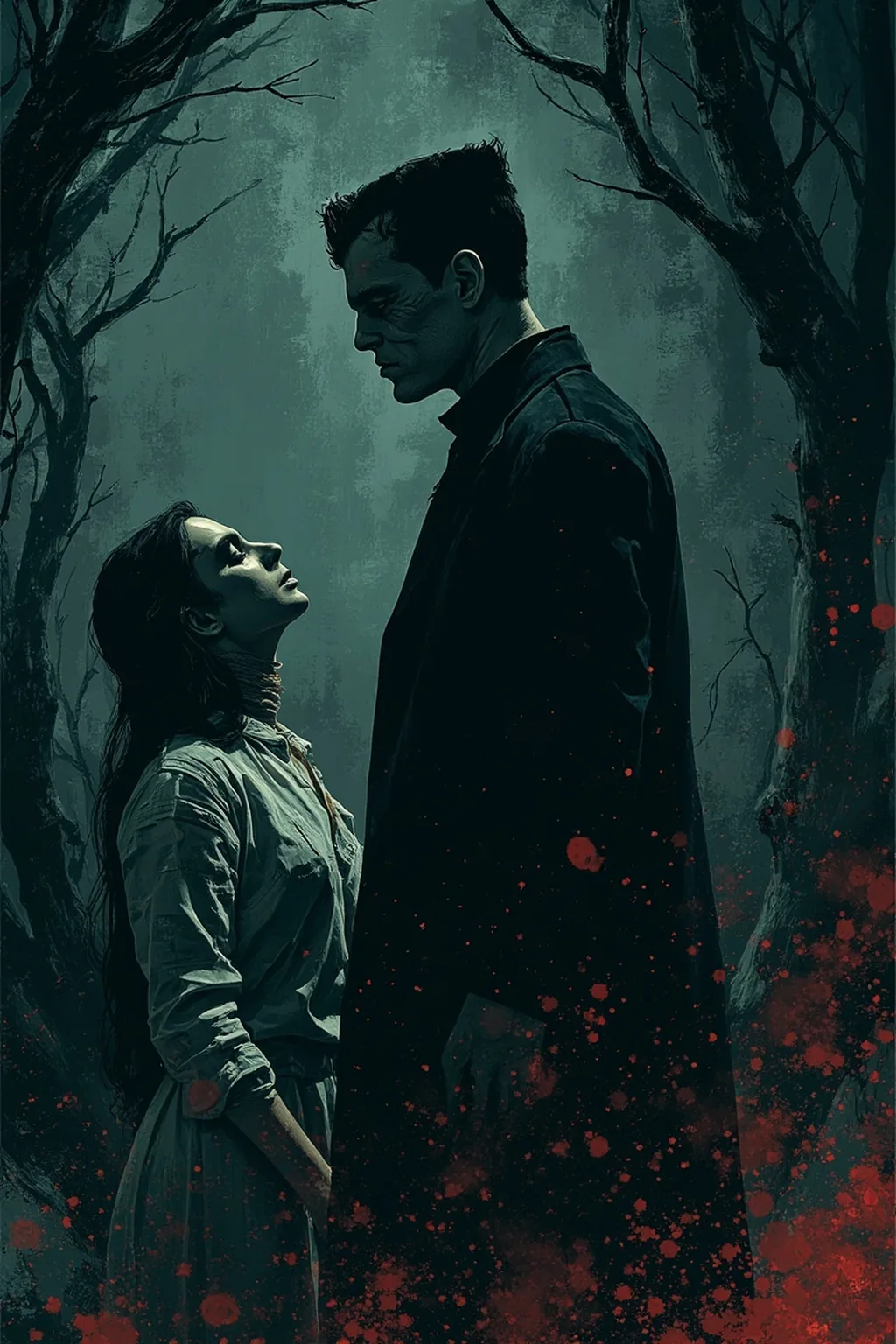
Frankenstein; or, the modern prometheus cover
Dangerous Knowledge Notable Quotes

Frankenstein; or, the modern prometheus

Passages worth revisiting from classic literature.

Shelley, Mary Wollstonecraft 1993 74 min

Chapter 2: Letter 1

Quotes

I try in vain to be persuaded that the pole is the seat of frost and desolation; it ever presents itself to my imagination as the region of beauty and delight. There, Margaret, the sun is for ever visible, its broad disk just skirting the horizon and diffusing a perpetual splendour.

Read interpretation

This passage establishes Walton’s Romantic idealism, contrasting the common perception of the Arctic as a wasteland with his vision of it as a paradise of eternal light and beauty.

Quotes

I shall satiate my ardent curiosity with the sight of a part of the world never before visited, and may tread a land never before imprinted by the foot of man. These are my enticements, and they are sufficient to conquer all fear of danger or death and to induce me to commence this laborious voyage with the joy a child feels when he embarks in a little boat, with his holiday mates, on an expedition of discovery up his native river.

Read interpretation

Walton articulates the driving force of his expedition: the intoxicating desire for discovery and the conquest of the unknown, which he compares to the innocent joy of childhood exploration.

Quotes

These reflections have dispelled the agitation with which I began my letter, and I feel my heart glow with an enthusiasm which elevates me to heaven, for nothing contributes so much to tranquillise the mind as a steady purpose—a point on which the soul may fix its intellectual eye.

Read interpretation

Here, Walton reveals the psychological necessity of his quest, finding tranquility and elevation through a singular, unwavering purpose that anchors his soul against the agitation of doubt.

Quotes

My life might have been passed in ease and luxury, but I preferred glory to every enticement that wealth placed in my path. Oh, that some encouraging voice would answer in the affirmative! My courage and my resolution is firm; but my hopes fluctuate, and my spirits are often depressed.

Read interpretation

Walton justifies his rejection of a comfortable life for the pursuit of glory, while simultaneously exposing the vulnerability and fluctuating hope that underlie his firm resolution.

Quotes

If I succeed, many, many months, perhaps years, will pass before you and I may meet. If I fail, you will see me again soon, or never.

Read interpretation

The letter concludes with a poignant summary of the stakes involved, weighing the long separation of success against the finality of death that failure implies.

Chapter 3: Letter 2

Quotes

But I have one want which I have never yet been able to satisfy, and the absence of the object of which I now feel as a most severe evil, I have no friend, Margaret: when I am glowing with the enthusiasm of success, there will be none to participate my joy; if I am assailed by disappointment, no one will endeavour to sustain me in dejection.

Read interpretation

This passage establishes the central emotional conflict of Walton’s character: the profound isolation that accompanies his ambition. Despite his progress in preparing the vessel, he recognizes that his triumphs and failures will be experienced in a vacuum, highlighting the necessity of a sympathetic witness to validate his endeavors.

Quotes

I am too ardent in execution and too impatient of difficulties. But it is a still greater evil to me that I am self-educated: for the first fourteen years of my life I ran wild on a common and read nothing but our Uncle Thomas’ books of voyages.

Read interpretation

Walton provides a critical self-assessment here, acknowledging that his autodidactic background has left him with brilliant but undisciplined mind. This admission of intellectual “want” foreshadows the potential dangers of unregulated ambition and sets the stage for his desperate need for a companion who can temper his impulsive nature.

Quotes

He had already bought a farm with his money, on which he had designed to pass the remainder of his life; but he bestowed the whole on his rival, together with the remains of his prize-money to purchase stock, and then himself solicited the young woman’s father to consent to her marriage with her lover.

Read interpretation

The story of the ship’s master serves as a narrative foil to Walton’s own self-interest, illustrating a model of noble self-sacrifice. It emphasizes the theme of romantic benevolence and emotional depth, contrasting the master’s silent, virtuous actions with Walton’s vocal but lonely intellectualism.

Quotes

There is something at work in my soul which I do not understand. I am practically industrious—painstaking, a workman to execute with perseverance and labour—but besides this there is a love for the marvellous, a belief in the marvellous, intertwined in all my projects, which hurries me out of the common pathways of men, even to the wild sea and unvisited regions I am about to explore.

Read interpretation

Walton articulates the mysterious, almost supernatural drive that compels him toward the unknown. This quote bridges the gap between practical industry and fatalistic passion, suggesting that his journey is motivated by an internal, irresistible force rather than mere curiosity or glory.

Chapter 4: Letter 3

Quotes

We have already reached a very high latitude; but it is the height of summer, and although not so warm as in England, the southern gales, which blow us speedily towards those shores which I so ardently desire to attain, breathe a degree of renovating warmth which I had not expected.

Read interpretation

Walton captures the deceptive allure of the Arctic, where the physical environment is harsh yet the psychological sensation is one of renewal and progress. This quote highlights the contrast between the freezing, dangerous reality and the warm, driving ambition that propels him forward.

Quotes

Adieu, my dear Margaret. Be assured that for my own sake, as well as yours, I will not rashly encounter danger. I will be cool, persevering, and prudent.

Read interpretation

In a moment of grounding, Walton attempts to reassure his sister—and perhaps himself—of his caution and stability. This promise of prudence stands in sharp relief against the overwhelming ambition that follows, revealing the internal conflict between his duty to safety and his drive for glory.

Quotes

But success shall crown my endeavours. Wherefore not? Thus far I have gone, tracing a secure way over the pathless seas, the very stars themselves being witnesses and testimonies of my triumph.

Read interpretation

This declaration marks the peak of Walton’s hubris before the inevitable encounter with Victor Frankenstein. He views the celestial bodies as silent witnesses to his conquest of nature, emphasizing his isolation and his belief that he is successfully imposing human will upon the chaotic elements.

Quotes

What can stop the determined heart and resolved will of man?

Read interpretation

Acting as a thematic refrain for the novel, this rhetorical question underscores the Romantic ideal of the indomitable human spirit. It foreshadows the coming tragedy by challenging the natural limits of mortality and science, suggesting that such resolve is both a magnificent and potentially fatal force.

Chapter 5: Letter 4

Quotes

We perceived a low carriage, fixed on a sledge and drawn by dogs, pass on towards the north, at the distance of half a mile; a being which had the shape of a man, but apparently of gigantic stature, sat in the sledge and guided the dogs.

Read interpretation

This is the first sighting of the Creature, a moment of profound mystery that shifts the narrative from a travelogue to a gothic thriller. The image of the gigantic figure driving a dogsled across the frozen wasteland establishes the supernatural scale of the events about to unfold.

Quotes

I never saw a more interesting creature: his eyes have generally an expression of wildness, and even madness, but there are moments when, if anyone performs an act of kindness towards him or does him any the most trifling service, his whole countenance is lighted up, as it were, with a beam of benevolence and sweetness that I never saw equalled.

Read interpretation

Walton’s description of the stranger introduces the complex duality of Victor Frankenstein—torn between destructive madness and a capacity for great benevolence. This observation foreshadows the tragic depth of the character Walton has rescued from the ice.

Quotes

One man’s life or death were but a small price to pay for the acquirement of the knowledge which I sought, for the dominion I should acquire and transmit over the elemental foes of our race.

Read interpretation

Walton’s declaration of extreme ambition serves as the catalyst for Victor’s emotional breakdown, highlighting the dangerous hubris that connects the two men. It underscores the theme that the pursuit of knowledge can demand a terrible moral price, a realization that has already shattered Victor’s life.

Quotes

“Unhappy man! Do you share my madness? Have you drunk also of the intoxicating draught? Hear me; let me reveal my tale, and you will dash the cup from your lips!”

Read interpretation

Victor’s desperate reaction marks the turning point where he decides to use his own tragedy as a warning to Walton. The metaphor of the “intoxicating draught” frames scientific ambition as a poison that clouds judgment, setting the stage for the central narrative to begin.

Quotes

“You seek for knowledge and wisdom, as I once did; and I ardently hope that the gratification of your wishes may not be a serpent to sting you, as mine has been.”

Read interpretation

Victor explicitly frames his upcoming story as a cautionary tale meant to save Walton from the same fate. This quote solidifies the thematic structure of the novel, positioning the narrative as a moral lesson regarding the perils of unchecked desire for forbidden knowledge.

Chapter 6: Chapter 1

Quotes

He came like a protecting spirit to the poor girl, who committed herself to his care; and after the interment of his friend he conducted her to Geneva and placed her under the protection of a relation. Two years after this event Caroline became his wife.

Read interpretation

This passage establishes the foundational virtue of Victor’s father, framing the family history as one of rescue and benevolence. It sets a high moral standard for the domestic sphere that Victor will later violate through his scientific ambitions.

Quotes

He strove to shelter her, as a fair exotic is sheltered by the gardener, from every rougher wind and to surround her with all that could tend to excite pleasurable emotion in her soft and benevolent mind.

Read interpretation

The metaphor of the “fair exotic” plant highlights the protective, almost idolatrous nature of the Frankenstein parents’ love. This image foreshadows the theme of creation and cultivation, contrasting the nurturing care of the father with Victor’s eventual monstrous creation.

Quotes

Her brow was clear and ample, her blue eyes cloudless, and her lips and the moulding of her face so expressive of sensibility and sweetness that none could behold her without looking on her as of a distinct species, a being heaven-sent, and bearing a celestial stamp in all her features.

Read interpretation

Elizabeth is described with angelic imagery that elevates her above the human realm, marking her as a figure of idealized beauty and fate. This “celestial stamp” foreshadows her role as the sacrificial victim whose suffering is tied to Victor’s hubris.

Quotes

I, with childish seriousness, interpreted her words literally and looked upon Elizabeth as mine—mine to protect, love, and cherish.

Read interpretation

Victor’s literal interpretation of his mother’s gift reveals his early tendency toward possession and control. This moment of claiming Elizabeth as his own establishes the dynamic of ownership that tragically defines their relationship and contributes to his eventual downfall.

Chapter 7: Chapter 2

Quotes

It was the secrets of heaven and earth that I desired to learn; and whether it was the outward substance of things or the inner spirit of nature and the mysterious soul of man that occupied me, still my inquiries were directed to the metaphysical, or in its highest sense, the physical secrets of the world.

Read interpretation

This declaration defines the core of Victor’s character: a desire to transcend the boundaries of ordinary knowledge to grasp the divine and the occult. It establishes the dangerous scope of his ambition, which seeks to master not just the physical world, but the very “mysterious soul of man.”

Quotes

If, instead of this remark, my father had taken the pains to explain to me that the principles of Agrippa had been entirely exploded and that a modern system of science had been introduced which possessed much greater powers than the ancient, because the powers of the latter were chimerical, while those of the former were real and practical, under such circumstances I should certainly have thrown Agrippa aside and have contented my imagination, warmed as it was, by returning with greater ardour to my former studies.

Read interpretation

Victor identifies a crucial turning point in his youth where a lack of parental guidance allowed his imagination to run wild. He explicitly blames his father’s casual dismissal of Agrippa for his descent into outdated and dangerous superstitions, highlighting the tragedy of missed opportunity for correction.

Quotes

Wealth was an inferior object, but what glory would attend the discovery if I could banish disease from the human frame and render man invulnerable to any but a violent death!

Read interpretation

Here, Victor’s scientific ambition is framed as a benevolent quest to conquer death and disease, masking the hubris that will lead to his ruin. This quote reveals the seductive nature of his goal, which promises god-like power under the guise of humanitarian service.

Quotes

As I stood at the door, on a sudden I beheld a stream of fire issue from an old and beautiful oak which stood about twenty yards from our house; and so soon as the dazzling light vanished, the oak had disappeared, and nothing remained but a blasted stump.

Read interpretation

The destruction of the oak tree by lightning is a visceral image of nature’s raw power that shifts Victor’s fascination from the occult to modern physics. This moment of destruction serves as the catalyst for his transition from alchemy to the study of galvanism and reanimation.

Quotes

It was a strong effort of the spirit of good, but it was ineffectual. Destiny was too potent, and her immutable laws had decreed my utter and terrible destruction.

Read interpretation

Victor reflects on his brief abandonment of science for mathematics as a failed intervention by a “guardian angel” trying to save him from himself. This passage underscores the novel’s theme of fatalism, suggesting that his tragic destiny was inescapable despite his momentary attempt at a safer path.

Chapter 8: Chapter 3

Quotes

She joined the hands of Elizabeth and myself. “My children,” she said, “my firmest hopes of future happiness were placed on the prospect of your union. This expectation will now be the consolation of your father. Elizabeth, my love, you must supply my place to my younger children. Alas! I regret that I am taken from you; and, happy and beloved as I have been, is it not hard to quit you all? But these are not thoughts befitting me; I will endeavour to resign myself cheerfully to death and will indulge a hope of meeting you in another world.”

Read interpretation

This moment marks the severance of Victor’s childhood sanctuary and the imposition of adult duty. By physically joining Elizabeth and Victor’s hands, the mother binds their fates together while simultaneously transferring the burden of domestic care to Elizabeth, setting the stage for the future tragedy that will stem from this union.

Quotes

“Every minute,” continued M. Krempe with warmth, “every instant that you have wasted on those books is utterly and entirely lost. You have burdened your memory with exploded systems and useless names. Good God! In what desert land have you lived, where no one was kind enough to inform you that these fancies which you have so greedily imbibed are a thousand years old and as musty as they are ancient? My dear sir, you must begin your studies entirely anew.”

Read interpretation

Krempe’s harsh dismissal serves as a crucial reality check that initially repels Victor but ultimately primes him for the dangerous synthesis of ancient ambition and modern method. The ridicule of his beloved alchemists creates a psychological tension that Waldman will soon exploit, turning Victor’s contempt into a dangerous drive for validation.

Quotes

“The ancient teachers of this science,” said he, “promised impossibilities and performed nothing. The modern masters promise very little; they know that metals cannot be transmuted and that the elixir of life is a chimera but these philosophers, whose hands seem only made to dabble in dirt, and their eyes to pore over the microscope or crucible, have indeed performed miracles. They penetrate into the recesses of nature and show how she works in her hiding-places. They ascend into the heavens; they have discovered how the blood circulates, and the nature of the air we breathe. They have acquired new and almost unlimited powers; they can command the thunders of heaven, mimic the earthquake, and even mock the invisible world with its own shadows.”

Read interpretation

Waldman’s eloquent panegyric acts as the catalyst for Victor’s ruin, validating the impossible dreams of his youth by cloaking them in the credibility of modern science. By describing the power to “command the thunders” and “mock the invisible world,” he provides the intellectual justification Victor needs to pursue the creation of life.

Quotes

Such were the professor’s words—rather let me say such the words of the fate—enounced to destroy me. As he went on I felt as if my soul were grappling with a palpable enemy; one by one the various keys were touched which formed the mechanism of my being; chord after chord was sounded, and soon my mind was filled with one thought, one conception, one purpose. So much has been done, exclaimed the soul of Frankenstein—more, far more, will I achieve; treading in the steps already marked, I will pioneer a new way, explore unknown powers, and unfold to the world the deepest mysteries of creation.

Read interpretation

This passage captures the irreversible turning point where scientific curiosity transforms into monomaniacal obsession. Victor explicitly acknowledges the destructive destiny being “enounced” upon him, yet he embraces it with a terrifying resolve to “unfold the deepest mysteries of creation,” sealing his fate as a modern Prometheus.

Chapter 9: Chapter 4

Quotes

I paused, examining and analysing all the minutiae of causation, as exemplified in the change from life to death, and death to life, until from the midst of this darkness a sudden light broke in upon me—a light so brilliant and wondrous, yet so simple, that while I became dizzy with the immensity of the prospect which it illustrated, I was surprised that among so many men of genius who had directed their inquiries towards the same science, that I alone should be reserved to discover so astonishing a secret.

Read interpretation

This passage captures the pivotal moment of transgression where Victor crosses the boundary from student to creator. The metaphor of light breaking from darkness signifies the acquisition of forbidden knowledge, while his dizziness foreshadows the destabilizing effect this power will have on his mind and soul.

Quotes

After days and nights of incredible labour and fatigue, I succeeded in discovering the cause of generation and life; nay, more, I became myself capable of bestowing animation upon lifeless matter.

Read interpretation

Victor’s explicit declaration of his capability to bestow animation marks the irreversible point of no return. It is the ultimate act of hubris, stripping the divine of its exclusive power and placing it in the hands of a mortal, setting the stage for the creation that will ruin him.

Quotes

A new species would bless me as its creator and source; many happy and excellent natures would owe their being to me. No father could claim the gratitude of his child so completely as I should deserve theirs.

Read interpretation

Driven by a god-like delusion, Victor envisions a future where he is worshipped by his creation, completely blind to the horror he is actually unleashing. This quote highlights his profound isolation and narcissism, as he seeks to replace natural human connections with a fabricated bond of absolute gratitude.

Quotes

Who shall conceive the horrors of my secret toil as I dabbled among the unhallowed damps of the grave or tortured the living animal to animate the lifeless clay? My limbs now tremble, and my eyes swim with the remembrance; but then a resistless and almost frantic impulse urged me forward; I seemed to have lost all soul or sensation but for this one pursuit.

Read interpretation

The imagery of “unhallowed damps” and “tortured living animals” underscores the grotesque reality of Victor’s “filthy creation,” contrasting his romantic aspirations with the repulsive physical labor required to achieve them. His frantic impulse reveals a loss of humanity, where the pursuit of the abstract ideal has destroyed his empathy for the living world.

Quotes

I kept my workshop of filthy creation; my eyeballs were starting from their sockets in attending to the details of my employment. The dissecting room and the slaughter-house furnished many of my materials; and often did my human nature turn with loathing from my occupation, whilst, still urged on by an eagerness which perpetually increased, I brought my work near to a conclusion.

Read interpretation

This visceral description of the workshop as a place of “filthy creation” emphasizes the corruption of Victor’s scientific endeavor. The conflict between his “human nature” turning with loathing and his increasing “eagerness” illustrates the internal civil war between his conscience and his ambition, a war he is losing.

Quotes

Every night I was oppressed by a slow fever, and I became nervous to a most painful degree; the fall of a leaf startled me, and I shunned my fellow creatures as if I had been guilty of a crime.

Read interpretation

Victor’s physical and mental deterioration reveals the heavy psychological toll of his transgression. By shunning humanity and feeling guilty without yet having committed the external act of animating the creature, he subconsciously recognizes the evil of his work, trapped in a state of paranoia and feverish anticipation.

Chapter 10: Chapter 5

Quotes

It was already one in the morning; the rain pattered dismally against the panes, and my candle was nearly burnt out, when, by the glimmer of the half-extinguished light, I saw the dull yellow eye of the creature open; it breathed hard, and a convulsive motion agitated its limbs.

Read interpretation

This is the moment of creation, stripped of all glory and rendered in pathetic, squalid detail. The dim light and dying candle mirror Victor’s own extinguished hope, as the “dull yellow eye” signals the birth of a nightmare rather than a dream.

Quotes

Beautiful! Great God! His yellow skin scarcely covered the work of muscles and arteries beneath; his hair was of a lustrous black, and flowing; his teeth of a pearly whiteness; but these luxuriances only formed a more horrid contrast with his watery eyes, that seemed almost of the same colour as the dun-white sockets in which they were set, his shrivelled complexion and straight black lips.

Read interpretation

Victor’s horrified realization deconstructs the romantic ideal of the sublime; the individual parts are beautiful, but the assembled whole is a monstrosity. This contrast between the “luxuriances” of the parts and the “watery eyes” of the whole marks the collapse of his scientific ambition into aesthetic revulsion.

Quotes

I had desired it with an ardour that far exceeded moderation; but now that I had finished, the beauty of the dream vanished, and breathless horror and disgust filled my heart.

Read interpretation

This succinctly captures the novel’s central theme of the dangers of unchecked ambition. The immediate transition from the “beauty of the dream” to “breathless horror” signifies the irreversible consequences of transgressing natural boundaries.

Quotes

I thought I saw Elizabeth, in the bloom of health, walking in the streets of Ingolstadt. Delighted and surprised, I embraced her, but as I imprinted the first kiss on her lips, they became livid with the hue of death; her features appeared to change, and I thought that I held the corpse of my dead mother in my arms; a shroud enveloped her form, and I saw the grave-worms crawling in the folds of the flannel.

Read interpretation

This nightmare serves as a terrifying omen, linking Victor’s act of creation directly to the corruption and death of his loved ones. By transforming Elizabeth into his mother’s worm-eaten corpse, his subconscious reveals that he understands his “filthy creation” is an act that blights life and brings decay.

Quotes

He held up the curtain of the bed; and his eyes, if eyes they may be called, were fixed on me. His jaws opened, and he muttered some inarticulate sounds, while a grin wrinkled his cheeks.

Read interpretation

The creature’s first interaction with its creator is one of mute, grotesque imitation, attempting to connect but only inspiring terror. The “grin” and “inarticulate sounds” emphasize the unnaturalness of the being and the immediate severance of any potential bond between them.

Like one who, on a lonely road, Doth walk in fear and dread, And, having once turned round, walks on, And turns no more his head; Because he knows a frightful fiend Doth close behind him tread.

Victor quotes Coleridge’s “Ancientient Mariner” to externalize his internal state, likening himself to the cursed mariner who cannot escape the presence of a dreadful specter. This literary allusion underscores his isolation and the inescapable nature of his guilt.

Quotes

Nothing could equal my delight on seeing Clerval; his presence brought back to my thoughts my father, Elizabeth, and all those scenes of home so dear to my recollection. I grasped his hand, and in a moment forgot my horror and misfortune; I felt suddenly, and for the first time during many months, calm and serene joy.

Read interpretation

The arrival of Henry Clerval provides a brief but poignant respite from Victor’s terror. This moment of human connection contrasts sharply with the solitary horror of his laboratory, grounding him in the domestic world he has sacrificed.

Quotes

I clapped my hands for joy and ran down to Clerval… I jumped over the chairs, clapped my hands, and laughed aloud… my loud, unrestrained, heartless laughter frightened and astonished him.

Read interpretation

Victor’s reaction to the creature’s absence is a clear indicator of his fractured psyche; his relief manifests as “heartless laughter” and erratic movement, contrasting sharply with Clerval’s concern. This hysteria underscores the depth of his trauma and his inability to process the reality of what he has done.

Quotes

The form of the monster on whom I had bestowed existence was for ever before my eyes, and I raved incessantly concerning him.

Read interpretation

Even in his delirium, Victor cannot escape the consequences of his actions, as the monster haunts his fever dreams. This mental imprisonment serves as his first punishment, proving that the psychological torture of his secret is as damaging as the physical threat of the creature.

Chapter 11: Chapter 6

Quotes

“one word from you, dear Victor, is necessary to calm our apprehensions. For a long time I have thought that each post would bring this line, and my persuasions have restrained my uncle from undertaking a journey to Ingolstadt.”

Read interpretation

Elizabeth’s letter serves as a lifeline connecting Victor to the domestic tranquility he has abandoned. Her desperate plea for a single word highlights the agonizing silence Victor has maintained and underscores the deep anxiety his absence has caused his family, contrasting sharply with the horror of his recent endeavors.

Quotes

“Justine has just returned to us; and I assure you I love her tenderly. She is very clever and gentle, and extremely pretty; as I mentioned before, her mien and her expression continually remind me of my dear aunt.”

Read interpretation

This passage introduces Justine Moritz, whose presence will soon become central to the tragedy. Elizabeth’s affectionate description of Justine’s gentleness and beauty highlights the innocence of the domestic sphere that Victor’s creation is destined to violate.

Quotes

“Ever since the fatal night, the end of my labours, and the beginning of my misfortunes, I had conceived a violent antipathy even to the name of natural philosophy. When I was otherwise quite restored to health, the sight of a chemical instrument would renew all the agony of my nervous symptoms.”

Read interpretation

Victor’s psychological trauma is laid bare here, revealing that his recovery is physical rather than spiritual. The tools of his creation have transformed from objects of fascination into sources of visceral horror, signifying the permanent scar his ambition has left on his psyche.

Quotes

“I felt as if he had placed carefully, one by one, in my view those instruments which were to be afterwards used in putting me to a slow and cruel death. I writhed under his words, yet dared not exhibit the pain I felt.”

Read interpretation

The praise from Professor Waldman acts as a form of torture, unwittingly twisting the knife of Victor’s guilt. This moment captures the intense isolation of Victor’s secret; he is surrounded by academic accolades for the very act that has destroyed his happiness, forcing him to suffer in silence.

Quotes

“D—n the fellow!” cried he; “why, M. Clerval, I assure you he has outstript us all. Ay, stare if you please; but it is nevertheless true. A youngster who, but a few years ago, believed in Cornelius Agrippa as firmly as in the gospel, has now set himself at the head of the university; and if he is not soon pulled down, we shall all be out of countenance.”

Read interpretation

Professor Krempe’s loud and harsh praise strikes Victor with even greater force due to his “insupportable sensitiveness.” The professor’s boast about Victor’s triumph over Agrippa serves as a painful reminder of the heretical path that led to his current misery.

Quotes

“Idleness had ever been irksome to me, and now that I wished to fly from reflection, and hated my former studies, I felt great relief in being the fellow-pupil with my friend, and found not only instruction but consolation in the works of the orientalists.”

Read interpretation

Seeking escape from the “reflection” that torments him, Victor turns to the Oriental languages with Henry. This shift in studies represents a desperate attempt to soothe his mind with the “melancholy” and “joy” of literature, contrasting the destructive reality of his scientific pursuits with the healing power of art and friendship.

Quotes

“Study had before secluded me from the intercourse of my fellow-creatures, and rendered me unsocial; but Clerval called forth the better feelings of my heart; he again taught me to love the aspect of nature, and the cheerful faces of children.”

Read interpretation

Henry Clerval is portrayed as the antidote to Victor’s obsessive and isolating research. Through Henry’s influence, Victor begins to reclaim his humanity and connection to the world, experiencing a fleeting restoration of the joy he possessed before his scientific ambitions took hold.

Quotes

“My own spirits were high, and I bounded along with feelings of unbridled joy and hilarity.”

Read interpretation

This moment of “unbridled joy” is tragically ironic, serving as the emotional peak before the inevitable collapse of Victor’s happiness. It emphasizes the fragility of his recovery and the deceptive calm that precedes the storm of the tragedy awaiting him in Geneva.

Chapter 12: Chapter 7

Quotes

“William is dead!—that sweet child, whose smiles delighted and warmed my heart, who was so gentle, yet so gay! Victor, he is murdered!”

Read interpretation

Alphonse’s letter shatters the peace Victor had found in Ingolstadt, abruptly forcing him to confront the violence that has breached his family’s sanctuary.

Quotes

“I quitted my seat, and walked on, although the darkness and storm increased every minute, and the thunder burst with a terrific crash over my head. It was echoed from Salêve, the Juras, and the Alps of Savoy; vivid flashes of lightning dazzled my eyes, illuminating the lake, making it appear like a vast sheet of fire; then for an instant every thing seemed of a pitchy darkness, until the eye recovered itself from the preceding flash.”

Read interpretation

The tempest mirrors the internal chaos of Victor’s mind as he approaches the site of the murder, the environment itself reacting with violent light and shadow to the horror that awaits him.

Quotes

“As I said these words, I perceived in the gloom a figure which stole from behind a clump of trees near me; I stood fixed, gazing intently: I could not be mistaken. A flash of lightning illuminated the object, and discovered its shape plainly to me; its gigantic stature, and the deformity of its aspect more hideous than belongs to humanity, instantly informed me that it was the wretch, the filthy dæmon, to whom I had given life.”

Read interpretation

In the sudden glare of the storm, Victor sees the undeniable proof of his guilt; the creature he animated stands revealed as the intruder in his family’s life.

Quotes

“What did he there? Could he be (I shuddered at the conception) the murderer of my brother? No sooner did that idea cross my imagination, than I became convinced of its truth; my teeth chattered, and I was forced to lean against a tree for support. The figure passed me quickly, and I lost it in the gloom. Nothing in human shape could have destroyed the fair child. He was the murderer! I could not doubt it.”

Read interpretation

The realization strikes Victor with physical force, collapsing the distance between his scientific ambition and the brutal reality of his brother’s death.

Quotes

“I thought of pursuing the devil; but it would have been in vain, for another flash discovered him to me hanging among the rocks of the nearly perpendicular ascent of Mont Salêve, a hill that bounds Plainpalais on the south. He soon reached the summit, and disappeared.”

Read interpretation

The monster’s superhuman agility on the sheer cliffs of Mont Salêve emphasizes the unnatural power Victor has bestowed upon him, rendering human pursuit futile.

Quotes

“I well knew that if any other had communicated such a relation to me, I should have looked upon it as the ravings of insanity. Besides, the strange nature of the animal would elude all pursuit, even if I were so far credited as to persuade my relatives to commence it. And then of what use would be pursuit? Who could arrest a creature capable of scaling the overhanging sides of Mont Salêve? These reflections determined me, and I resolved to remain silent.”

Read interpretation

Victor’s fear of being judged mad, combined with the impossible nature of his tale, traps him into a vow of silence that protects his reputation at the cost of justice.

Quotes

“Indeed, who would credit that Justine Moritz, who was so amiable, and fond of all the family, could suddenly become so capable of so frightful, so appalling a crime?”

Read interpretation

The accusation of Justine introduces a new layer of agony, as the family’s trust in their beloved servant crumbles under the weight of circumstantial evidence.

Quotes

“You are all mistaken; I know the murderer. Justine, poor, good Justine, is innocent.”

Read interpretation

Victor’s internal protest highlights the torture of his position; he holds the absolute truth that could exonerate her, yet he remains paralyzed by his own secret.

Chapter 13: Chapter 8

Quotes

During the whole of this wretched mockery of justice I suffered living torture. It was to be decided whether the result of my curiosity and lawless devices would cause the death of two of my fellow beings: one a smiling babe full of innocence and joy, the other far more dreadfully murdered, with every aggravation of infamy that could make the murder memorable in horror. Justine also was a girl of merit and possessed qualities which promised to render her life happy; now all was to be obliterated in an ignominious grave, and I the cause!

Read interpretation

This passage captures the core tragedy of the novel: the direct link between Victor’s scientific ambition and the destruction of his loved ones. He explicitly identifies his “wretched mockery of justice” and “curiosity and lawless devices” as the cause of the suffering, acknowledging that his creation has indirectly murdered William and is now murdering Justine through false accusation.

Quotes

“I did confess, but I confessed a lie. I confessed, that I might obtain absolution; but now that falsehood lies heavier at my heart than all my other sins. The God of heaven forgive me! Ever since I was condemned, my confessor has besieged me; he threatened and menaced, until I almost began to think that I was the monster that he said I was. He threatened excommunication and hell fire in my last moments if I continued obdurate. Dear lady, I had none to support me; all looked on me as a wretch doomed to ignominy and perdition. What could I do? In an evil hour I subscribed to a lie; and now only am I truly miserable.”

Read interpretation

Justine’s confession is a turning point that seals her fate, highlighting the failure of religious and social institutions to protect the innocent. Coerced by the threat of excommunication and abandoned by those who should have supported her, her false confession stands in stark contrast to Victor’s silence; she lies to save her soul, while he stays silent to protect his reputation, resulting in her execution.

Quotes

But I, the true murderer, felt the never-dying worm alive in my bosom, which allowed of no hope or consolation. Elizabeth also wept and was unhappy, but hers also was the misery of innocence, which, like a cloud that passes over the fair moon, for a while hides but cannot tarnish its brightness. Anguish and despair had penetrated into the core of my heart; I bore a hell within me which nothing could extinguish.

Read interpretation

Victor’s internal monologue reveals the depth of his psychological torment. By declaring himself the “true murderer,” he accepts moral culpability for the creature’s actions. The metaphor of the “never-dying worm” signifies a guilt that is inescapable and eternal, contrasting his self-inflicted hell with the temporary, pure sorrow of the innocent women around him.

Quotes

Ye weep, unhappy ones, but these are not your last tears! Again shall you raise the funeral wail, and the sound of your lamentations shall again and again be heard! Frankenstein, your son, your kinsman, your early, much-loved friend; he who would spend each vital drop of blood for your sakes, who has no thought nor sense of joy except as it is mirrored also in your dear countenances, who would fill the air with blessings and spend his life in serving you—he bids you weep, to shed countless tears; happy beyond his hopes, if thus inexorable fate be satisfied, and if the destruction pause before the peace of the grave have succeeded to your sad torments!

Read interpretation

This prophetic outburst serves as a grim foreshadowing of the tragedies yet to come. Victor realizes that the deaths of William and Justine are only the beginning of his family’s ruin. The passage underscores the irony that his desire to serve and protect his family has led directly to their desolation, and he ominously predicts that the “destruction” is not yet finished.

Chapter 14: Chapter 9

Quotes

Nothing is more painful to the human mind than, after the feelings have been worked up by a quick succession of events, the dead calmnesses of inaction and certainty which follows and deprives the soul both of hope and fear. Justine died, she rested, and I was alive. The blood flowed freely in my veins, but a weight of despair and remorse pressed on my heart which nothing could remove.

Read interpretation

Victor articulates the psychological paralysis that follows the trauma of the trial. The contrast between the “dead calmness of inaction” and the previous “quick succession of events” highlights his inability to escape his guilt, while the realization that he lives while his innocent victims die deepens his self-loathing.

Quotes

Often, after the rest of the family had retired for the night, I took the boat and passed many hours upon the water. Sometimes, with my sails set, I was carried by the wind; and sometimes, after rowing into the middle of the lake, I left the boat to pursue its own course and often, I say, I was tempted to plunge into the silent lake, that the waters might close over me and my calamities for ever.

Read interpretation

This passage reveals Victor’s suicidal despair and his isolation on the lake. The temptation to end his life is a direct result of his “unalterable evils,” and the image of the silent lake offering oblivion contrasts sharply with the “unquiet thing” he has become.

Quotes

But I was restrained, when I thought of the heroic and suffering Elizabeth, whom I tenderly loved, and whose existence was bound up in mine. I thought also of my father and surviving brother; should I by my base desertion leave them exposed and unprotected to the malice of the fiend whom I had let loose among them?

Read interpretation

Victor identifies the specific chain of responsibility that keeps him from suicide. He realizes that his death would be a “base desertion” that leaves his family vulnerable to the creature he created. This acknowledgment cements his duty to suffer for the sake of protecting them from the “fiend.”

Quotes

“When I reflect, my dear cousin,” said she, “on the miserable death of Justine Moritz, I no longer see the world and its works as they before appeared to me. Before, I looked upon the accounts of vice and injustice that I read in books or heard from others as tales of ancient days or imaginary evils; but now misery has come home, and men appear to me as monsters thirsting for each other’s blood.”

Read interpretation

Elizabeth’s loss of innocence mirrors the corruption of Victor’s soul. Her statement that “misery has come home” marks the end of the family’s sheltered existence, and her perception of men as “monsters” ironically reflects the true nature of the hidden threat Victor has unleashed upon them.

Quotes

I listened to this discourse with the extremest agony. I, not in deed, but in effect, was the true murderer. Elizabeth read my anguish in my countenance, and kindly taking my hand, said, “My dearest friend, you must calm yourself. These events have affected me, God knows how deeply; but I am not so wretched as you are. There is an expression of despair, and sometimes of revenge, in your countenance that makes me tremble.”

Read interpretation

The dramatic irony here is palpable; Elizabeth comforts the man she believes is a grieving friend, unaware that he is the “true murderer” in effect. Her observation of the “expression of despair, and sometimes of revenge” foreshadows the violent cycle that Victor is struggling to contain.

Quotes

The immense mountains and precipices that overhung me on every side, the sound of the river raging among the rocks, and the dashing of the waterfalls around spoke of a power mighty as Omnipotence—and I ceased to fear or to bend before any being less almighty than that which had created and ruled the elements, here displayed in their most terrific guise.

Read interpretation

In the presence of the sublime Alpine landscape, Victor experiences a temporary reprieve from his terror. The sheer scale and power of nature make his own creation—the “daemon”—seem small by comparison, allowing him a moment of respite where he ceases to fear the monster.

Quotes

A tingling long-lost sense of pleasure often came across me during this journey. Some turn in the road, some new object suddenly perceived and recognised, reminded me of days gone by, and were associated with the lighthearted gaiety of boyhood. The very winds whispered in soothing accents, and maternal Nature bade me weep no more.

Read interpretation

Nature is personified here as a maternal force offering solace, contrasting with the destructive “unhallowed arts” Victor practiced. The return of boyhood memories and the “tingling sense of pleasure” emphasize how far he has fallen from innocence, while also highlighting nature’s power to temporarily heal the human spirit.

Chapter 15: Chapter 10

Quotes

These sublime and magnificent scenes afforded me the greatest consolation that I was capable of receiving. They elevated me from all littleness of feeling, and although they did not remove my grief, they subdued and tranquillised it.

Read interpretation

Victor seeks refuge in the grandeur of the Alps, hoping the sheer scale of nature will dwarf his personal guilt and anguish over the deaths of William and Justine.

Quotes

We rest; a dream has power to poison sleep. We rise; one wand’ring thought pollutes the day. … Nought may endure but mutability!

Read interpretation

A poetic interlude that underscores the fragility of human happiness and the inescapable turbulence of the mind, contrasting the eternal ice with the fleeting, troubled nature of man.

Quotes

As I said this I suddenly beheld the figure of a man, at some distance, advancing towards me with superhuman speed. He bounded over the crevices in the ice, among which I had walked with caution; his stature, also, as he approached, seemed to exceed that of man.

Read interpretation

The terrifying moment of recognition on the glacier, where Victor’s sanctuary is invaded by the physical embodiment of his scientific transgression.

Quotes

“Devil,” I exclaimed, “do you dare approach me? And do not you fear the fierce vengeance of my arm wreaked on your miserable head? Begone, vile insect! Or rather, stay, that I may trample you to dust! And, oh! That I could, with the extinction of your miserable existence, restore those victims whom you have so diabolically murdered!”

Read interpretation

Victor’s immediate, visceral reaction is one of pure rage and a desire for violence, blaming the creature entirely for the destruction of his family while ignoring his own responsibility.

Quotes

“All men hate the wretched; how, then, must I be hated, who am miserable beyond all living things! Yet you, my creator, detest and spurn me, thy creature, to whom thou art bound by ties only dissoluble by the annihilation of one of us.”

Read interpretation

The creature articulates the core tragedy of his existence: he is hated by the entire human race, including the one man who is biologically and morally bound to him as a father.

Quotes

“If you will comply with my conditions, I will leave them and you at peace; but if you refuse, I will glut the maw of death, until it be satiated with the blood of your remaining friends.”

Read interpretation

A chilling ultimatum that shifts the power dynamic; the monster holds Victor’s fate and the lives of his loved ones in the balance, demanding negotiation rather than begging for mercy.

Quotes

“Remember that I am thy creature; I ought to be thy Adam, but I am rather the fallen angel, whom thou drivest from joy for no misdeed. Everywhere I see bliss, from which I alone am irrevocably excluded. I was benevolent and good; misery made me a fiend.”

Read interpretation

The creature frames his narrative within biblical allusion, contrasting his intended role as a beloved first man with his reality as a Satan figure cast out by his creator, arguing that his wickedness is a product of his suffering.

Quotes

“I was benevolent and good; misery made me a fiend. Make me happy, and I shall again be virtuous.”

Read interpretation

This pivotal assertion suggests that the creature’s evil nature is not innate but circumstantial, offering Victor a chance to redeem them both by alleviating the creature’s loneliness.

Quotes

“The guilty are allowed, by human laws, bloody as they are, to speak in their own defence before they are condemned. Listen to me, Frankenstein. You accuse me of murder, and yet you would, with a satisfied conscience, destroy your own creature.”

Read interpretation

The creature appeals to Victor’s sense of justice and logic, pointing out the hypocrisy of condemning him without a trial while simultaneously acting as his executioner.

Quotes

For the first time, also, I felt what the duties of a creator towards his creature were, and that I ought to render him happy before I complained of his wickedness.

Read interpretation

A profound turning point in Victor’s psyche; his blind hatred is checked by a sudden, heavy realization of his obligations and the potential that his neglect caused the monster’s rage.

Chapter 16: Chapter 11

Quotes

“It is with considerable difficulty that I remember the original era of my being; all the events of that period appear confused and indistinct. A strange multiplicity of sensations seized me, and I saw, felt, heard, and smelt at the same time; and it was, indeed, a long time before I learned to distinguish between the operations of my various senses.”

Read interpretation

The Creature describes the chaotic and overwhelming sensory overload of his birth, emphasizing the disorienting transition from non-existence to a confused, physical consciousness.

Quotes

“It was dark when I awoke; I felt cold also, and half frightened, as it were, instinctively, finding myself so desolate. Before I had quitted your apartment, on a sensation of cold, I had covered myself with some clothes, but these were insufficient to secure me from the dews of night. I was a poor, helpless, miserable wretch; I knew, and could distinguish, nothing; but feeling pain invade me on all sides, I sat down and wept.”

Read interpretation

This moment marks the Creature’s first experience of true suffering and isolation; his immediate reaction to weep highlights his innate sensitivity and the tragic lack of comfort in his new life.

Quotes

“One day, when I was oppressed by cold, I found a fire which had been left by some wandering beggars, and was overcome with delight at the warmth I experienced from it. In my joy I thrust my hand into the live embers, but quickly drew it out again with a cry of pain. How strange, I thought, that the same cause should produce such opposite effects!”

Read interpretation

A pivotal discovery where the Creature learns the dual nature of fire—its capacity for both comfort and pain—serving as his first lesson in the complexities of the physical world.

Quotes

“His appearance, different from any I had ever before seen, and his flight somewhat surprised me. But I was enchanted by the appearance of the hut; here the snow and rain could not penetrate; the ground was dry; and it presented to me then as exquisite and divine a retreat as Pandæmonium appeared to the dæmons of hell after their sufferings in the lake of fire.”

Read interpretation

The Creature finds sanctuary in a shepherd’s hut, comparing the relief of shelter from the brutal elements to the demons’ escape from the lake of fire, underscoring the severity of his previous suffering.

Quotes

“One of the best of these I entered, but I had hardly placed my foot within the door before the children shrieked, and one of the women fainted. The whole village was roused; some fled, some attacked me, until, grievously bruised by stones and many other kinds of missile weapons, I escaped to the open country…”

Read interpretation

This brutal rejection by the villagers is a crucial turning point that hardens the Creature’s understanding of humanity; he learns that his appearance inevitably inspires violence and terror, forcing him into hiding.

Quotes

“Here, then, I retreated and lay down happy to have found a shelter, however miserable, from the inclemency of the season, and still more from the barbarity of man.”

Read interpretation

The Creature establishes his hidden hovel, finding safety not just from the weather but specifically from the cruelty of humans, highlighting his profound alienation from society.

Quotes

“The silver hair and benevolent countenance of the aged cottager won my reverence, while the gentle manners of the girl enticed my love. He played a sweet mournful air which I perceived drew tears from the eyes of his amiable companion… I felt sensations of a peculiar and overpowering nature; they were a mixture of pain and pleasure, such as I had never before experienced…”

Read interpretation

Observing the De Lacey family through a chink in the wall, the Creature experiences his first emotional connection to humanity, feeling a complex mix of awe, longing, and the pain of his own exclusion from their tenderness.

Quotes

“Nothing could exceed in beauty the contrast between these two excellent creatures. One was old, with silver hairs and a countenance beaming with benevolence and love; the younger was slight and graceful in his figure, and his features were moulded with the finest symmetry, yet his eyes and attitude expressed the utmost sadness and despondency.”

Read interpretation

The Creature closely studies the physical and emotional details of the cottagers, admiring their beauty and benevolence while noting their sorrow, which begins to teach him about the nuances of human emotion and suffering.

Chapter 17: Chapter 12

Quotes

“I remembered too well the treatment I had suffered the night before from the barbarous villagers, and resolved, whatever course of conduct I might hereafter think it right to pursue, that for the present I would remain quietly in my hovel, watching and endeavouring to discover the motives which influenced their actions.”

Read interpretation

This quote establishes the Creature’s cautious and observational nature following his earlier rejection by humanity. It highlights his transition from a confused, reactive being to a deliberate student of human behavior, setting the stage for his intellectual and emotional education through the De Lacey family.

Quotes

“They often, I believe, suffered the pangs of hunger very poignantly, especially the two younger cottagers, for several times they placed food before the old man when they reserved none for themselves.”

Read interpretation

The Creature witnesses the extreme self-sacrifice of the De Lacey family, a moment that fundamentally shifts his understanding of human nature. This observation of love enduring through poverty serves as his first moral lesson and prompts him to cease stealing their food, marking the beginning of his own ethical development.

Quotes

“I found that these people possessed a method of communicating their experience and feelings to one another by articulate sounds. I perceived that the words they spoke sometimes produced pleasure or pain, smiles or sadness, in the minds and countenances of the hearers. This was indeed a godlike science, and I ardently desired to become acquainted with it.”

Read interpretation

Here, the Creature identifies language as the key to connection and power, elevating the mundane act of speech to a “godlike science.” This realization drives his intense desire to learn, framing his intellectual pursuit not merely as a skill to be acquired, but as a bridge to the human intimacy he craves.

Quotes

“I had admired the perfect forms of my cottagers—their grace, beauty, and delicate complexions; but how was I terrified when I viewed myself in a transparent pool! At first I started back, unable to believe that it was indeed I who was reflected in the mirror; and when I became fully convinced that I was in reality the monster that I am, I was filled with the bitterest sensations of despondence and mortification.”

Read interpretation

This pivotal moment represents the Creature’s traumatic confrontation with his own identity. The contrast between the admired beauty of the cottagers and his own reflection shatters his naive hope, instilling a deep sense of “mortification” that defines his self-loathing and his fear that his deformity will forever bar him from acceptance.

Quotes

“I imagined that they would be disgusted, until, by my gentle demeanour and conciliating words, I should first win their favour and afterwards their love.”

Read interpretation

Despite his internalized horror regarding his appearance, the Creature clings to a desperate strategy of redemption through personality. This quote reveals his tragic hope that the virtues of his mind and heart can overcome the visceral repulsion his form inspires, a hope that will eventually be tested against the reality of human prejudice.

Chapter 18: Chapter 13

Quotes

“Felix seemed ravished with delight when he saw her, every trait of sorrow vanished from his face, and it instantly expressed a degree of ecstatic joy, of which I could hardly have believed it capable; his eyes sparkled, as his cheek flushed with pleasure; and at that moment I thought him as beautiful as the stranger.”

Read interpretation

The arrival of Safie acts as the catalyst for the chapter’s emotional shift. Witnessing Felix’s instantaneous transformation from deep melancholy to ecstatic joy provides the Creature with a powerful, tangible example of human connection and the restorative power of love.

Quotes

“I soon perceived that although the stranger uttered articulate sounds and appeared to have a language of her own, she was neither understood by nor herself understood the cottagers. They made many signs which I did not comprehend, but I saw that her presence diffused gladness through the cottage, dispelling their sorrow as the sun dissipates the morning mists.”

Read interpretation

Safie’s presence fundamentally alters the atmosphere of the cottage. Her arrival dispels the family’s long-standing gloom, offering the Creature a clear observation of how a single presence can heal a household and inspire a shared pursuit of understanding.

Quotes

“The book from which Felix instructed Safie was Volney’s Ruins of Empires. I should not have understood the purport of this book had not Felix, in reading it, given very minute explanations. Through this work I obtained a cursory knowledge of history and a view of the several empires at present existing in the world; it gave me an insight into the manners, governments, and religions of the different nations of the earth.”

Read interpretation

This quote highlights the specific vehicle of the Creature’s intellectual awakening. By listening to Felix teach Safie from Volney’s Ruins of Empires, the Creature absorbs a sweeping history of human civilization, learning of war, virtue, and the rise and fall of nations, which fundamentally alters his understanding of the world.

Quotes

“Was man, indeed, at once so powerful, so virtuous and magnificent, yet so vicious and base? He appeared at one time a mere scion of the evil principle and at another as all that can be conceived of noble and godlike.”

Read interpretation

The Creature struggles to reconcile the duality of human nature he encounters in his studies. This internal conflict illustrates his moral confusion as he attempts to understand how the same species can be capable of both supreme godlike virtue and depraved wickedness.

Quotes

“The words induced me to turn towards myself. I learned that the possessions most esteemed by your fellow creatures were high and unsullied descent united with riches. A man might be respected with only one of these advantages, but without either he was considered, except in very rare instances, as a vagabond and a slave… And what was I?”

Read interpretation

Armed with the knowledge of social hierarchy, the Creature turns his scrutiny inward. This moment is crucial as he measures his own existence against human standards of wealth and lineage, realizing for the first time the full extent of his poverty and lack of status.

Quotes

“I was, besides, endued with a figure hideously deformed and loathsome; I was not even of the same nature as man… Was I, then, a monster, a blot upon the earth, from which all men fled and whom all men disowned?”

Read interpretation

This passage captures the devastating climax of the Creature’s self-realization. It is the moment where education transforms from a gift into a curse, as he becomes painfully aware of his physical deformity and his total alienation from the human race.

Quotes

“Of what a strange nature is knowledge! It clings to the mind when it has once seized on it like a lichen on the rock. I wished sometimes to shake off all thought and feeling, but I learned that there was but one means to overcome the sensation of pain, and that was death—a state which I feared yet did not understand.”

Read interpretation

The Creature reflects on the irreversible burden of enlightenment. He realizes that ignorance was a protective shield that has now been shattered, leaving him with a painful awareness that cannot be unlearned, likening the persistence of knowledge to the stubborn growth of lichen.

Quotes

“But where were my friends and relations? No father had watched my infant days, no mother had blessed me with smiles and caresses; or if they had, all my past life was now a blot, a blind vacancy in which I distinguished nothing… What was I? The question again recurred, to be answered only with groans.”

Read interpretation

The final agony of his education is the discovery of domestic bonds and family lineage. Hearing of the love between parents and children highlights the absolute void of his own origins, leaving him with an existential crisis that he can only express through despair.

Chapter 19: Chapter 14

Quotes

“The name of the old man was De Lacey. He was descended from a good family in France, where he had lived for many years in affluence, respected by his superiors and beloved by his equals. His son was bred in the service of his country, and Agatha had ranked with ladies of the highest distinction.”

Read interpretation

This passage establishes the high social standing and virtue of the De Lacey family before their fall, creating a stark contrast with their current poverty that heightens the tragedy of their situation.

Quotes

“The injustice of his sentence was very flagrant; all Paris was indignant; and it was judged that his religion and wealth rather than the crime alleged against him had been the cause of his condemnation.”

Read interpretation

The Creature identifies systemic prejudice and corruption as the root of the family’s suffering, reinforcing his growing cynicism about human institutions and the fragility of justice.

Quotes

“Felix had accidentally been present at the trial; his horror and indignation were uncontrollable when he heard the decision of the court. He made, at that moment, a solemn vow to deliver him and then looked around for the means.”

Read interpretation

Felix’s impulsive vow to save the unjustly imprisoned merchant marks the pivotal moment of idealism that ultimately leads to the family’s ruin, illustrating the dangerous consequences of intervening against established power.

Quotes

“Safie related that her mother was a Christian Arab, seized and made a slave by the Turks; recommended by her beauty, she had won the heart of the father of Safie, who married her. The young girl spoke in high and enthusiastic terms of her mother, who, born in freedom, spurned the bondage to which she was now reduced.”

Read interpretation

Through Safie’s mother, the narrative introduces a legacy of resistance against tyranny and a desire for intellectual independence, values that resonate deeply with the Creature as he secretly educates himself.

Quotes

“The prospect of marrying a Christian and remaining in a country where women were allowed to take a rank in society was enchanting to her.”

Read interpretation

Safie’s motivation for fleeing is explicitly tied to the desire for liberty and equality, contrasting her to the Creature who is denied any place in society regardless of his actions or desires.

Quotes

“The government of France were greatly enraged at the escape of their victim and spared no pains to detect and punish his deliverer. The plot of Felix was quickly discovered, and De Lacey and Agatha were thrown into prison.”

Read interpretation

The ruthless response of the state serves as a grim lesson to the Creature about the cost of benevolence and the overwhelming power of authority to crush individual acts of heroism.

Quotes

“Felix soon learned that the treacherous Turk, for whom he and his family endured such unheard-of oppression, on discovering that his deliverer was thus reduced to poverty and ruin, became a traitor to good feeling and honour and had quitted Italy with his daughter, insultingly sending Felix a pittance of money to aid him, as he said, in some plan of future maintenance.”

Read interpretation

The Turk’s betrayal highlights the theme of ingratitude and the fickleness of human nature, reinforcing the Creature’s fear that kindness is often met with cruelty.

Quotes

“When alone, Safie resolved in her own mind the plan of conduct that it would become her to pursue in this emergency. A residence in Turkey was abhorrent to her; her religion and her feelings were alike averse to it.”

Read interpretation

Safie’s decisive rejection of her father’s tyranny and her willingness to brave the unknown alone mirror the Creature’s own existence as an outcast dependent on his own resolve for survival.

Chapter 20: Chapter 15

Quotes

“But Paradise Lost excited different and far deeper emotions. I read it, as I had read the other volumes which had fallen into my hands, as a true history. It moved every feeling of wonder and awe that the picture of an omnipotent God warring with his creatures was capable of exciting. I often referred the several situations, as their similarity struck me, to my own. Like Adam, I was apparently united by no link to any other being in existence; but his state was far different from mine in every other respect. He had come forth from the hands of God a perfect creature, happy and prosperous, guarded by the especial care of his Creator; he was allowed to converse with and acquire knowledge from beings of a superior nature, but I was wretched, helpless, and alone. Many times I considered Satan as the fitter emblem of my condition, for often, like him, when I viewed the bliss of my protectors, the bitter gall of envy rose within me.”

Read interpretation

The Creature’s identification with Milton’s epic is a pivotal moment in his psychological development. By comparing himself to both Adam and Satan, he articulates his existential crisis: he is a created being without a creator’s love, an outcast who envies the happiness of others. This realization shifts his self-conception from a confused child to a tragic, fallen figure, setting the stage for his future resentment toward Victor and humanity.

Quotes

“Everything is related in them which bears reference to my accursed origin; the whole detail of that series of disgusting circumstances which produced it is set in view; the minutest description of my odious and loathsome person is given, in language which painted your own horrors and rendered mine indelible. I sickened as I read. ‘Hateful day when I received life!’ I exclaimed in agony. ‘Accursed creator! Why did you form a monster so hideous that even you turned from me in disgust? God, in pity, made man beautiful and alluring, after his own image; but my form is a filthy type of yours, more horrid even from the very resemblance. Satan had his companions, fellow devils, to admire and encourage him, but I am solitary and abhorred.’”

Read interpretation

Reading Victor’s journal provides the definitive answer to the Creature’s questions about his origin, confirming his worst fears. The contrast between God’s beautiful creation of Adam and Victor’s disgusted creation of the Creature cements the Creature’s view of himself as an abomination. This moment transforms his confusion into cursed knowledge, deepening his isolation and fueling his hatred for the man who brought him into a world that rejects him.

Quotes

“My heart beat quick; this was the hour and moment of trial, which would decide my hopes or realise my fears. The servants were gone to a neighbouring fair. All was silent in and around the cottage; it was an excellent opportunity; yet, when I proceeded to execute my plan, my limbs failed me and I sank to the ground. Again I rose, and exerting all the firmness of which I was master, removed the planks which I had placed before my hovel to conceal my retreat. The fresh air revived me, and with renewed determination I approached the door of their cottage.”

Read interpretation

This passage captures the intense physical and emotional vulnerability of the Creature as he prepares to reveal himself to the blind old man. The failure of his limbs and his subsequent revival symbolize the immense stakes of this encounter; it is not merely a social visit, but a desperate bid for acceptance that he believes will determine his fate. The tension here is palpable, marking the transition from his solitary observation to active, dangerous engagement.

Quotes

“‘That is indeed unfortunate; but if you are really blameless, cannot you undeceive them?’ … ‘I am blind and cannot judge of your countenance, but there is something in your words which persuades me that you are sincere. I am poor and an exile, but it will afford me true pleasure to be in any way serviceable to a human creature.’”

Read interpretation

The irony of this conversation is heartbreaking; the old man judges the Creature solely by his eloquent and sorrowful words, offering the kindness and protection the Creature has desperately craved. Because De Lacey is blind, he perceives the “humanity” of the monster’s soul without the prejudice of sight, creating a fleeting moment of genuine connection that highlights the tragedy of the Creature’s condition: he is accepted only when invisible.

Quotes

“At that instant the cottage door was opened, and Felix, Safie, and Agatha entered. Who can describe their horror and consternation on beholding me? Agatha fainted, and Safie, unable to attend to her friend, rushed out of the cottage. Felix darted forward, and with supernatural force tore me from his father, to whose knees I clung, in a transport of fury, he dashed me to the ground and struck me violently with a stick. I could have torn him limb from limb, as the lion rends the antelope. But my heart sank within me as with bitter sickness, and I refrained.”

Read interpretation

The violent shattering of the Creature’s hope is the climax of the chapter and a turning point in the narrative. The physical brutality of Felix’s attack contrasts with the Creature’s restraint—he possesses the power to destroy them but chooses not to, revealing a lingering morality amidst his anguish. This rejection confirms his belief that he will never be accepted by humans and pushes him irrevocably toward vengeance and despair.

Chapter 21: Chapter 16

Quotes

“But this was a luxury of sensation that could not endure; I became fatigued with excess of bodily exertion and sank on the damp grass in the sick impotence of despair. There was none among the myriads of men that existed who would pity or assist me; and should I feel kindness towards my enemies? No; from that moment I declared everlasting war against the species, and more than all, against him who had formed me and sent me forth to this insupportable misery.”

Read interpretation

This marks the definitive turning point where the Creature abandons his benevolence. Realizing that no human will ever accept him, he formally declares war on humanity and specifically Victor, shifting his nature from a victim of circumstance to an agent of active vengeance.

Quotes

“I continued for the remainder of the day in my hovel in a state of utter and stupid despair. My protectors had departed and had broken the only link that held me to the world. For the first time the feelings of revenge and hatred filled my bosom, and I did not strive to control them, but allowing myself to be borne away by the stream, I bent my mind towards injury and death.”

Read interpretation

The discovery that the De Laceys have fled forever severs the Creature’s last emotional tether to humanity. The “link” holding him to the world is broken, and he stops fighting his darker impulses, allowing a flood of hatred to dictate his actions toward destruction.

Quotes

“As the night advanced, a fierce wind arose from the woods and quickly dispersed the clouds that had loitered in the heavens; the blast tore along like a mighty avalanche and produced a kind of insanity in my spirits that burst all bounds of reason and reflection. I lighted the dry branch of a tree and danced with fury around the devoted cottage, my eyes still fixed on the western horizon, the edge of which the moon nearly touched.”

Read interpretation

The imagery of the Creature dancing with fury around the burning cottage is a visceral manifestation of his descent into madness. The fire represents the total destruction of his hope for domesticity and connection, an act of “insanity” that physically obliterates the home he once watched over with such tenderness.

Quotes

“This was then the reward of my benevolence! I had saved a human being from destruction, and as a recompense I now writhed under the miserable pain of a wound which shattered the flesh and bone. The feelings of kindness and gentleness which I had entertained but a few moments before gave place to hellish rage and gnashing of teeth. Inflamed by pain, I vowed eternal hatred and vengeance to all mankind.”

Read interpretation

The rescue of the drowning girl represents the Creature’s final attempt at goodness, which is met with immediate violence. This crucial injustice cements his transformation; the pain of the gunshot wound physically enforces the lesson that kindness will be punished, hardening his heart against the entire human race.

Quotes

“‘Frankenstein! you belong then to my enemy—to him towards whom I have sworn eternal revenge; you shall be my first victim.’

“The child still struggled and loaded me with epithets which carried despair to my heart; I grasped his throat to silence him, and in a moment he lay dead at my feet.”

Read interpretation

The murder of William is the irreversible escalation of the Creature’s war against Victor. Upon realizing the boy’s identity, the Creature acts not out of instinctual hunger but calculated revenge, silencing the child to strike directly at his creator’s heart.

Quotes

“I gazed on my victim, and my heart swelled with exultation and hellish triumph; clapping my hands, I exclaimed, ‘I too can create desolation; my enemy is not invulnerable; this death will carry despair to him, and a thousand other miseries shall torment and destroy him.’”

Read interpretation

This quote reveals the depth of the Creature’s newfound power and malice. He mimics Victor’s role as a creator but of “desolation” rather than life, finding a dark satisfaction in proving that his enemy is vulnerable and that he can inflict misery equal to his own.

Quotes

“The thought was madness; it stirred the fiend within me—not I, but she, shall suffer; the murder I have committed because I am for ever robbed of all that she could give me, she shall atone. The crime had its source in her; be hers the punishment! Thanks to the lessons of Felix and the sanguinary laws of man, I had learned now to work mischief. I bent over her and placed the portrait securely in one of the folds of her dress.”

Read interpretation

Framing Justine for the murder demonstrates the Creature’s adoption of human cruelty and deceit. By planting the evidence, he weaponizes the “sanguinary laws of man” to extend his vengeance, ensuring that Victor suffers not just the loss of a brother, but the destruction of an innocent life.

Quotes

“I am alone and miserable; man will not associate with me; but one as deformed and horrible as myself would not deny herself to me. My companion must be of the same species and have the same defects. This being you must create.”

Read interpretation

The chapter concludes with the Creature’s ultimate demand, which drives the plot forward. He articulates his loneliness not as a desire for human love, which has been proven impossible, but as a request for a specific biological equal—a mate as monstrous as himself—to end his isolation.

Chapter 22: Chapter 17

Quotes

“You must create a female for me with whom I can live in the interchange of those sympathies necessary for my being. This you alone can do, and I demand it of you as a right which you must not refuse to concede.”

Read interpretation

The Creature concludes his narrative by shifting from storyteller to negotiator, asserting a terrifying claim on his creator’s future labor. This demand frames the central conflict of the chapter: Victor is no longer merely haunted by his past mistake, but is now being blackmailed into compounding it.

Quotes

“I do refuse it,” I replied; “and no torture shall ever extort a consent from me. You may render me the most miserable of men, but you shall never make me base in my own eyes. Shall I create another like yourself, whose joint wickedness might desolate the world. Begone! I have answered you; you may torture me, but I will never consent.”

Read interpretation

Victor’s initial refusal is grounded in moral revulsion and the terrifying logic that a second monster could only multiply the suffering in the world. It highlights his desperate attempt to cling to his integrity, even as he acknowledges the Creature’s power to make him miserable.

Quotes

“I am malicious because I am miserable. Am I not shunned and hated by all mankind? You, my creator, would tear me to pieces and triumph; remember that, and tell me why I should pity man more than he pities me? … But that cannot be; the human senses are insurmountable barriers to our union. Yet mine shall not be the submission of abject slavery. I will revenge my injuries; if I cannot inspire love, I will cause fear, and chiefly towards you my arch-enemy, because my creator, do I swear inextinguishable hatred.”

Read interpretation

The Creature offers a chilling philosophical defense of his villainy, arguing that his malice is a direct product of his isolation and rejection. This passage is crucial as it reframes his evil not as an inherent flaw, but as a consequence of Victor’s abandonment and society’s cruelty.

Quotes

“My vices are the children of a forced solitude that I abhor, and my virtues will necessarily arise when I live in communion with an equal. I shall feel the affections of a sensitive being and become linked to the chain of existence and events from which I am now excluded.”

Read interpretation

In a final, persuasive plea, the Creature argues that his nature is not fixed and that companionship is the only cure for his antisocial behavior. This logic strikes at Victor’s sense of justice and responsibility, suggesting that the creator owes his creation a chance at redemption.

Quotes

“I consent to your demand, on your solemn oath to quit Europe for ever, and every other place in the neighbourhood of man, as soon as I shall deliver into your hands a female who will accompany you in your exile.”

Read interpretation

Victor’s capitulation marks a major turning point in the novel, where he sacrifices his moral scruples for the safety of his family. By agreeing to create a mate, he accepts a burden that will haunt him, hoping to exile the threat of the Creature forever.

Quotes

“Oh! stars and clouds and winds, ye are all about to mock me; if ye really pity me, crush sensation and memory; let me become as nought; but if not, depart, depart, and leave me in darkness.”

Read interpretation

Left alone on the glacier after the Creature’s departure, Victor is consumed by anguish and a sense of cosmic mockery. This moment of despair underscores the heavy psychological toll of his decision and his desire for oblivion to escape his conscience.

Quotes

Yet even thus I loved them to adoration; and to save them, I resolved to dedicate myself to my most abhorred task. The prospect of such an occupation made every other circumstance of existence pass before me like a dream, and that thought only had to me the reality of life.

Read interpretation

Despite his horror at the task ahead, Victor’s love for his family transforms the creation of a female monster into a necessary sacrifice. This passage solidifies his tragic motivation: he is willing to destroy his own soul and potentially the world to protect those he loves from the Creature’s vengeance.

Chapter 23: Chapter 18

Quotes

Day after day, week after week, passed away on my return to Geneva; and I could not collect the courage to recommence my work. I feared the vengeance of the disappointed fiend, yet I was unable to overcome my repugnance to the task which was enjoined me.

Read interpretation

Victor is paralyzed by the promise he made to the Creature. Despite the threat of vengeance, he finds himself physically and mentally unable to begin creating a female monster, leading to a period of deep procrastination and avoidance.

Quotes

Alas! To me the idea of an immediate union with my Elizabeth was one of horror and dismay. I was bound by a solemn promise which I had not yet fulfilled and dared not break, or if I did, what manifold miseries might not impend over me and my devoted family!

Read interpretation

When his father suggests an immediate marriage to Elizabeth to cure his melancholy, Victor is internally horrified. He realizes that he cannot wed or find peace while the Creature’s demand hangs over him, trapping him between his love for Elizabeth and his fear of the monster.

Quotes

I knew that a thousand fearful accidents might occur, the slightest of which would disclose a tale to thrill all connected with me with horror. I was aware also that I should often lose all self-command, all capacity of hiding the harrowing sensations that would possess me during the progress of my unearthly occupation. I must absent myself from all I loved while thus employed.

Read interpretation

Victor decides he must travel to England to perform his loathsome task. He justifies the trip not only for scientific knowledge but to protect his family from the potential “accidents” and loss of control that might occur if he were to work on the monster in his father’s house.

Quotes

During my absence I should leave my friends unconscious of the existence of their enemy and unprotected from his attacks, exasperated as he might be by my departure. But he had promised to follow me wherever I might go, and would he not accompany me to England?

Read interpretation

As he prepares to leave, Victor is tormented by the fear that the Creature will attack his family while he is gone. He clings to the desperate hope that the fiend will follow him to England instead, a gamble that defines his anxiety throughout the departure.

Quotes

He was alive to every new scene, joyful when he saw the beauties of the setting sun, and more happy when he beheld it rise and recommence a new day. “This is what it is to live,” he cried; “now I enjoy existence! But you, my dear Frankenstein, wherefore are you desponding and sorrowful!”

Read interpretation

The journey down the Rhine highlights the tragic contrast between Victor and Henry Clerval. While Henry is ecstatic, viewing the world with “an eye of feeling and delight,” Victor is consumed by internal gloom, unable to enjoy the beauty that surrounds him because of his secret burden.

Quotes

I lay at the bottom of the boat, and as I gazed on the cloudless blue sky, I seemed to drink in a tranquillity to which I had long been a stranger. And if these were my sensations, who can describe those of Henry? He felt as if he had been transported to Fairy-land and enjoyed a happiness seldom tasted by man.

Read interpretation

Even the majestic scenery of the Rhine fails to fully lift Victor’s spirits. While he finds a momentary, slight tranquility in the sky, Henry experiences a profound, almost fairy-tale joy, emphasizing Victor’s isolation and the heavy curse that separates him from normal human experience.

Chapter 24: Chapter 19

Quotes

Company was irksome to me; when alone, I could fill my mind with the sights of heaven and earth; the voice of Henry soothed me, and I could thus cheat myself into a transitory peace. But busy, uninteresting, joyous faces brought back despair to my heart. I saw an insurmountable barrier placed between me and my fellow men; this barrier was sealed with the blood of William and Justine, and to reflect on the events connected with those names filled my I soul with anguish.

Read interpretation

Victor’s isolation in London highlights the psychological toll of his secret. While Henry represents a tether to humanity and sanity, the presence of strangers only deepens Victor’s guilt and alienation, reminding him that the deaths of William and Justine have severed his connection to society.

Quotes

I now also began to collect the materials necessary for my new creation, and this was to me like the torture of single drops of water continually falling on the head. Every thought that was devoted to it was an extreme anguish, and every word that I spoke in allusion to it caused my lips to quiver, and my heart to palpitate.

Read interpretation

The preparation for the female monster is described not as scientific endeavor but as psychological torture. Unlike the passionate frenzy of his first creation, this task is a burden of dread, causing physical symptoms of distress that underscore his deep moral revulsion.

Quotes

But I am a blasted tree; the bolt has entered my soul; and I felt then that I should survive to exhibit what I shall soon cease to be—a miserable spectacle of wrecked humanity, pitiable to others and intolerable to myself.

Read interpretation

Victor uses the metaphor of a blasted tree to describe his internal state while traveling through Oxford. He recognizes that he has been fundamentally destroyed by his own actions, reduced to a living ruin that can only endure suffering rather than experience the life and liberty surrounding him.

Quotes

Sometimes I thought that the fiend followed me and might expedite my remissness by murdering my companion. When these thoughts possessed me, I would not quit Henry for a moment, but followed him as his shadow, to protect him from the fancied rage of his destroyer.

Read interpretation

Victor’s fear transforms into paranoia as he travels north. He realizes that the Creature’s threats extend to his friend, and he becomes Henry’s protector, haunted by the possibility that his own delay in creating the mate will cost Henry his life.

Quotes

I fixed on one of the remotest of the Orkneys as the scene of my labours. It was a place fitted for such a work, being hardly more than a rock whose high sides were continually beaten upon by waves. The soil was barren, scarcely affording pasture for a few miserable cows, and oatmeal for its inhabitants, which consisted of five persons, whose gaunt and scraggy limbs gave tokens of their miserable fare.

Read interpretation

The setting of the Orkney islands mirrors Victor’s desolate internal state. He chooses a place of extreme barrenness and poverty to perform his “detestable occupation,” emphasizing the unnatural and lifeless nature of the task he is about to undertake.

Quotes

During my first experiment, a kind of enthusiastic frenzy had blinded me to the horror of my employment; my mind was intently fixed on the consummation of my labour, and my eyes were shut to the horror of my proceedings. But now I went to it in cold blood, and my heart often sickened at the work of my hands.

Read interpretation

This passage contrasts the two acts of creation. The first was driven by ambition and ignorance, while the second is performed with full awareness of its horror. Victor works in “cold blood,” fully conscious of the repulsion and moral weight of what he is doing.

Chapter 25: Chapter 20

Quotes

I was now about to form another being of whose dispositions I was alike ignorant; she might become ten thousand times more malignant than her mate and delight, for its own sake, in murder and wretchedness. They might even hate each other; the creature who already lived loathed his own deformity, and might he not conceive a greater abhorrence for it when it came before his eyes in the female form?

Read interpretation

Victor’s imagination turns against his own work, foreseeing a future where a female companion breeds not peace but a “race of devils.” This moment of moral reasoning marks the transition from blind scientific ambition to the terrified acceptance of responsibility for the potential extinction of humanity.

Quotes

I trembled and my heart failed within me, when, on looking up, I saw by the light of the moon the dæmon at the casement. A ghastly grin wrinkled his lips as he gazed on me, where I sat fulfilling the task which he had allotted to me.

Read interpretation

The appearance of the Creature at the window serves as a terrifying reminder of the surveillance under which Victor lives. The “ghastly grin” signifies the Creature’s anticipation of his companion’s birth and foreshadows the immediate violence that will follow Victor’s decision to stop.

Quotes

As I looked on him, his countenance expressed the utmost extent of malice and treachery. I thought with a sensation of madness on my promise of creating another like to him, and trembling with passion, tore to pieces the thing on which I was engaged.

Read interpretation

This is the irreversible turning point of the chapter. Victor’s physical destruction of the female creature is an act of defiance that seals his fate and transforms the Creature’s desire for companionship into a pure drive for vengeance.

Quotes

“You have destroyed the work which you began; what is it that you intend? Do you dare to break your promise? I have endured toil and misery; I left Switzerland with you; I crept along the shores of the Rhine, among its willow islands and over the summits of its hills. I have dwelt many months in the heaths of England and among the deserts of Scotland. I have endured incalculable fatigue, and cold, and hunger; do you dare destroy my hopes?”

Read interpretation

The Creature confronts Victor with a catalogue of the suffering he has endured to ensure the creation of a mate. His accusation emphasizes the physical and emotional journey undertaken, framing the destruction of the work as a profound betrayal of their compact.

Quotes

“Begone! I do break my promise; never will I create another like yourself, equal in deformity and wickedness.”

Read interpretation

Victor responds with absolute defiance, explicitly rejecting the bond that tied him to the Creature. This refusal is the catalyst that shifts the Creature’s desperation into active malice.

Quotes

“Slave, I before reasoned with you, but you have proved yourself unworthy of my condescension. Remember that I have power; you believe yourself miserable, but I can make you so wretched that the light of day will be hateful to you. You are my creator, but I am your master; obey!”

Read interpretation

Here the Creature explicitly shifts the dynamic of their relationship. He abandons the role of the supplicant asking for a mate and assumes the role of a dominant tormentor, asserting psychological mastery over his creator through the promise of future misery.

Quotes

“Shall each man,” cried he, “find a wife for his bosom, and each beast have his mate, and I be alone? I had feelings of affection, and they were requited by detestation and scorn. Man! You may hate, but beware! Your hours will pass in dread and misery, and soon the bolt will fall which must ravish from you your happiness for ever. Are you to be happy while I grovel in the intensity of my wretchedness? You can blast my other passions, but revenge remains—revenge, henceforth dearer than light or food!”

Read interpretation

The Creature’s monologue escalates from a plea for companionship to a declaration of total war. By comparing his solitude to the natural order of mates and beasts, he justifies his upcoming vengeance as a twisted form of justice, elevating revenge above the basic necessities of life.

Quotes

“Devil, cease; and do not poison the air with these sounds of malice. I have declared my resolution to you, and I am no coward to bend beneath words. Leave me; I am inexorable.”

Read interpretation

Victor stands firm against the Creature’s psychological assault, refusing to be cowed by the threats. His refusal to bend beneath words highlights his stubborn resolve, even as he remains physically powerless to stop the fiend.

Quotes

“It is well. I go; but remember, I shall be with you on your wedding-night.”

Read interpretation

This is the most chilling and memorable threat in the novel. It is structurally vital because it sets the timeline for the climax of the story and hangs over Victor’s head like a sword of Damocles, defining his every action from this moment forward.

Quotes

I started forward and exclaimed, “Villain! Before you sign my death-warrant, be sure that you are yourself safe.”

Read interpretation

Victor’s immediate reaction is a desperate counter-threat, revealing his lingering belief that he might yet have the power to destroy the Creature. It underscores the physical danger that still exists between them, even as the psychological war takes precedence.

Quotes

At one time the moon, which had before been clear, was suddenly overspread by a thick cloud, and I took advantage of the moment of darkness and cast my basket into the sea; I listened to the gurgling sound as it sank and then sailed away from the spot.

Read interpretation

Victor attempts to cleanse his conscience and hide his crimes by sinking the remains of the female creature. The act of casting the basket into the dark sea symbolizes his desperate, futile attempt to wash away the monstrous consequences of his ambition.

Quotes

“You will know that soon enough,” replied a man with a hoarse voice. “Maybe you are come to a place that will not prove much to your taste, but you will not be consulted as to your quarters, I promise you.”

Read interpretation

Upon landing in Ireland, Victor is met with immediate hostility rather than the aid he expects. This rude welcome foreshadows the accusation to come and marks the beginning of his fall from respected scientist to suspected murderer.

Quotes

“Ay, sir, free enough for honest folks. Mr. Kirwin is a magistrate, and you are to give an account of the death of a gentleman who was found murdered here last night.”

Read interpretation

The narrative tension spikes as Victor is abruptly arrested for a crime he did not commit. This accusation creates a new layer of peril, trapping him in a foreign land while the Creature’s threat of wedding-night vengeance still looms.

Chapter 26: Chapter 21

Quotes

The first part of this deposition did not in the least interest me, but when the mark of the fingers was mentioned I remembered the murder of my brother and felt myself extremely agitated; my limbs trembled, and a mist came over my eyes, which obliged me to lean on a chair for support. The magistrate observed me with a keen eye and of course drew an unfavourable augury from my manner.

Read interpretation

This moment marks the point where circumstantial evidence begins to tighten around Victor. His physical reaction to the specific detail of the strangulation—recalling his brother William’s murder—betrays his guilt to the magistrate, not for this specific crime, but for the existence of the creature responsible.

Quotes

I entered the room where the corpse lay and was led up to the coffin. How can I describe my sensations on beholding it? I feel yet parched with horror, nor can I reflect on that terrible moment without shuddering and agony. The examination, the presence of the magistrate and witnesses, passed like a dream from my memory when I saw the lifeless form of Henry Clerval stretched before me.

Read interpretation

The discovery of Henry Clerval’s body is the novel’s devastating turning point, stripping Victor of his last true friend and tether to humanity. The legal proceedings fade into irrelevance against the visceral horror of realizing his creation has again struck down someone he loves.

Quotes

A fever succeeded to this. I lay for two months on the point of death; my ravings, as I afterwards heard, were frightful; I called myself the murderer of William, of Justine, and of Clerval. Sometimes I entreated my attendants to assist me in the destruction of the fiend by whom I was tormented; and at others I felt the fingers of the monster already grasping my neck, and screamed aloud with agony and terror.

Read interpretation

Victor’s two-month delirium serves as a subconscious confession, blurring the lines between his responsibility and the monster’s actions. His ravings reveal the totality of his psychological collapse, where he is haunted by the physical sensation of the very murders he did not commit with his own hands.

Quotes

“For that matter,” replied the old woman, “if you mean about the gentleman you murdered, I believe that it were better for you if you were dead, for I fancy it will go hard with you! However, that’s none of my business; I am sent to nurse you and get you well; I do my duty with a safe conscience; it were well if everybody did the same.”

Read interpretation

The nurse’s brutal indifference highlights Victor’s total isolation. Even in his weakest state, he is met with judgment rather than pity, reinforcing his belief that the world sees him only as a wretched criminal, unaware of the true “daemon” that torments him.

Quotes

“My father!” cried I, while every feature and every muscle was relaxed from anguish to pleasure. “Is my father indeed come? How kind, how very kind! But where is he, why does he not hasten to me?”

Read interpretation

The arrival of Alphonse Frankenstein provides the first crack of light in Victor’s darkness, shifting his emotion from absolute despair to desperate relief. This reunion underscores the tragedy that his father’s love is the only force capable of pulling him back from the brink of madness.

Quotes

My father was enraptured on finding me freed from the vexations of a criminal charge, that I was again allowed to breathe the fresh atmosphere and permitted to return to my native country. I did not participate in these feelings, for to me the walls of a dungeon or a palace were alike hateful. The cup of life was poisoned for ever, and although the sun shone upon me, as upon the happy and gay of heart, I saw around me nothing but a dense and frightful darkness, penetrated by no light but the glimmer of two eyes that glared upon me.

Read interpretation

Legal acquittal brings no solace to Victor; his internal prison is inescapable. The metaphor of the poisoned cup signifies that his freedom is hollow, as he remains haunted by the eyes of the dead Henry and the living monster, rendering the external world meaningless.

Quotes

Yet one duty remained to me, the recollection of which finally triumphed over my selfish despair. It was necessary that I should return without delay to Geneva, there to watch over the lives of those I so fondly loved and to lie in wait for the murderer, that if any chance led me to the place of his concealment, or if he dared again to blast me by his presence, I might, with unfailing aim, put an end to the existence of the monstrous image which I had endued with the mockery of a soul still more monstrous.

Read interpretation

Victor transforms his despair into a singular, deadly purpose. He accepts the burden of a destroyer, resolving to return to Geneva not to live, but to fulfill the violent destiny of protecting his family by exterminating the creature he created.

Quotes

Towards morning I was possessed by a kind of nightmare; I felt the fiend’s grasp in my neck and could not free myself from it; groans and cries rang in my ears. My father, who was watching over me, perceiving my restlessness, awoke me; the dashing waves were around, the cloudy sky above, the fiend was not here: a sense of security, a feeling that a truce was established between the present hour and the irresistible, disastrous future imparted to me a kind of calm forgetfulness, of which the human mind is by its structure peculiarly susceptible.

Read interpretation

The chapter closes with a temporary, fragile peace born of exhaustion. The nightmare of the monster’s grasp persists even in sleep, suggesting that Victor can never truly escape his creation, and the “truce” he feels is merely the lull before the inevitable final confrontation.

Chapter 27: Chapter 22

Quotes

I had unchained an enemy among them whose joy it was to shed their blood and to revel in their groans. How they would, each and all, abhor me and hunt me from the world, did they know my unhallowed acts and the crimes which had their source in me!

Read interpretation

Victor’s guilt manifests as a profound sense of alienation from humanity. He feels that his scientific transgression has placed a “demon” among his loved ones, making him an unwitting agent of their suffering and forcing him into a solitary, tormented existence.

Quotes

“I am not mad,” I cried energetically; “the sun and the heavens, who have viewed my operations, can bear witness of my truth. I am the assassin of those most innocent victims; they died by my machinations. A thousand times would I have shed my own blood, drop by drop, to have saved their lives; but I could not, my father, indeed I could not sacrifice the whole blood.”

Read interpretation

Victor desperately attempts to confess his responsibility for the deaths of William, Justine, and Henry to his father, but his absolute truth is dismissed as the raving of a madman. This highlights the tragic irony that his sanity depends on the concealment of the very reality that proves his guilt.

Quotes

This letter revived in my memory what I had before forgotten, the threat of the fiend—“I will be with you on your wedding-night!” Such was my sentence, and on that night would the dæmon employ every art to destroy me and tear me from the glimpse of happiness which promised partly to console my sufferings.

Read interpretation

Elizabeth’s loving letter, intended to release Victor from an unwanted obligation, instead triggers the recollection of the creature’s specific and terrifying vow. This moment shifts the marriage from a symbol of domestic peace to a date with destiny and death.

Quotes

I resolved, therefore, that if my immediate union with my cousin would conduce either to hers or my father’s happiness, my adversary’s designs against my life should not retard it a single hour.

Read interpretation

Victor reasons that delaying the marriage will not save him, as the monster has already proven he can kill at will. He decides to hasten the wedding to secure a brief happiness for his family, accepting the fatalistic belief that his own death is imminent and unavoidable.

Quotes

Great God! If for one instant I had thought what might be the hellish intention of my fiendish adversary, I would rather have banished myself for ever from my native country and wandered a friendless outcast over the earth than have consented to this miserable marriage.

Read interpretation

In a moment of horrifying foresight, the narrator reveals that Victor has completely misinterpreted the threat. While Victor believes he is marching to his own execution, he is unknowingly delivering Elizabeth to the murderer, sealing her doom rather than his.

Quotes

The sun sank beneath the horizon as we landed, and as I touched the shore I felt those cares and fears revive which soon were to clasp me and cling to me for ever.

Read interpretation

As the wedding voyage concludes at Evian, the setting sun marks the end of Victor’s brief respite. The imagery suggests that the darkness of his fate is descending permanently, and the peace of the journey is about to be shattered by the violence he anticipates.

Chapter 28: Chapter 23

Quotes

I had been calm during the day, but so soon as night obscured the shapes of objects, a thousand fears arose in my mind. I was anxious and watchful, while my right hand grasped a pistol which was hidden in my bosom; every sound terrified me, but I resolved that I would sell my life dearly and not shrink from the conflict until my own life or that of my adversary was extinguished.

Read interpretation

This passage captures the suffocating tension of the wedding night, where Victor’s anticipation of the monster’s threat turns the atmosphere of celebration into a trap. It highlights his transition from a state of attempted calm to one of hyper-vigilant, armed readiness, signaling that the conflict he has long dreaded is finally imminent.

Quotes

Great God! Why did I not then expire! Why am I here to relate the destruction of the best hope and the purest creature on earth? She was there, lifeless and inanimate, thrown across the bed, her lifeless arms and relaxed form flung by the murderer on its bridal bier.

Read interpretation

The discovery of Elizabeth’s body marks the absolute nadir of Victor’s suffering, the irreversible destruction of his domestic happiness. The imagery of the “bridal bier” poignantly contrasts the sanctity of marriage with the horror of murder, emphasizing the monster’s ultimate revenge.

Quotes

The windows of the room had before been darkened, and I felt a kind of panic on seeing the pale yellow light of the moon illuminate the chamber. The shutters had been thrown back, and with a sensation of horror not to be described, I saw at the open window a figure the most hideous and abhorred. A grin was on the face of the monster; he seemed to jeer, as with his fiendish finger he pointed towards the corpse of my wife.

Read interpretation

This moment is the terrifying climax of the chapter, where the creator and creature confront one another over the victim’s body. The monster’s grin and pointing finger serve as a grotesque mockery of Victor’s failure to protect his loved ones, solidifying the creature’s shift from a pathetic wretch to a malevolent tormentor.

Quotes

Nothing is so painful to the human mind as a great and sudden change. The sun might shine or the clouds might lower, but nothing could appear to me as it had done the day before. A fiend had snatched from me every hope of future happiness; no creature had ever been so miserable as I was; so frightful an event is single in the history of man.

Read interpretation

Victor reflects on the total alteration of his reality, where the familiar world is now permanently stained by his loss. This quote underscores the psychological devastation of the event, emphasizing that his misery is unique in human history due to the specific, unnatural nature of his tormentor.

Quotes

Liberty, however, had been a useless gift to me, had I not, as I awakened to reason, at the same time awakened to revenge. As the memory of past misfortunes pressed upon me, I began to reflect on their cause—the monster whom I had created, the miserable dæmon whom I had sent abroad into the world for my destruction. I was possessed by a maddening rage when I thought of him, and desired and ardently prayed that I might have him within my grasp to wreak a great and signal revenge on his cursed head.

Read interpretation

Here, Victor’s character undergoes a final transformation; grief transmutes into a singular, driving purpose for vengeance. He acknowledges that freedom is meaningless without the object of his hatred, effectively dedicating his remaining existence solely to the destruction of his creation.

Quotes

“That cannot be; but all that I can say will be of little avail. My revenge is of no moment to you; yet, while I allow it to be a vice, I confess that it is the devouring and only passion of my soul. My rage is unspeakable when I reflect that the murderer, whom I have turned loose upon society, still exists. You refuse my just demand; I have but one resource, and I devote myself, either in my life or death, to his destruction.”

Read interpretation

Victor’s final declaration to the magistrate signifies his complete abandonment of societal norms and legal recourse in favor of a personal, eternal vendetta. He admits that revenge has consumed his soul, marking the point where he becomes as singularly obsessed and monstrous in his pursuit as the creature he hunts.

Chapter 29: Chapter 24

Quotes

My present situation was one in which all voluntary thought was swallowed up and lost. I was hurried away by fury; revenge alone endowed me with strength and composure; it moulded my feelings and allowed me to be calculating and calm at periods when otherwise delirium or death would have been my portion.

Read interpretation

This opening passage establishes the singular, consuming force that drives Victor through the final chapter. Stripped of all other human volition, he is reduced to a mechanism fueled entirely by the need for retribution, highlighting the total degradation of his character.

Quotes

I knelt on the grass and kissed the earth and with quivering lips exclaimed, “By the sacred earth on which I kneel, by the shades that wander near me, by the deep and eternal grief that I feel, I swear; and by thee, O Night, and the spirits that preside over thee, to pursue the dæmon who caused this misery, until he or I shall perish in mortal conflict.”

Read interpretation

Victor’s solemn vow at the graves of his family marks the transition from grief to a supernatural dedication to vengeance. It is a moment of high drama where he invokes the spirits of the dead to sanction his future actions, binding his life irrevocably to the destruction of his creation.

Quotes

I was answered through the stillness of night by a loud and fiendish laugh. It rang on my ears long and heavily; the mountains re-echoed it, and I felt as if all hell surrounded me with mockery and laughter.

Read interpretation

The Creature’s response to Victor’s vow is a masterstroke of psychological horror. Instead of a physical attack, he mocks Victor’s decision to live, confirming that the Creator’s continued existence is the true punishment, thereby inverting the dynamic of hunter and hunted.

Quotes

“My reign is not yet over”—these words were legible in one of these inscriptions—“you live, and my power is complete. Follow me; I seek the everlasting ices of the north, where you will feel the misery of cold and frost, to which I am impassive.”

Read interpretation

These taunting inscriptions serve as the breadcrumbs for the global pursuit, guiding Victor toward the frozen north. The quote emphasizes the Creature’s dominance and his desire to drag Victor into a landscape of desolation where he holds the advantage.

Quotes

But now, when I appeared almost within grasp of my foe, my hopes were suddenly extinguished, and I lost all trace of him more utterly than I had ever done before. A ground sea was heard; the thunder of its progress, as the waters rolled and swelled beneath me, became every moment more ominous and terrific.

Read interpretation

The climax of the physical pursuit occurs not with a battle, but with a fracture of the ice itself. This moment of cosmic irony separates the two antagonists by a chasm of water, symbolizing the unbridgeable divide between creator and creation and leaving Victor in a state of total hopelessness.

Quotes

“What do you mean? What do you demand of your captain? Are you, then, so easily turned from your design? Did you not call this a glorious expedition? … Be men, or be more than men. Be steady to your purposes and firm as a rock. This ice is not made of such stuff as your hearts may be; it is mutable and cannot withstand you if you say that it shall not.”

Read interpretation

Even on his deathbed, Victor’s eloquence remains powerful. This speech to Walton’s mutinous crew is a final assertion of the Romantic ideal—enduring danger for the sake of glory and honor—contrasting sharply with the sailors’ pragmatic desire for safety.

Quotes

“Alas! The strength I relied on is gone; I feel that I shall soon die, and he, my enemy and persecutor, may still be in being. Think not, Walton, that in the last moments of my existence I feel that burning hatred and ardent desire of revenge I once expressed; but I feel myself justified in desiring the death of my adversary.”

Read interpretation

In his final moments, Victor’s rage cools into a cold, reasoned justification for his actions. He admits that his hatred has subsided, yet he maintains a logical necessity for the Creature’s death, offering a final warning to Walton about the dangers of unchecked ambition.

Quotes

“That is also my victim!” he exclaimed. “In his murder my crimes are consummated; the miserable series of my being is wound to its close! Oh, Frankenstein! Generous and self-devoted being! What does it avail that I now ask thee to pardon me? I, who irretrievably destroyed thee by destroying all thou lovedst.”

Read interpretation

The Creature’s lament over Victor’s body reveals the complex tragedy of their bond. He acknowledges that his crimes are now complete and that the destruction of Victor was ultimately the destruction of his own only connection to the world, leaving him utterly alone.

Quotes

“When I run over the frightful catalogue of my sins, I cannot believe that I am the same creature whose thoughts were once filled with sublime and transcendent visions of the beauty and the majesty of goodness. But it is even so; the fallen angel becomes a malignant devil. Yet even that enemy of God and man had friends and associates in his desolation; I am alone.”

Read interpretation

This confession encapsulates the Creature’s tragic arc. He contrasts his initial benevolence and desire for virtue with his eventual descent into misery, noting that even Satan was not as solitary as he, emphasizing the depth of his alienation.

Quotes

“But soon,” he cried with sad and solemn enthusiasm, “I shall die, and what I now feel be no longer felt. Soon these burning miseries will be extinct. I shall ascend my funeral pile triumphantly and exult in the agony of the torturing flames.”

Read interpretation

The Creature’s final vow of self-destruction brings the narrative full circle. He chooses the purifying destruction of fire to end his suffering, ensuring that no “curious and unhallowed wretch” will ever repeat his existence, thus closing the chapter on the modern Prometheus.