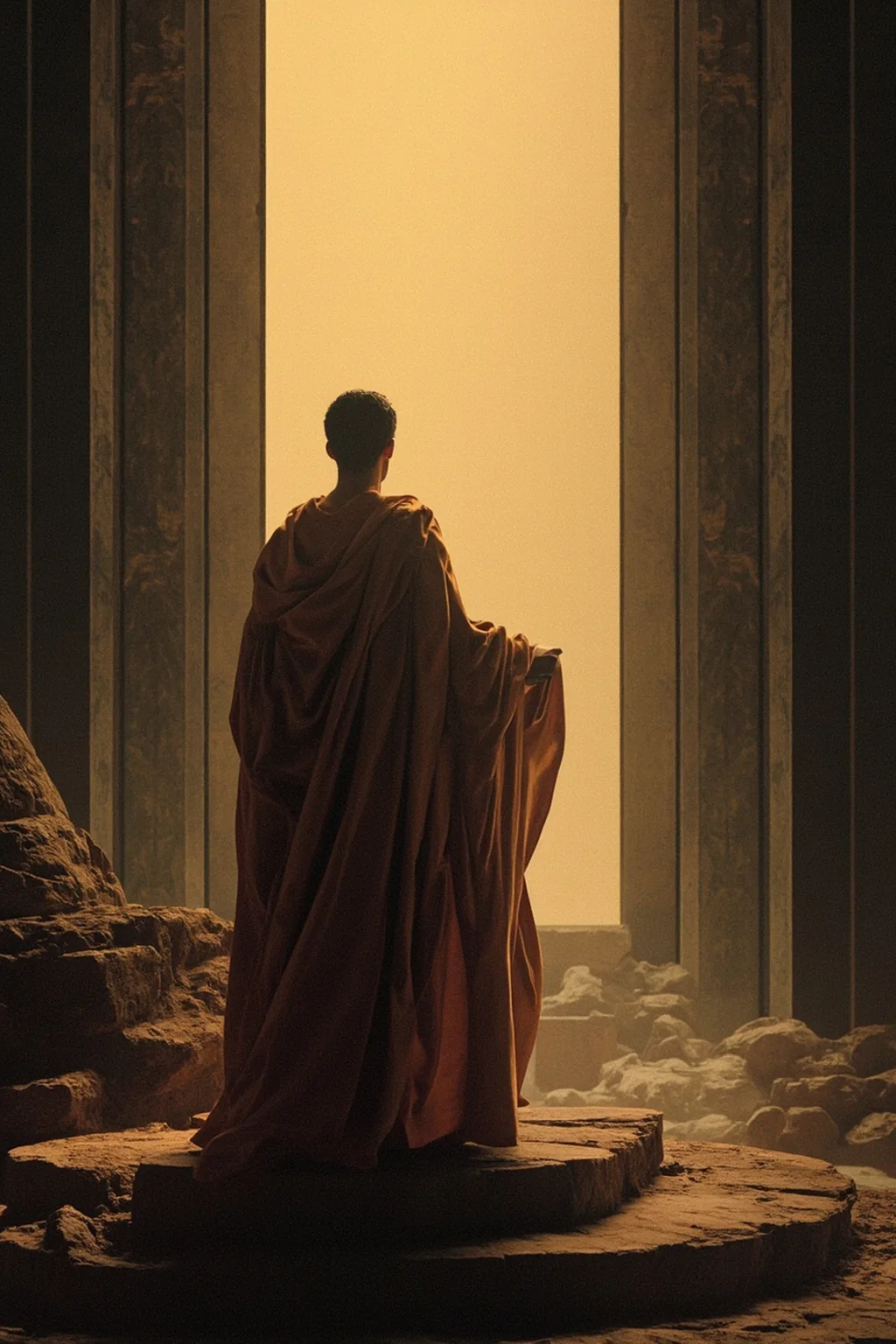
Written during military campaigns at the edges of the empire, the *Meditations* represent a private dialogue between a ruler and his conscience. Marcus Aurelius does not seek to teach a system, but to fortify his own mind against the corruption of power and the fear of death. The work moves from a catalog of gratitude to his teachers to a rigorous metaphysical examination of change, duty, and the rational soul, ultimately concluding that the good life consists in acting justly and accepting fate as a necessary part of the cosmic whole.
The text then explores the social dimension of this philosophy. Marcus views reasonable creatures as members of one body, united for a common operation. He distinguishes between merely seeing oneself as a “part” and recognizing oneself as a “member” of the rational community, the latter implying a genuine love for others based on a recognition of shared nature. He argues that external accidents affect only the body, while the soul remains unharmed unless it chooses to judge events as evil. His understanding, which rules over him, will not trouble itself unless it adopts a false opinion. He banishes the “demon” of opinion, realizing that true happiness consists in a good spirit rather than the validation of external views. Like gold or an emerald that retains its color regardless of how it is treated, the rational soul must remain good for its own sake.
Marcus further examines the root of negative emotions, particularly anger. When others trespass against him, he considers that they do so out of ignorance and a mistaken judgment of what is good or evil. This realization fosters pity rather than rage, as he recognizes that they act against their own true interests and will soon be gone, just as he will. He advises himself to wipe away all opinions, restrain unreasonable lusts, and focus on the present moment. He draws on Plato and other philosophers to illustrate the magnanimity of viewing all time and space, which makes mortal life seem insignificant. The true measure of a man, like Socrates, is not his death or his logic, but his soul’s disposition: justice towards men and holiness towards the Gods. One can be divine and happy even if unknown, simply by being modest, charitable, and obedient to God.
The original text of this work is in the public domain. This page focuses on a guided summary article, reading notes, selected quotes, and visual learning materials for educational purposes.