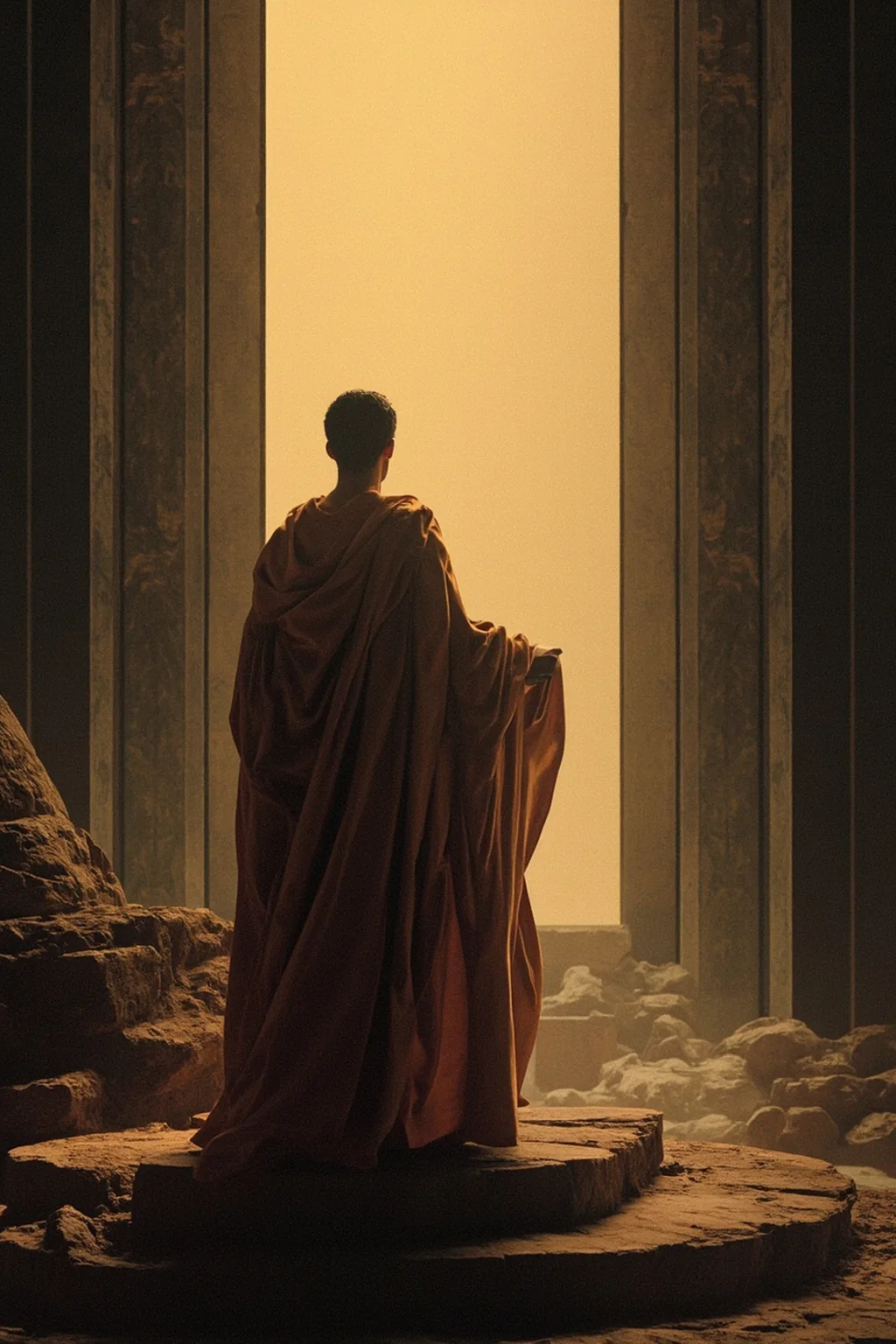
Written during military campaigns at the edges of the empire, the *Meditations* represent a private dialogue between a ruler and his conscience. Marcus Aurelius does not seek to teach a system, but to fortify his own mind against the corruption of power and the fear of death. The work moves from a catalog of gratitude to his teachers to a rigorous metaphysical examination of change, duty, and the rational soul, ultimately concluding that the good life consists in acting justly and accepting fate as a necessary part of the cosmic whole.
The final sections provide practical rules for living and dying. Marcus compares life to a wrestler’s practice, where one must be ready for whatever falls, rather than a dancer’s performance, which relies on specific steps. He addresses the experience of pain, noting that it is neither shameful nor harmful to the understanding. It is either short or endurable, and the mind can retain its tranquility by separating itself from bodily sensations. He urges himself not to be discouraged by minor discomforts like heat or lack of appetite, viewing them as tests of patience. He warns against being angry with the wicked, for the immortal Gods endure them without indignation, and man, who is himself a sinner and exists but for a moment, should hardly be less patient. Perfection, he concludes, is attained when one spends every day as if it were the last, free from dissipation and dissimulation. One should run out one’s time with cheerfulness, regardless of the exclamation of men or the violence of beasts, because everything proceeds according to the original deliberation of the universe, which once resolved upon the creation of the world and continues to govern it with a single, coherent intent.
Marcus Aurelius opens the eighth book by confronting the vanity of reputation and the failure to live consistently as a philosopher. He acknowledges that he has wandered from the path of wisdom and that his past actions have compromised his claim to a life of philosophy. Because he cannot reclaim the credit of a lifetime devoted to reason, he resolves to disregard fame entirely. Instead, he focuses on the time remaining to him, determining to live according to his true nature. He reflects on his past errors, noting that happiness was not found in logical subtleties, wealth, honor, or pleasure. Having exhausted these avenues without satisfaction, he concludes that true happiness resides only in practicing what is proper to man. This practice depends entirely on having correct opinions about good and evil, specifically that nothing is truly beneficial except what makes a man just, temperate, courageous, and liberal, and nothing is hurtful except what causes the contrary.
The original text of this work is in the public domain. This page focuses on a guided summary article, reading notes, selected quotes, and visual learning materials for educational purposes.