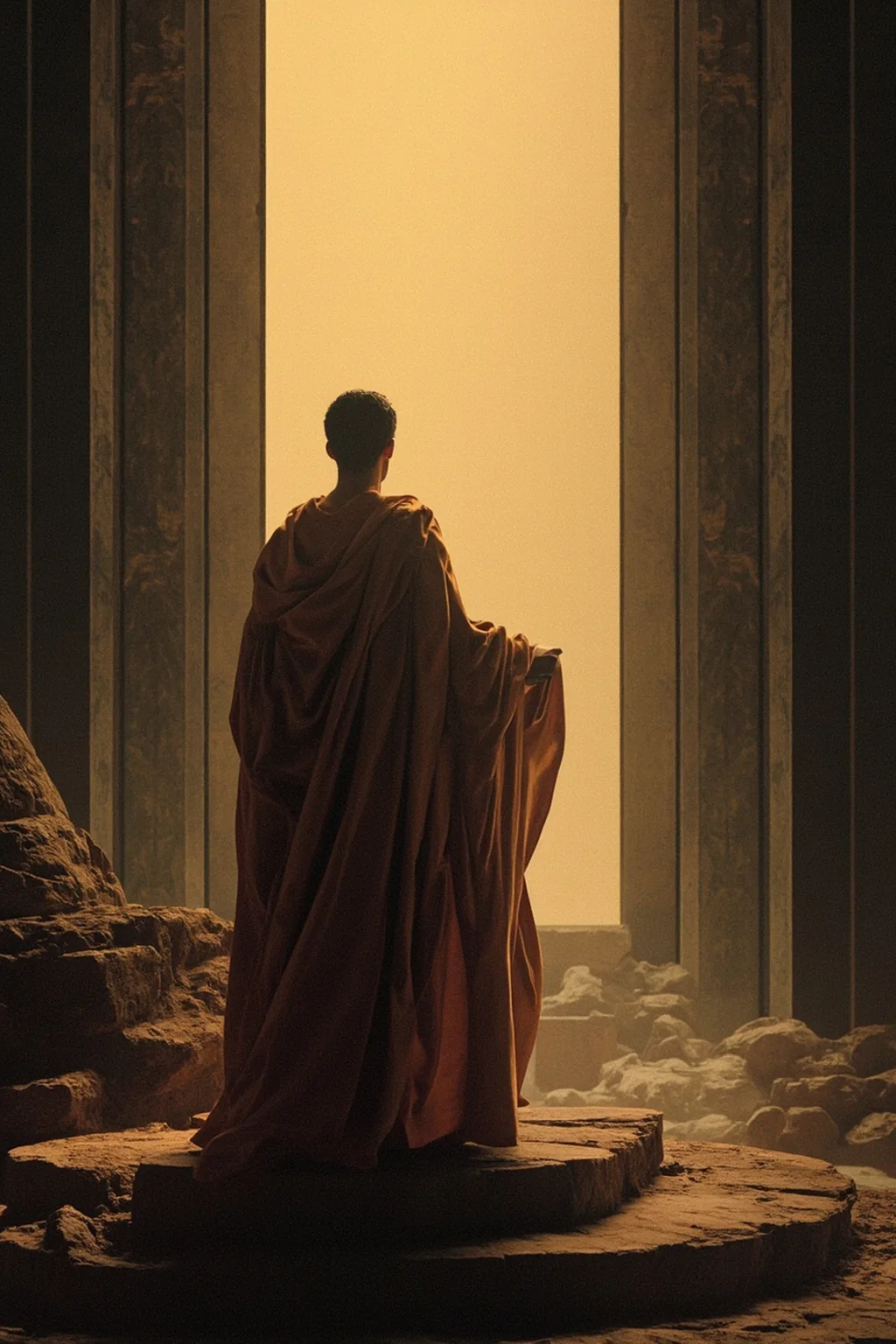
Written during military campaigns at the edges of the empire, the *Meditations* represent a private dialogue between a ruler and his conscience. Marcus Aurelius does not seek to teach a system, but to fortify his own mind against the corruption of power and the fear of death. The work moves from a catalog of gratitude to his teachers to a rigorous metaphysical examination of change, duty, and the rational soul, ultimately concluding that the good life consists in acting justly and accepting fate as a necessary part of the cosmic whole.
From this foundation of self-examination, Marcus establishes a criterion for future action. Before undertaking any act, he questions how it will align with his conscience and whether it will cause future regret. Recognizing the brevity of life, he urges himself to ensure that every action befits a reasonable being whose end is the common good and who is governed by the same law of right and reason as God. He contrasts the transient power of conquerors like Alexander, Pompeius, and Caius with the enduring authority of philosophers like Diogenes, Heraclitus, and Socrates. While the rulers were slaves to their errors, the philosophers penetrated the true nature of things and exercised genuine power over causes and subjects. Marcus advises that the actions of others should not trouble him, as they follow the nature of the universe. He resolves to focus on his own duty to be a good man, speaking justly, kindly, and modestly without hypocrisy.
The text then moves to a contemplation of the universe’s constant transformation. Marcus observes that nature is perpetually occupied with transferring matter, changing things, and carrying them to other places. Because this process is usual and ordinary, he argues there is no cause to fear new things, as all things are disposed by equality. A rational nature finds its proper speed when it gives no consent to false or uncertain imaginations, directs all motions toward the common good, and willingly embraces whatever the common nature appoints. He compares the rational soul to a leaf, which is part of the common nature of plants, yet notes that human nature is part of a reasonable and just common nature that cannot be hindered. This nature makes an equal distribution of duration, substance, form, and operation according to the worth of things.
Turning to practical discipline, Marcus addresses the lack of time for reading by substituting it with moral exercises. He argues that even without books, one has time to exercise the soul against carnal pleasures, to contemn honor, and to care for the welfare of the ungrateful. He forbids complaining about court life and defines repentance as self-reproach for neglecting what is profitable. Since no honest man ever repented neglecting a carnal pleasure, he deduces that such pleasures are neither good nor profitable. He prescribes a method for analyzing objects by examining their constitution, substance, use, form, and duration. Similarly, he advises analyzing fancies and imaginations according to their true nature. When encountering others, he suggests immediately considering their opinions regarding good, evil, pain, and pleasure. Understanding their dogmata explains their actions and prevents wonder or anger at their behavior, just as a physician does not wonder at a fever.
The original text of this work is in the public domain. This page focuses on a guided summary article, reading notes, selected quotes, and visual learning materials for educational purposes.