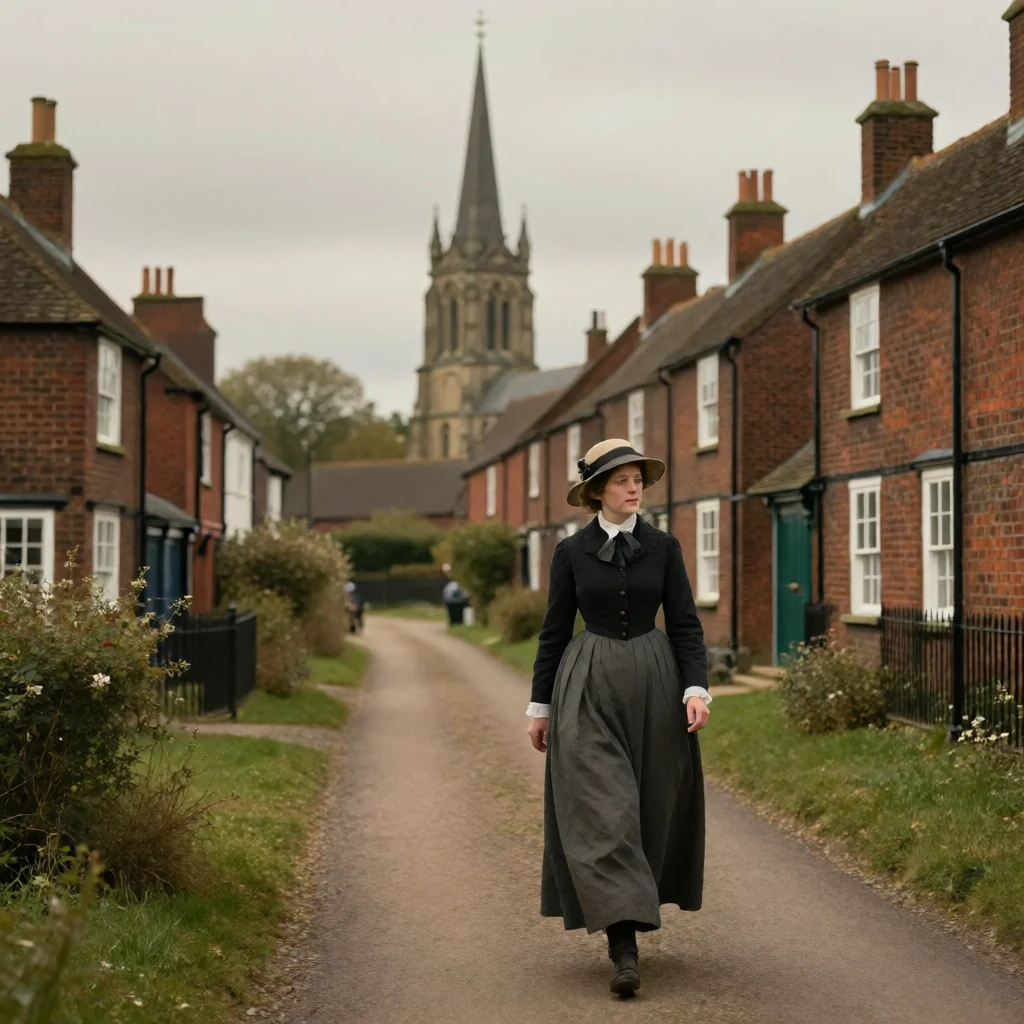
Bulstrode’s defensive outburst at the meeting
Bulstrode’s defensive outburst at the meeting
Bulstrode undergoes a crisis of feeling almost too violent for his delicate frame, racked by the sudden realization that his life is a failure, that he stands dishonored before those he had schooled himself to reprove, and that God has left him unscreened to the triumphant scorn of men glad to have their hatred justified. Yet through that bodily infirmity runs a tenacious nerve of self-preserving will. Still seated, for he cannot rise, he speaks in a hoarse but audible voice, protesting as a Christian minister against proceedings dictated by “virulent hatred.” He turns the accusation upon his hearers: who shall be his accuser, he demands, but men whose own lives are unchristian, nay scandalous, who use low instruments to carry out their ends, whose profession is “a tissue of chicanery,” and who spend their incomes on sensual enjoyments while he devotes his to the best objects of this life and the next? At the word “chicanery” murmurs and hisses rise, and four men start up at once; but Hawley’s instantaneous outburst outpaces the others. He repudiates Bulstrode’s “canting palavering Christianity,” declares he does not maintain thieves or cheat offspring of their inheritance in the name of religion, and again demands either a satisfactory explanation or Bulstrode’s withdrawal from posts in which they decline him as a colleague. The chairman Thesiger, while offering Bulstrode full opportunity for hearing, urges him as his clergyman to quit the room and avoid further hindrance to business.
Lydgate assists Bulstrode and realizes the bribe
Lydgate assists Bulstrode and realizes the bribe
Bulstrode hesitates a moment, takes his hat from the floor, and slowly rises, grasping the corner of the chair so totteringly that Lydgate is certain he cannot walk unaided. Despite his own shock and the bitter recognition of what this public association must look like, Lydgate cannot bear to see a man sink for want of help; he rises and gives Bulstrode his arm, leading him from the room. In that very act of gentle duty, the full meaning of his connection to Bulstrode breaks over him: he becomes convinced that the thousand pounds was a bribe and that Raffles’s treatment was tampered with from an evil motive. The inferences are tightly linked, and the town, knowing of the loan, already believes it to be a bribe that Lydgate accepted. Morally compelled, Lydgate escorts Bulstrode to the Bank, sends a man for his carriage, and waits to see him home. Meanwhile the meeting’s business is dispatched and breaks into eager discussion of the Bulstrode—and Lydgate—affair. Mr. Brooke, who has only heard imperfect hints until now and worries that he “went a little too far” in countenancing Bulstrode, makes himself fully informed and confides his benevolent sadness to Mr. Farebrother as the clergyman prepares to walk back to Lowick.
CHAPTER LXXI.
Chapter LXXI follows Mr. Brooke and Mr. Farebrother as they drive together to visit Dorothea at the Manor after a sanitary meeting. During the carriage ride, Mr. Brooke expresses hopeful skepticism about reports concerning Lydgate’s conduct, while Mr. Farebrother remains troubled, privately fearing that Lydgate may have compromised himself under financial pressure.
A Visit to Mrs. Casaubon
Upon arriving at the Manor, Mr. Brooke and Mr. Farebrother find Dorothea outdoors and in good spirits. After a brief exchange about the meeting, Mr. Brooke reveals that troubling news has been discussed. As they walk through the garden toward the churchyard gate, Mr. Farebrother heading on to the parsonage, Dorothea hears the full account of the accusations against Lydgate and listens with deep interest, requesting details and impressions be repeated.
Dorothea’s Resolve
After a short pause at the churchyard gate, Dorothea addresses Mr. Farebrother with firm conviction, declaring her refusal to believe Lydgate guilty of base conduct. She resolves to discover the truth and clear his name.
BOOK VIII.
The title “Sunset and Sunrise” suggests a meditation on transition and renewal, contrasting the declining end of one era with the ascending beginning of another. This imagery of cyclical passage implies a chapter concerned with the passage of time and the movement from one state to another, perhaps reflecting on an ending that carries within it the seeds of a new beginning.
The original text of this work is in the public domain. This page focuses on a guided summary article, reading notes, selected quotes, and visual learning materials for educational purposes.