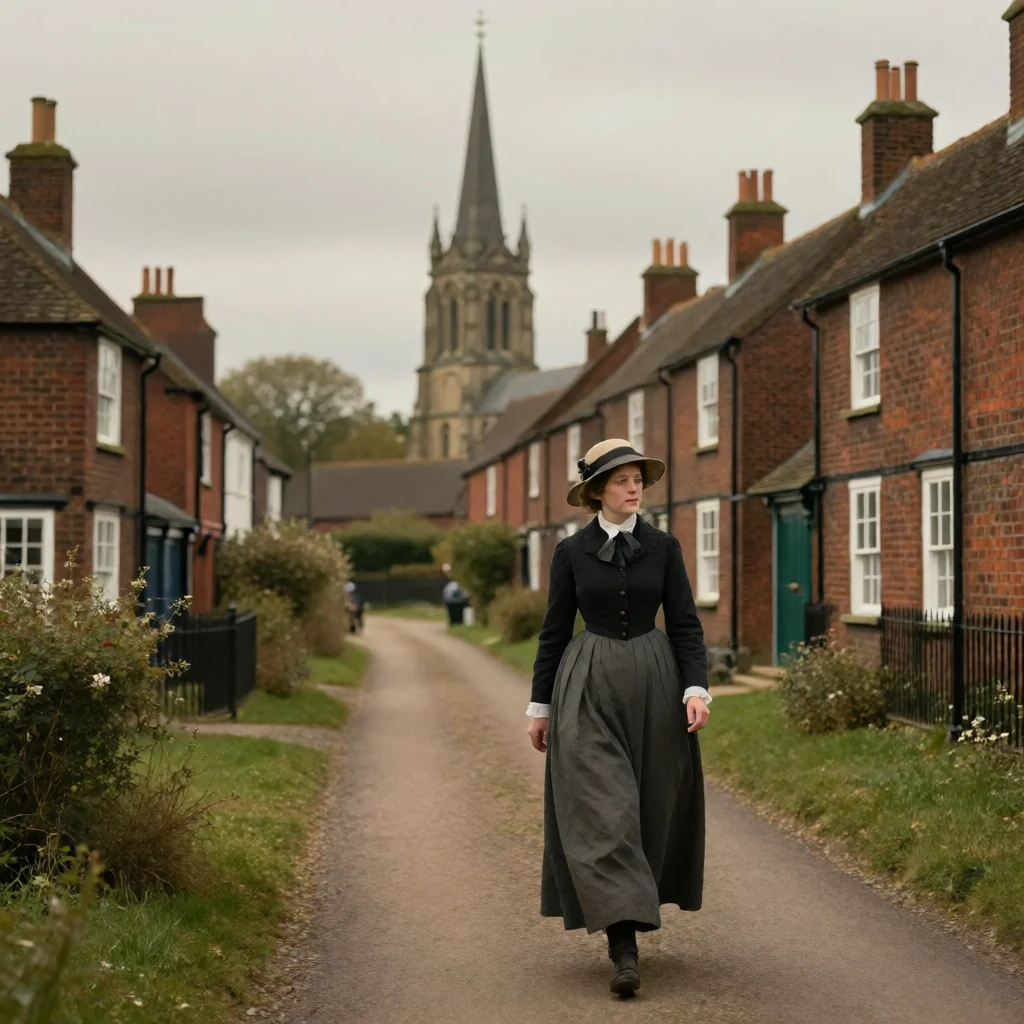
Sunset and Sunrise
This section bears the title “Sunset and Sunrise,” indicating a passage marked by the temporal threshold between two natural cycles. The title itself evokes the transition from one phase to another, suggesting either a chapter of endings or one of renewed beginnings.
CHAPTER LXXII.
This chapter continues Dorothea’s determination to defend Lydgate against accusations of having accepted a bribe from Bulstrode, while her family and friends urge caution. The chapter explores themes of faith, trust, character, and the tension between moral idealism and pragmatic wisdom.
Full Souls as Double Mirrors
The chapter opens with an epigraph comparing full souls to double mirrors that create an endless vista of fair things before, repeating things behind. This poetic imagery introduces the chapter’s concern with reflection, perception, and the complexity of human character.
Dorothea’s Resolve to Vindicate Lydgate
Dorothea’s impetuous generosity drives her to want to immediately vindicate Lydgate from suspicion of accepting bribe money. However, Mr. Farebrother’s experienced counsel causes her to consider the delicate nature of the situation. He suggests there is no solid ground for public inquiry—otherwise Hawley would have pursued it—and approaching Lydgate privately risks taking the matter as a deadly insult. Dorothea expresses conviction that Lydgate’s conduct has not been guilty, drawing on her intensified belief that people are generally better than their neighbors think they are.
Farebrother’s Cautions on Probing Lydgate’s Conduct
Farebrother explains the difficulty of beginning any inquiry into Lydgate’s conduct. He sees two paths: publicly setting the magistrate and coroner to work, or privately questioning Lydgate. Neither path offers clear advantage. He has experienced difficulty speaking to Lydgate on personal matters and believes one should know the truth about his conduct beforehand before feeling confident of a good result.
Dorothea’s Discontent with Farebrother’s Caution
For the first time, Dorothea feels rather discontented with Mr. Farebrother. She dislikes his cautious weighing of consequences instead of an ardent faith in efforts of justice and mercy that would conquer through emotional force. Her recent experiences have strengthened her opposition to unfavorable constructions of others, yet she finds herself at odds with the pragmatic approach her mentor recommends.
Dorothea Renews Her Lydgate Defense at Dinner
Two days later at dinner at the Manor with her uncle and the Chettams, Dorothea returns to the subject with renewed vivacity. She argues that Lydgate would understand his friends’ first wish to justify him when hearing calumnies. Drawing on her own past troubles where Lydgate advised and attended her during illness, she insists that such bonds of mutual support are what give life meaning.
Farebrother’s View of Mutable Human Character
Farebrother gently cautions Dorothea that character is not cut in marble—it is not something solid and unalterable. Character, he explains, is something living and changing that may become diseased, much like bodies do. While he can conceive of an honorable man succumbing to temptation under pressure of hard circumstances, he maintains he would not believe anything worse of Lydgate except under stringent proof.
Sir James Chettam’s Warnings Against Meddling
Sir James Chettam, now an anxious brother-in-law rather than the diffident suitor he once was, disagrees with Dorothea’s approach. He warns that she cannot undertake to manage a man’s life for him. Lydgate must know how he stands and act for himself. He cautions her to keep back from meddling with the Bulstrode business, as they do not yet know what may turn up.
Farebrother’s Concession to Dorothea’s Ardor
Despite his reservations, Farebrother concedes that a woman may venture on some efforts of sympathy that would hardly succeed if men undertook them. He is almost converted by Dorothea’s ardor, acknowledging the potential value of her compassionate intervention in Lydgate’s situation.
Dorothea’s Plan to Consult Lydgate on the Hospital
Dorothea proposes using the hospital as an opportunity to consult Lydgate and gain his confidence. She explains that since she is not to have the land, she might take Bulstrode’s place in providing for the Hospital, and she needs to consult Lydgate about the prospects of doing good by keeping up the present plans. This would give her the perfect opportunity to ask for his confidence and potentially learn information that might clarify the circumstances.
The original text of this work is in the public domain. This page focuses on a guided summary article, reading notes, selected quotes, and visual learning materials for educational purposes.