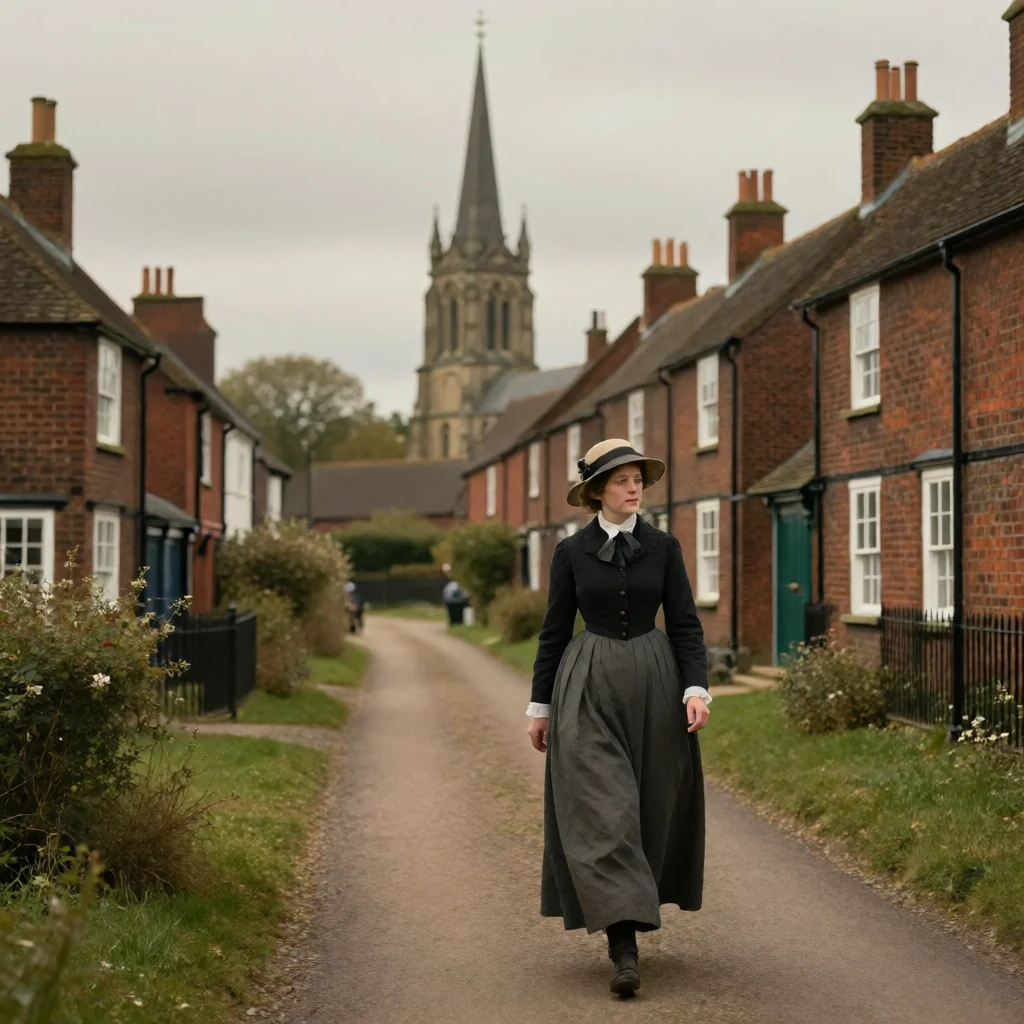
The Marriage Question
Celia presses the central issue: how can Dorothea marry Mr. Ladislaw, whom none of them ever imagined she could marry? Celia compares the new attachment unfavorably with Dorothea’s former wish to marry Mr. Casaubon for his great soul and learning, suggesting Dorothea seems determined to make herself uncomfortable.
Celia’s Tears
Celia becomes increasingly earnest as she describes the practical consequences of the marriage—the estrangement from little Arthur and the impossibility of seeing Dorothea because of James’s disapproval. Celia’s rare tears appear, and her small features show touching distress.
Dorothea’s Firmness
Dorothea responds with tender gravity, assuring Celia that if they never meet, it will not be her fault. She maintains a firm and gentle composure in the face of Celia’s distress.
James’s Disapproval
Celia explains that James disapproves because he considers the marriage wrong and believes Dorothea is behaving as she always has—only now more seriously. Celia confesses she cannot help loving Dorothea despite everything, and worries aloud about where Dorothea could possibly live.
Plans for London
Dorothea announces her intention to go to London, settling the question of where she will live with a simple declaration.
Sisterly Affection
Celia laments that Dorothea will live in a street and be poor, offering to share half her belongings but recognizing she cannot because they will never see each other. Dorothea affectionately calls her “Kitty” and bids her take comfort, suggesting James may eventually forgive.
Celia’s Acceptance
Celia drying her eyes returns to her argument that it would be better if Dorothea were not married at all, since marriage brings discomfort and contradicts her sister’s stated principles. She reminds Dorothea that nobody thinks Mr. Ladislaw a proper husband and that Dorothea once said she would never marry again.
The Untold Story
Celia reflects on how mysterious the whole attachment is and declares she cannot think how it all came about. She expresses that it would be pleasant to hear the story of how Dorothea and Ladislaw became engaged.
Discussing Ladislaw
Celia settles cozily and asks if Dorothea can tell her how it came about. Dorothea pinches her sister’s chin and says if Celia knew the story, it would not seem wonderful—implying the tale involves deeply felt experience.
Emotional Plea
Celia pleads softly to be told the story, but Dorothea gently declines, saying Celia would have to feel with her to truly understand. The exchange reveals the depth of the sisters’ affection and the limits of what words alone can convey.
Gentle Reassurance
Dorothea uses the moment of closeness with Celia to offer gentle reassurance about James’s possible forgiveness and her own resolve, blending affection with quiet certainty.
Firm Declaration
Acknowledging she might have been wiser and done something better had she been better, Dorothea makes her firm declaration: she has promised to marry Mr. Ladislaw and she is going to marry him. Her tone carries a note Celia has long recognized as unmistakable.
Sisters’ Conversation
Celia, recognizing Dorothea’s unyielding tone, dismisses all contest and asks simply and comfortingly whether Ladislaw is very fond of Dorothea. Hearing that he is and that Dorothea is fond of him, Celia finds this “nice,” though she wistfully wishes for a husband like James nearby. The sisters settle into comfortable reflection on what has transpired.
CHAPTER LXXXV.
This chapter depicts the psychological torment of Bulstrode as he prepares to leave Middlemarch, along with his wife’s grief and efforts to arrange property benefits for her brother’s family. The chapter opens with a Bunyan quote personifying persecuting passions as jurors condemning Faithful, establishing the theme of internal judgment and moral condemnation that permeates the chapter.
The Jury of Persecuting Passions
The chapter begins with an extended epigraph from Pilgrim’s Progress, in which Bunyan personifies the persecuting passions—Mr. Blindman, Mr. No-good, Mr. Malice, Mr. Love-lust, and others—as jurors who unanimously condemn Faithful before the judge. Each passion speaks its condemnation, from “Away with such a fellow from the earth!” to “Might I have all the world given me, I could not be reconciled to him.” This allegorical passage establishes the framework for understanding Bulstrode’s internal and external condemnation.
The original text of this work is in the public domain. This page focuses on a guided summary article, reading notes, selected quotes, and visual learning materials for educational purposes.