Victor Hugo Love Quote
The chapter leads with an excerpt from Victor Hugo’s L’homme qui rit that frames love as a divine, preservative force that sustains bonds formed in early life. It describes the “incorruptible adhesion” of those who love from life’s dawn, the freshness of long-held old loves, and compares the gentle, enduring devotion of aged couples to the pastoral, timeless love of Daphnis and Chloé.
Garth Family Tea Time Exchange
During tea time at the Garth home, Mrs. Garth greets Caleb as he returns from work, asks if he has eaten his dinner, confirms Mary is in the garden with Letty, and notes Fred has not yet arrived. When she sees Caleb preparing to head back out, he reassures her he only intends to speak to Mary for a moment before returning, as he often prioritizes his work over family meals.
Mary Garth and Letty in the Garden
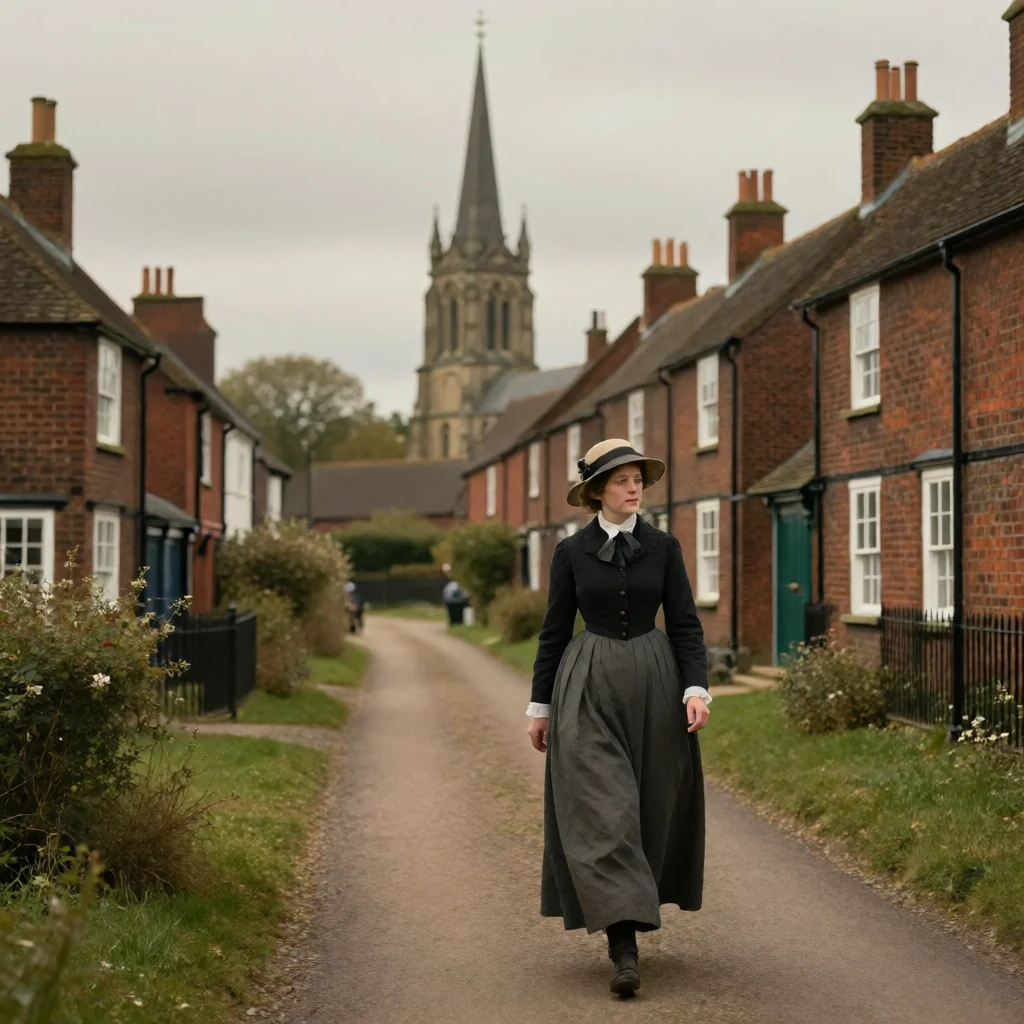
Mary is found in a sunny, grassy corner of the Garth garden, swinging a delighted Letty between two pear trees, with a pink kerchief tied over her head to shield her eyes from the low sun. When she spots her father, she leaves the swing, pushes back her kerchief, and greets him with a warm, involuntary smile of loving pleasure.
Caleb Garth Shares Stone Court News with Mary
Caleb pulls Mary aside for a walk to share news that Fred will move to Stone Court to manage the farm for his aunt Bulstrode, with Caleb taking on oversight responsibility for the arrangement. He explains that with prudent saving, Fred could eventually own the farm’s stock and furniture, notes the extra work may mildly upset Mrs. Garth, and says he wanted to tell Mary first so she can share the news with Fred before he discusses the details with him directly.
Mary and Fred’s Engagement Conversation
When Fred arrives at the Garth home, he and Mary banter playfully about his worn coat cuffs and his plan to save for a wedding suit, with Mary teasing him about unrealistic expectations. Mary then shares Caleb’s news about the Stone Court farm opportunity, and the pair reaffirm their deep, unwavering love for each other, agreeing to wait to marry until Fred is settled. Their tender moment is interrupted by Ben, who runs up asking if they are coming inside to eat cake.
Finale: Fred and Mary’s Married Life
The narrative opens its finale by framing marriage as a new beginning rather than a final end, noting that Fred and Mary built a lasting, happy partnership. Fred became a well-regarded farmer known for both practical and theoretical agricultural work, published a popular treatise on green crop cultivation and cattle feeding, and remained steady and hardworking, with Mary’s support helping him stay grounded. The couple had three sons, remained devoted to each other over the years, and continued to live at Stone Court, where in their old age they could be seen sitting peacefully at the same window Mary once looked out of during her time working for Peter Featherstone.
Lydgate and Rosamond’s Later Years
Tertius Lydgate never saw his hair turn white, dying of diphtheria at age 50 with his wife and children provided for via a large life insurance policy. He built a successful medical practice alternating between London and a continental spa, published a treatise on gout, but always considered himself a failure for not achieving his original scientific ambitions. Rosamond never made another serious misstep, remaining mild-tempered but inflexible, often admonishing Lydgate and wearing down his resistance over time. After Lydgate’s death, she married a wealthy elderly physician, made a social show with her daughters, and never spoke ill of Dorothea Brooke, who had aided her during a past crisis. The couple had a history of sharp, cutting arguments—including Lydgate once comparing Rosamond to a basil plant that flourished on “murdered man’s brains,” a jab she countered by noting he had chosen her and had long praised Mrs. Ladislaw over her.
The original text of this work is in the public domain. This page focuses on a guided summary article, reading notes, selected quotes, and visual learning materials for educational purposes.