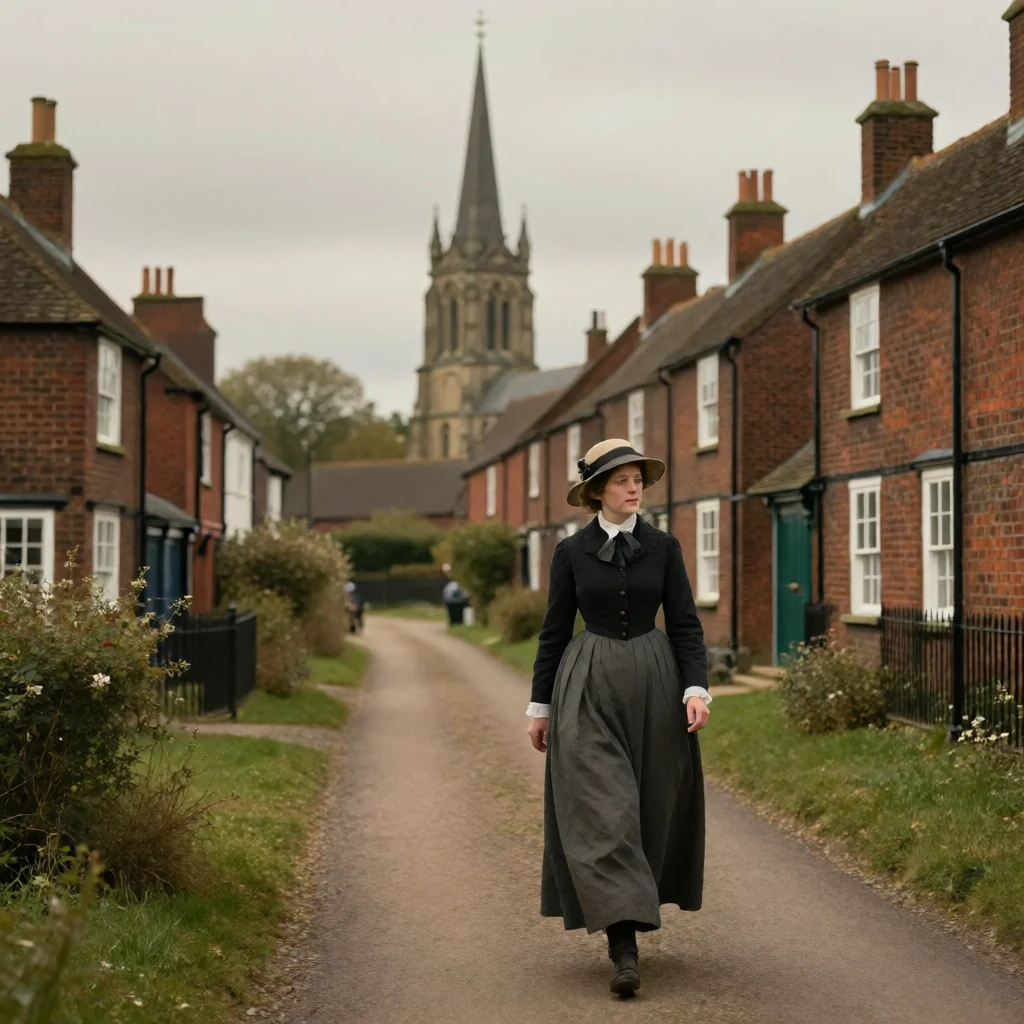
CHAPTER XXIX.
One morning, some weeks after her arrival at Lowick, Dorothea—but why always Dorothea? Was her point of view the only possible one with regard to this marriage? I protest against all our interest, all our effort at understanding being given to the young skins that look blooming in spite of trouble. Mr. Casaubon had an intense consciousness within him, and was spiritually a-hungered like the rest of us. He had done nothing exceptional in marrying—nothing but what society sanctions, and considers an occasion for wreaths and bouquets. On such a young lady he would make handsome settlements, and he would neglect no arrangement for her happiness: in return, he should receive family pleasures and leave behind him that copy of himself which seemed so urgently required of a man—to the sonneteers of the sixteenth century. He had always intended to acquit himself by marriage, and the sense that he was fast leaving the years behind him was a reason to him for losing no more time.
When he had seen Dorothea he believed that he had found even more than he demanded: she might really be such a helpmate to him as would enable him to dispense with a hired secretary, an aid which Mr. Casaubon had never yet employed and had a suspicious dread of. Mr. Casaubon was nervously conscious that he was expected to manifest a powerful mind. He had not had much foretaste of happiness in his previous life. To know intense joy without a strong bodily frame, one must have an enthusiastic soul. Mr. Casaubon had never had a strong bodily frame, and his soul was sensitive without being enthusiastic. His experience was of that pitiable kind which shrinks from pity, and fears most of all that it should be known. The difficulty of making his Key to all Mythologies unimpeachable weighed like lead upon his mind.
To this mental estate, to sensibilities thus fenced in, Mr. Casaubon had thought of annexing happiness with a lovely young bride; but even before marriage, as we have seen, he found himself under a new depression in the consciousness that the new bliss was not blissful to him. Marriage, like religion and erudition, nay, like authorship itself, was fated to become an outward requirement, and Edward Casaubon was bent on fulfilling unimpeachably all requirements. Dorothea had succeeded in making it a matter of course that she should take her place at an early hour in the library and have work assigned her. There was to be a new Parergon, a small monograph on some lately traced indications concerning the Egyptian mysteries. These minor monumental productions were always exciting to Mr. Casaubon.
Thus Mr. Casaubon was in one of his busiest epochs, and Dorothea joined him early in the library where he had breakfasted alone. Celia at this time was on a second visit to Lowick. Dorothea was going silently to her desk when he said, in that distant tone which implied that he was discharging a disagreeable duty—“Dorothea, here is a letter for you, which was enclosed in one addressed to me.” It was a letter of two pages, and she immediately looked at the signature. “Mr. Ladislaw! What can he have to say to me?” she exclaimed. “You can, if you please, read the letter,” said Mr. Casaubon, severely pointing to it with his pen, and not looking at her. “But I may as well say beforehand, that I must decline the proposal it contains to pay a visit here. I trust I may be excused for desiring an interval of complete freedom from such distractions as have been hitherto inevitable, and especially from guests whose desultory vivacity makes their presence a fatigue.”
This ill-tempered anticipation that she could desire visits which might be disagreeable to her husband was too sharp a sting to be meditated on until after it had been resented. “Why do you attribute to me a wish for anything that would annoy you? You speak to me as if I were something you had to contend against. Wait at least till I appear to consult my own pleasure apart from yours.” “Dorothea, you are hasty,” answered Mr. Casaubon, nervously. “I think it was you who were first hasty in your false suppositions about my feeling,” said Dorothea, in the same tone. “We will, if you please, say no more on this subject, Dorothea. I have neither leisure nor energy for this kind of debate.” Mr. Casaubon dipped his pen and made as if he would return to his writing, though his hand trembled so much that the words seemed to be written in an unknown character.
Dorothea left Ladislaw’s two letters unread on her husband’s writing-table and went to her own place, the scorn and indignation within her rejecting the reading of these letters. There had been this apparent quiet for half an hour, and Dorothea had not looked away from her own table, when she heard the loud bang of a book on the floor, and turning quickly saw Mr. Casaubon on the library steps clinging forward as if he were in some bodily distress. He was still for two or three minutes, unable to speak or move, gasping for breath. Dorothea rang the bell violently, and presently Mr. Casaubon was helped to the couch. “Can you lean on me, dear?” she said with her whole soul melted into tender alarm. When Mr. Casaubon descended the three steps and fell backward in the large chair, he no longer gasped but seemed helpless and about to faint. Sir James Chettam came in, having been met in the hall with the news that Mr. Casaubon had “had a fit in the library.” “Good God! this is just what might have been expected,” was his immediate thought.
When Sir James entered the library, however, Mr. Casaubon could make some signs of his usual politeness, and Dorothea, who in the reaction from her first terror had been kneeling and sobbing by his side now rose and herself proposed that some one should ride off for a medical man. “I recommend you to send for Lydgate,” said Sir James. Dorothea appealed to her husband, and he made a silent sign of approval. So Mr. Lydgate was sent for and he came wonderfully soon, for the messenger met him leading his horse along the Lowick road and giving his arm to Miss Vincy.
“Poor dear Dodo—how dreadful!” said Celia. “It is very shocking that Mr. Casaubon should be ill; but I never did like him. And I think he is not half fond enough of Dorothea.” “I always thought it a horrible sacrifice of your sister,” said Sir James. “She is a noble creature,” said the loyal-hearted Sir James. He had just had a fresh impression of this kind, as he had seen Dorothea stretching her tender arm under her husband’s neck and looking at him with unspeakable sorrow.
The original text of this work is in the public domain. This page focuses on a guided summary article, reading notes, selected quotes, and visual learning materials for educational purposes.