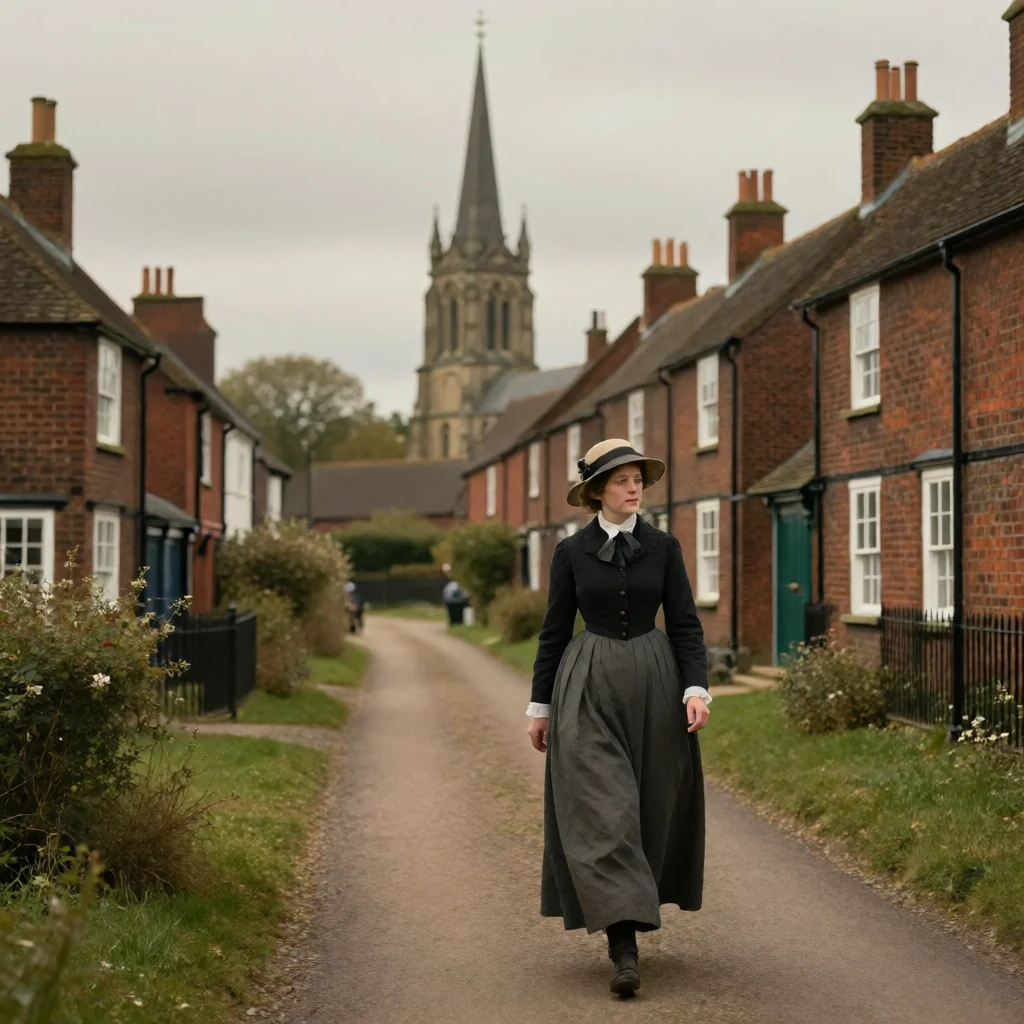
CHAPTER LXXIV.
The chapter opens with the line mercifully grant that we may grow aged together. In Middlemarch a wife could not long remain ignorant that the town held a bad opinion of her husband. No feminine intimate might carry her friendship so far as to make a plain statement to the wife of the unpleasant fact known or believed about her husband; but when a woman with her thoughts much at leisure got them suddenly employed on something grievously disadvantageous to her neighbors, various moral impulses were called into play which tended to stimulate utterance. Candor was one. To be candid, in Middlemarch phraseology, meant to use an early opportunity of letting your friends know that you did not take a cheerful view of their capacity, their conduct, or their position; and a robust candor never waited to be asked for its opinion. Then, again, there was the love of truth, a lively objection to seeing a wife look happier than her husband’s character warranted. Stronger than all, there was the regard for a friend’s moral improvement, sometimes called her soul.
There were hardly any wives in Middlemarch whose matrimonial misfortunes would in different ways be likely to call forth more of this moral activity than Rosamond and her aunt Bulstrode. Mrs. Bulstrode was not an object of dislike, and had never consciously injured any human being. Men had always thought her a handsome comfortable woman. When the scandal about her husband was disclosed they remarked of her, ah, poor woman, she is as honest as the day, she never suspected anything wrong in him, you may depend on it. Women, who were intimate with her, talked together much of poor Harriet, imagined what her feelings must be when she came to know everything. Rosamond was more severely criticised and less pitied. She had always been showy, said Mrs. Hackbutt. We can hardly blame her for that, said Mrs. Sprague, because few of the best people in the town cared to associate with Bulstrode. I think we must not set down people’s bad actions to their religion, said falcon-faced Mrs. Plymdale. It is true Mr. Plymdale has always been on good terms with Mr. Bulstrode, and Harriet Vincy was my friend long before she married him. I can hardly think she knows anything yet. She wears very neat patterns always, said Mrs. Plymdale. As to her knowing what has happened, it can’t be kept from her long. The Vincys know, for Mr. Vincy was at the meeting. It will be a great blow to him. There is his daughter as well as his sister.
Poor Mrs. Bulstrode, meanwhile, had been no further shaken by the oncoming tread of calamity than in the busier stirring of that secret uneasiness which had always been present in her since the last visit of Raffles to The Shrubs. She had been innocently cheered by her husband’s more hopeful speech about his own health. The calm was disturbed when Lydgate had brought him home ill from the meeting, and in spite of comforting assurances during the next few days, she cried in private from the conviction that her husband was not suffering from bodily illness merely, but from something that afflicted his mind. Something, she felt sure, had happened. She begged leave for her daughters to sit with their father, and drove into the town to pay some visits, conjecturing that if anything were known to have gone wrong she should see or hear some sign of it. She called on Mrs. Hackbutt, who rubbed the back of one hand with the palm of the other held against her chest, and let her eyes ramble over the pattern on the rug. Mrs. Hackbutt longed to say, if you take my advice you will part from your husband, but it seemed clear to her that the poor woman knew nothing of the thunder ready to bolt on her head. Mrs. Bulstrode felt suddenly rather chill and trembling; there was evidently something unusual behind Mrs. Hackbutt’s speech.
When she was in conversation with Mrs. Plymdale, that comforting explanation seemed no longer tenable. Selina received her with a pathetic affectionateness and a disposition to give edifying answers. Mrs. Plymdale let fall certain words of mysterious appropriateness about her resolution never to turn her back on her friends, which convinced Mrs. Bulstrode that what had happened must be some kind of misfortune. She began to have an agitating certainty that the misfortune was something more than the mere loss of money. She said good-by with nervous haste, and told the coachman to drive to Mr. Vincy’s warehouse. When she entered the private counting-house where her brother sat at his desk, her knees trembled and her usually florid face was deathly pale. Something of the same effect was produced in him by the sight of her: he rose from his seat to take her by the hand, and said with his impulsive rashness, God help you, Harriet, you know all. That moment was perhaps worse than any which came after. Without that memory of Raffles she might still have thought only of monetary ruin, but now along with her brother’s look and words there darted into her mind the idea of some guilt in her husband, then under the working of terror came the image of her husband exposed to disgrace, and then after an instant of scorching shame in which she felt only the eyes of the world, with one leap of her heart she was at his side in mournful but unreproaching fellowship with shame and isolation. He told her everything, very inartificially, in slow fragments. You’d better have been a Vincy all your life, and so had Rosamond. Mrs. Bulstrode made no reply. Give me your arm to the carriage, Walter, she said. I feel very weak.
The original text of this work is in the public domain. This page focuses on a guided summary article, reading notes, selected quotes, and visual learning materials for educational purposes.