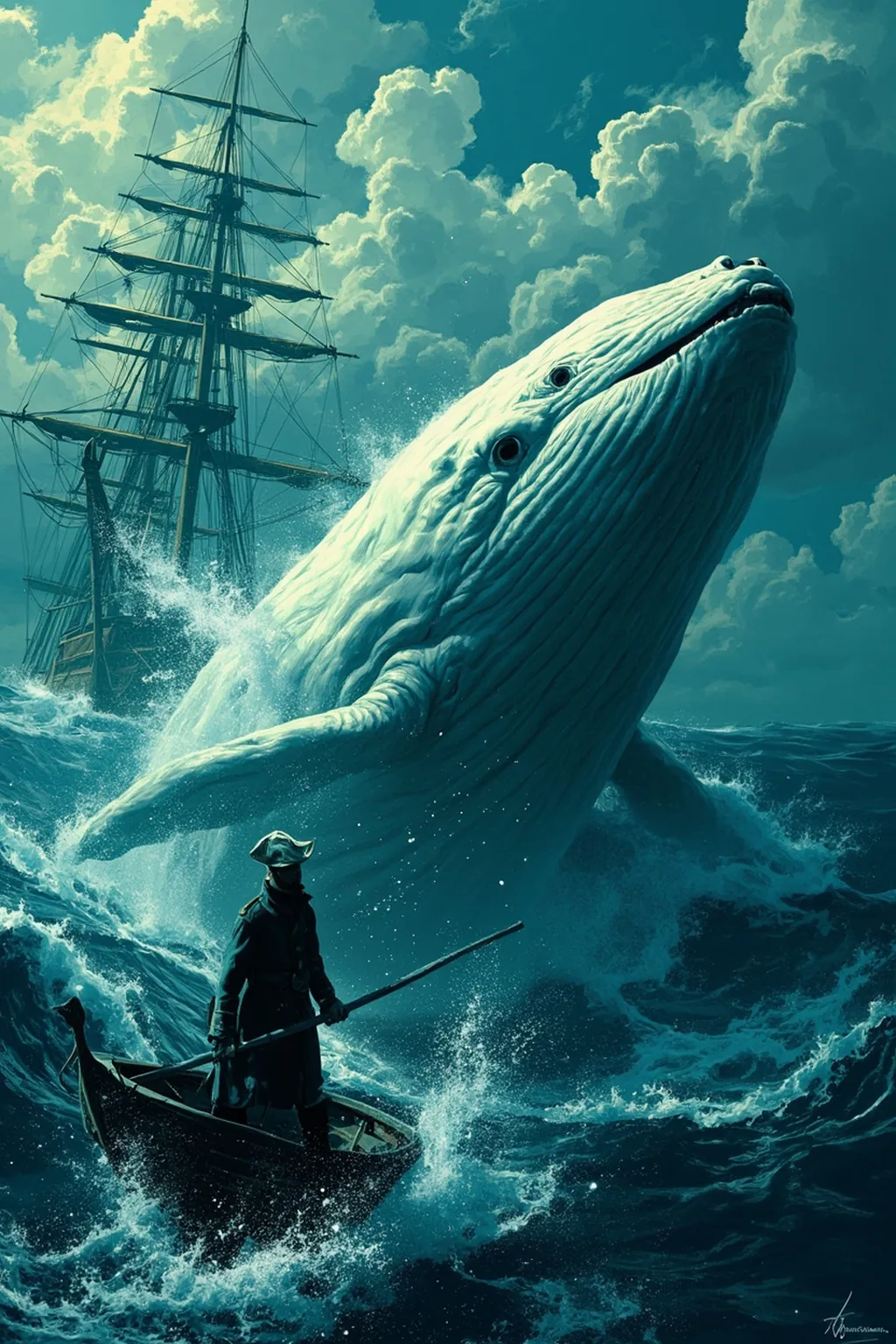
The Little-Known Razor Back Whale
The Razor Back whale stands as one of the most poorly documented species in maritime literature. Despite its distinctive physical characteristic—a prominent sharp ridge along its back—this whale has managed to evade thorough scientific observation and documentation. The creature’s very name suggests its defining feature, yet beyond this single anatomical detail, almost nothing certain is known about its behavior, diet, or reproduction. This section explores the challenges inherent in studying a marine animal that deliberately avoids human contact and remains largely hidden from view.
Razor Back Sightings Off Cape Horn
The primary documented encounters with the Razor Back whale have occurred in the treacherous waters off Cape Horn, the notorious southernmost tip of South America. Sailors have observed this whale at a distance in these cold, storm-prone waters, suggesting a preference for subpolar or polar regions. The remote and dangerous nature of these waters has contributed significantly to the scarcity of reliable observations, as few vessels venture into these regions and even fewer are positioned to study marine life during their passage.
Elusive Nature of the Razor Back
Perhaps the most striking characteristic of the Razor Back whale is its extraordinarily retiring and elusive disposition. This animal actively avoids both whalers seeking to harvest it and philosophers hoping to study it, demonstrating a remarkable ability to escape human detection despite its substantial size. While the text explicitly states this evasion does not indicate cowardice, the whale has never permitted observers to see more than its distinctive dorsal ridge breaking the water’s surface, suggesting either extreme wariness or a fundamentally secretive nature.
The Razor Back’s Sharp Ridged Back
The whale’s most notable physical feature—a long, sharp ridge running along its back—provides both its common name and its primary means of identification. This dorsal ridge rises prominently from the animal’s body and has been observed cutting through the water’s surface during the rare moments when the creature has shown itself. The sharpness of this ridge suggests it may serve a biological purpose, perhaps related to hydrodynamics, thermoregulation, or defense, though without closer observation, such speculation remains unfounded.
Limited Knowledge of the Razor Back Whale
This concluding section summarizes the fundamental paradox of the Razor Back whale: a creature documented yet almost entirely unknown. The narrator freely admits to knowing little more about the animal than its existence and basic physical description, and this ignorance is shared by all others who have encountered it. The chapter ends with a resigned acknowledgment—“Let him go”—recognizing that further pursuit of knowledge about this particular whale must await either a change in the animal’s secretive behavior or advances in marine observation technology.
BOOK I. (Folio), CHAPTER VI. (Sulphur Bottom).—Another retiring
This chapter describes the Sulphur Bottom whale, characterized by its distinctive brimstone-colored belly. The narrator acknowledges the limited knowledge about this mysterious creature, noting it is rarely seen except in remote southern waters, and even then at great distances. Unlike other whales, the Sulphur Bottom is never hunted because it would easily outrun any whaling line. The chapter concludes with the end of Book I (the Folio section) and transitions to Book II.
Sulphur Bottom
The Sulphur Bottom is identified as a gentile whale with a distinctive brimstone belly, possibly acquired from deep dives along Tartarian tiles. This whale remains elusive, being seen only in the remoter southern seas, and always at too great a distance to observe closely. It is never chased due to its ability to outrun substantial lengths of whaling line. Numerous prodigies are told of this creature, but the narrator admits no further truthful details can be added, even by the most experienced Nantucket whalemen.
BOOK I. (Folio)
Book I, designated as the Folio section of the work, concludes with this chapter. The Folio encompasses the largest whales, including the Sulphur Bottom discussed in this chapter. Following the description of the Sulphur Bottom, the book transitions to its second section.
The original text of this work is in the public domain. This page offers a compressed quick-read summary for educational purposes.