The Ancient Chambers and Dorothée’s Story
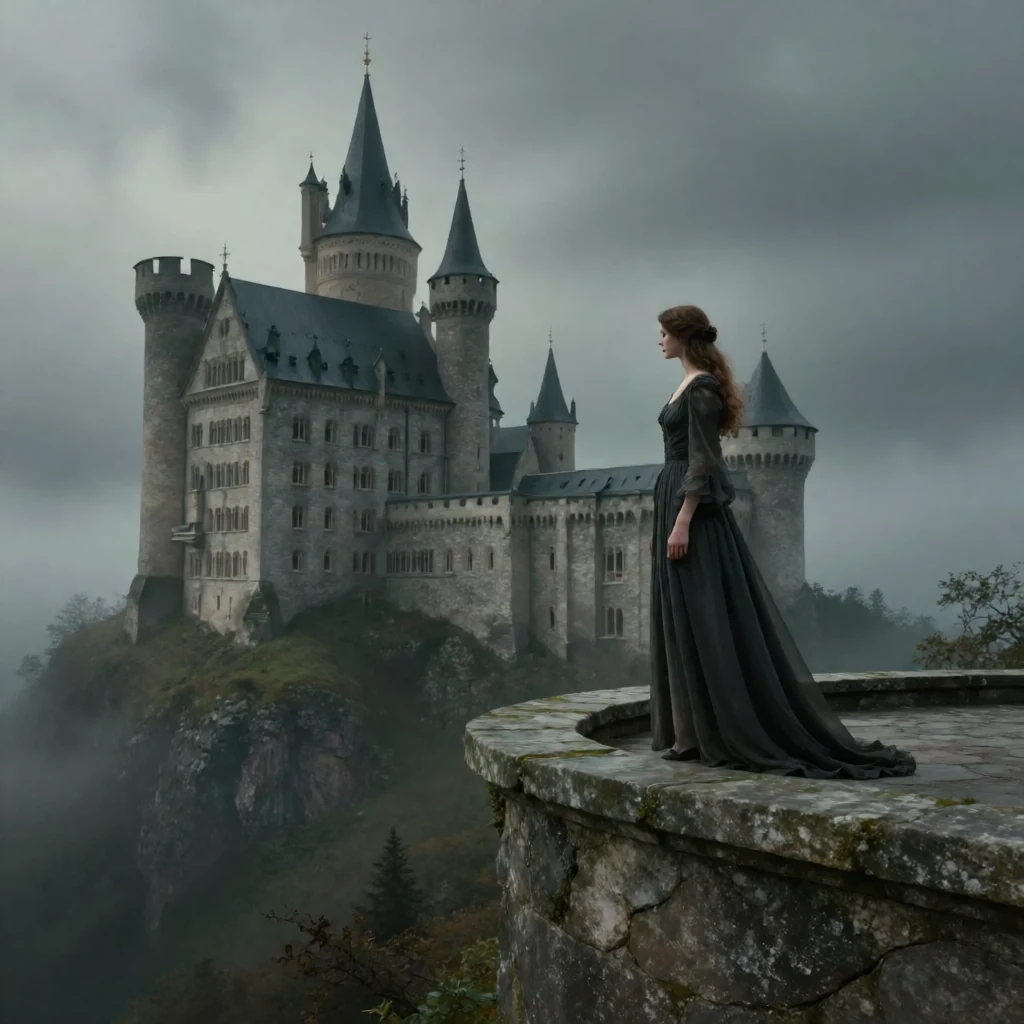
Lady Blanche escorts Emily through the château’s ancient chambers, filled with old but magnificent furniture. Emily is amused by the architecture and décor, comparing them to the even more antique and grotesque chambers of Udolpho. The housekeeper Dorothée, whose appearance is as antiquated as her surroundings, accompanies them and regards Emily with deep attention. Dorothée seems particularly interested in Emily, frequently gazing at her with intensity. The old housekeeper’s demeanor suggests there is more to her curiosity than mere politeness, hinting at some past connection or recognition that will later emerge.
Recognition of the Udolpho Landscape
While gazing from one of the château’s windows, Emily suddenly recognizes familiar landmarks—the fields, woods, and gleaming brook she had seen with La Voisin shortly after her father’s death, on her way from the monastery to her cottage. She realizes this is the château that St. Aubert had deliberately avoided during his lifetime, having made cryptic remarks about it at the time. This discovery disturbs Emily deeply, as she recalls her father’s emotional reaction upon finding himself near this mansion and other peculiar circumstances of his conduct. The recognition of this landscape connects her past to the present mystery of Château-le-Blanc, suggesting her father’s knowledge of its dark secrets.
The Midnight Music and the Locked Gallery
Emily inquires about the mysterious midnight music she had heard mentioned, and Dorothée confirms that the music is still heard but its source remains undiscovered. When Emily asks why no one has pursued the investigation, Dorothée cryptically suggests that some believe it is caused by a spirit. Emily, remembering her recent experiences at Udolpho, determines not to be misled by superstition, yet feels awe mingling with her curiosity. Dorothée reveals that the music began after the Marchioness’s death. Lady Blanche presses Dorothée for more information about the château’s history, but the housekeeper grows alarmed and refuses to explain further, particularly when she begins to mention “my lord, the Marquis” before catching herself. The conversation is interrupted when they reach a gallery door that has remained locked since the Marchioness’s death, which Dorothée refuses to open, saying she has not seen those rooms since her lady died.
The Marchioness’s Death and Grief
As they walk through the gallery, Dorothée tells Emily that Lady Blanche reminds her of the late Marchioness, remembering when the young woman first arrived at the château in full bloom. When Blanche asks if the Marchioness remained happy, Dorothée shakes her head somberly. Pressed for more details, Dorothée reveals that she sees the Marchioness on her deathbed whenever she thinks of those times, describing it as a “terrible scene.” When Emily asks why it was so terrible, Dorothée responds philosophically that death is always terrible. Her grief remains fresh despite the years that have passed, and she can recall those events more clearly than recent occurrences—a common trait of the grieving. Emily, observing the tears in Dorothée’s eyes, refrains from further questioning to spare the old woman’s feelings.
The Count’s Invitation and Emily’s Consent
Emily is interrupted while expressing gratitude for the hospitality she has received and mentioning her intention to go to the convent. The Count and Countess urge her to extend her stay at the château, pressing the invitation with such apparent sincerity that Emily, though eager to visit her friends at the monastery and visit her father’s grave, consents to remain a few more days. The Count’s benign manner reminds Emily powerfully of her late father, and she feels both gratitude and embarrassment toward the Countess, who receives her with one of her occasional fascinating smiles—a warmth that results from a previous conversation between the Count and his wife about Emily. The Count’s evident worthiness inclines Emily to trust him almost from their first meeting.
Letters to the Abbess, Quesnel, and Valancourt
Emily writes immediately to the abbess, requesting to be received into St. Claire convent as a boarder. She also sends letters to her uncle Monsieur Quesnel and to Valancourt, informing them merely of her arrival in France. Since she does not know Valancourt’s current location, she directs her letter to his brother’s estate in Gascony. These letters represent Emily’s efforts to reconnect with her past life and make arrangements for her future, balancing her desire to return to the familiar surroundings of the convent with her responsibilities to family and friends. The letters also mark her transition from the相对安全和舒适的环境 of the château back to the uncertain world outside.
The original text of this work is in the public domain. This page focuses on a guided summary article, reading notes, selected quotes, and visual learning materials for educational purposes.