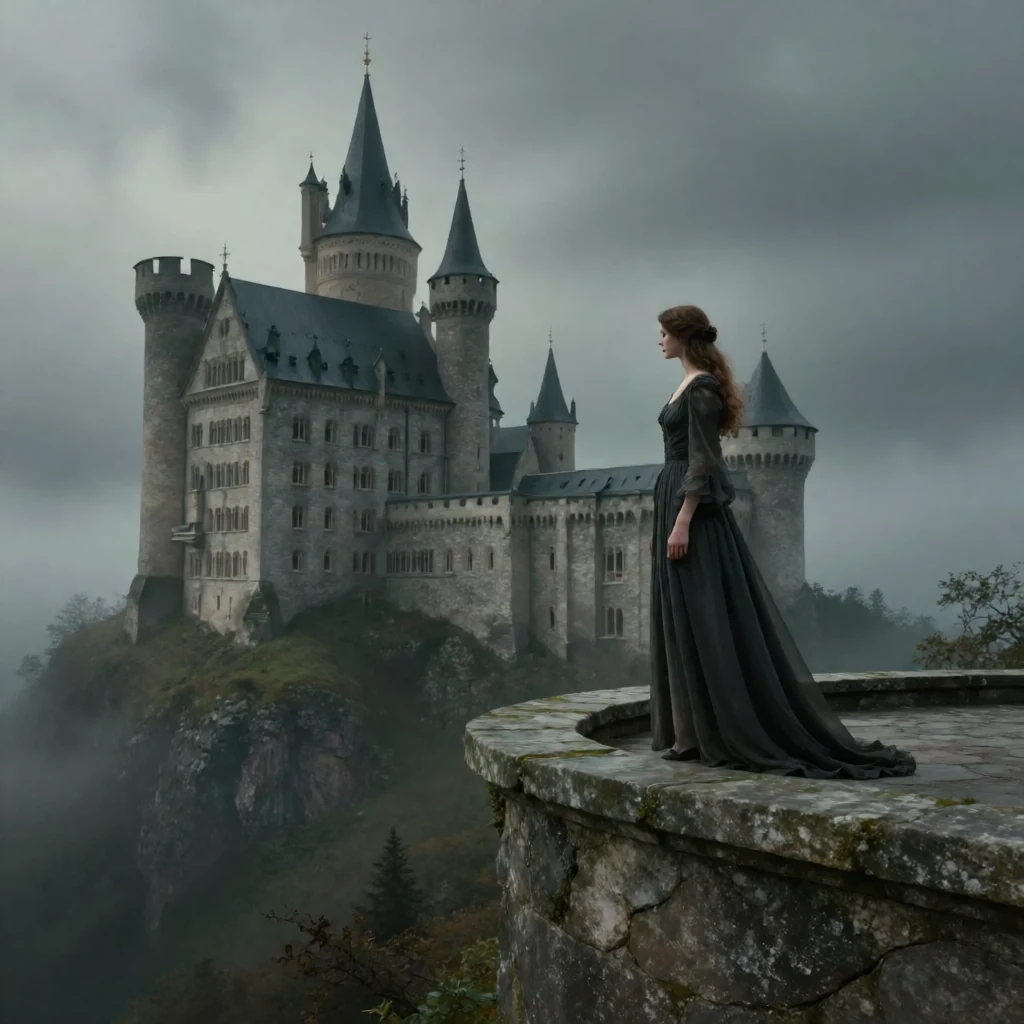
The North Apartments Vigil
Count de Villefort received troubling news that his family had been thrown into confusion by superstition, and he remained anxious about Ludovico’s disappearance despite offering rewards. The Count decided to personally watch in the north apartments that night, promising not to go alone. Though Lady Blanche and Emily entreated him to abandon this危险ous endeavor, he refused, declaring he had no faith in supernatural apparitions and would be prepared for any mortal threat. His son Henri reluctantly agreed to accompany him, while the Baron and M. Du Pont joined Lady Blanche in begging him not to tempt fate, warning that an evil spirit surely haunted those chambers, as Ludovico’s disappearance proved its malice. The skeptical Count smiled at their superstitions, armed himself, and retired to the north apartments with Henri, set to investigate the mystery that night.
CHAPTER IX
CHAPTER IX
This chapter continues the suspenseful events at the castle, introducing Sister Agnes’s tragic backstory while advancing Emily’s journey toward La Vallée. The Count maintains mysterious reserve about the supernatural events, and Emily learns of a forced marriage that led to madness. The chapter concludes with Emily’s departure for Thoulouse at M. Quesnel’s summons.
Baron St. Foix’s Enquiry
Baron St. Foix’s Enquiry
The Baron, kept awake by anxiety, rises early and knocks on the Count’s closet door. He finds the Count grave and reserved. Despite the Baron’s pressing enquiries about the night’s events, the Count refuses to discuss what occurred regarding Ludovico or the north chambers. He entreats the Baron to be silent about anything extraordinary he may observe in the Count’s future conduct. The Baron agrees to discretion but suspects the Count has become a convert to belief in the supernatural.
The Count’s Reserve
The Count’s Reserve
The Count requests the Baron not question Henri on the topic and asks that he notice nothing to the family. At breakfast, the Count meets his family with a cheerful countenance, deflecting enquiries with light ridicule and assumed gaiety, assuring them they need not fear the north chambers. He maintains his unusual reserve toward his oldest friend of thirty years, insisting no ordinary circumstance has imposed this silence.
Henri’s Unconcealed Fear
Henri’s Unconcealed Fear
Henri is less successful at disguising his feelings than the Count. Terror has not entirely faded from his countenance; he is often silent and thoughtful. When he attempts to laugh at Mademoiselle Bearn’s eager enquiries, it is evidently only an attempt.
The Count at the Convent
The Count at the Convent
In the evening, the Count visits the convent as promised. Emily notices playful ridicule mixed with reserve in his mention of the north apartment. When she reminds him of his promise to share the result of his enquiries and asks for proof the chambers are haunted, his look becomes solemn. He tells her not to let the abbess infect her good understanding with fancies, but adds with a profound sigh that apparitions come not on light or sportive errands. He falls into momentary thoughtfulness and refuses to say more.
Nuns Discuss the North Apartment
Nuns Discuss the North Apartment
Emily discovers the nuns already know about the Count spending the night in the apartment from which Ludovico disappeared. The news has spread rapidly through peasants who bring fruit to the monastery. The nuns express various opinions—most condemn the Count’s conduct as rash and presumptuous, calling it provocation of an evil spirit’s vengeance. Only Sister Frances contends he acted with the bravery of a virtuous mind, knowing himself guiltless and claiming the protection of a higher Power.
Sister Agnes’s Fit of Madness
Sister Agnes’s Fit of Madness
Sister Frances defends the Count’s virtuous courage. Agnes then warns that the guilty cannot claim divine protection, declaring “who is he, that shall dare to call himself innocent!” She becomes increasingly agitated, uttering “to what a horrible depth may we fall!” Her eyes resume a wild expression as she exclaims about seeing figures rise like furies to torment her. She stands in fixed horror, eyes straining and moving slowly around the room. Another nun leads her away. Agnes recovers, sighs deeply, and says she is feverish, knowing not what she says.
The original text of this work is in the public domain. This page focuses on a guided summary article, reading notes, selected quotes, and visual learning materials for educational purposes.