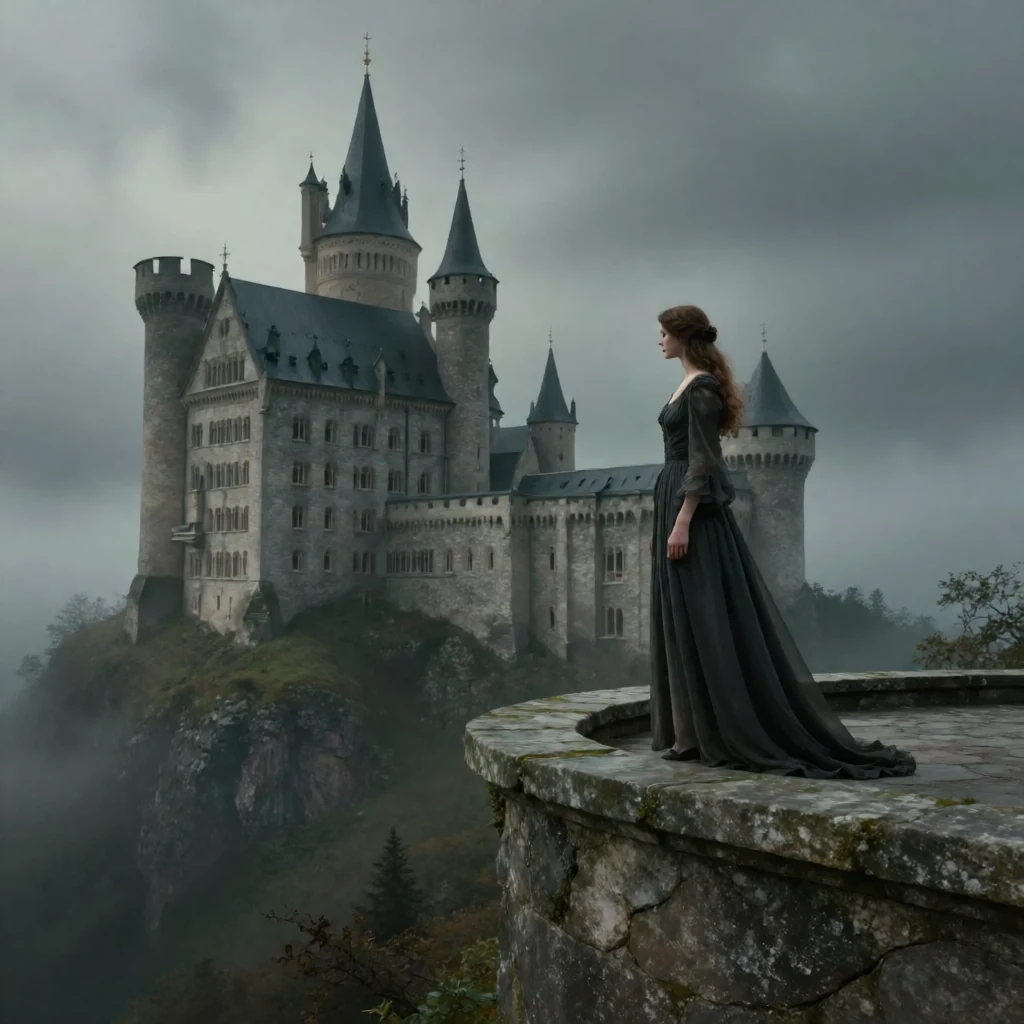
Twilight on the Mountains
Twilight on the Mountains. The setting sun casts a yellow gleam over pine and chestnut forests and tints the snowy peaks, but the light soon fades and the scenery takes on a more tremendous aspect: where the torrent had been seen it is now only heard, and the dark mass of mountains alone remains. Blanche views the deepening scene in silence, her enthusiasm giving way to apprehension as she considers the doubtful precipices bordering the road; she asks her father about the distance to the inn and the danger of proceeding at such a late hour. The guides offer a doubtful answer and suggest waiting for moonlight, but ultimately assure the travelers there is no danger and press on. Blanche’s apprehension eases, and she again yields to pensive pleasure, watching twilight spread over woods and mountains while her lover St. Foix gradually turns their conversation from scenery to his affection, until the magical illusions of the hour are forgotten in tender sentiment.
The Monumental Cross
The Monumental Cross. As evening deepens into night and gathering vapours roll along the mountain sides, the guides propose to rest until the moon rises, suspecting a storm is coming. While searching for shelter, the party spots an object through the dusk on a rocky point below and cautiously approaches, only to discover a monumental cross marking the site of a murder. The guides identify it as the memorial to a Count de Beliard, slain years before by banditti infesting that part of the Pyrenees, the monument’s unusual size suggesting a person of distinction. Blanche shudders as one guide relates horrifying particulars in a low, frightened tone; a flash of lightning and distant thunder then alarm the travelers, who abandon the scene of solitary horror in search of shelter.
The Guides’ Boasts
The Guides’ Boasts. Having regained their former track, the guides attempt to interest the Count with tales of robberies and murders committed along the very passes they must traverse, interweaving accounts of their own dauntless courage and narrow escapes. The chief guide draws forth one of four pistols tucked into his belt and boasts it has shot three robbers within the year, then brandishes an enormous clasp-knife before recounting its deeds; St. Foix, perceiving Blanche’s terror, interrupts him. The Count, secretly amused, whispers his plan to Blanche and proceeds to recount exploits of his own that far outstrip the guide’s stories, delivered with such artful coloring of truth that the guides fall visibly silent. Their loquacity laid to rest, the chief guide’s vigilance sharpens—he listens anxiously to thunder and the rising breeze, halts before a tuft of cork trees and draws a pistol in anticipation of bandits hiding behind—until the Count can no longer contain his laughter.
Shelter in the Cave
Shelter in the Cave. Reaching a level spot sheltered by overhanging cliffs and a wood of larch, and with the guides still ignorant of their distance from the inn, the travelers resolve to rest until the moon rises or the storm disperses. Blanche alights with St. Foix’s assistance and the whole party enters a shallow cavity formed by curving rocks, where a struck light and kindled fire provide cheerfulness, warmth against the chilling mountain night air, and protection from the wolves infesting the wilds. Provisions spread on a rocky projection make an excellent supper, after which St. Foix saunters toward the eastern point of the precipice seeking the moon, but encounters only gloom broken by murmuring woods far below, distant thunder, and faint voices from the cave. He observes the sublime spectacle of sulphureous clouds and lightnings illuminating the abyss, and then the partial gleam of the cave fire on rocks and pine-woods, contemplating the picturesque scene within the cave itself, where Blanche’s elegant form contrasts with the Count’s majestic figure and the grotesque habits of the guides, all framed against a dusky-tinted larch.
Moonrise and Mountain Lore
Moonrise and Mountain Lore. The moon, broad and yellow, rises over the eastern summits from among embattled clouds, revealing dimly the grandeur of the heavens, rolling vapours, and doubtful mountains—prompting St. Foix to recall lines from The Minstrel on the dreadful pleasure of standing sublime like a shipwrecked mariner on a desert coast. Awakened by the guides calling his name, he returns to calm the fears of the Count and Blanche. As the storm appears to approach, the party remains in the cave, where the Count, seated between his daughter and St. Foix, converses on the natural history of the Pyrenees—the mineral and fossil substances, veins of marble and granite, strata of shells discovered near summits thousands of fathoms above sea level, tremendous chasms and caverns, and the phenomena marking the history of the deluge. He then turns to the civil history of the mountains, naming remarkable French and Spanish fortresses in the passes and recounting celebrated sieges and encounters from the era when Ambition first drove Solitude from her deep recesses and left the print of blood upon her sacred haunts.
The original text of this work is in the public domain. This page focuses on a guided summary article, reading notes, selected quotes, and visual learning materials for educational purposes.