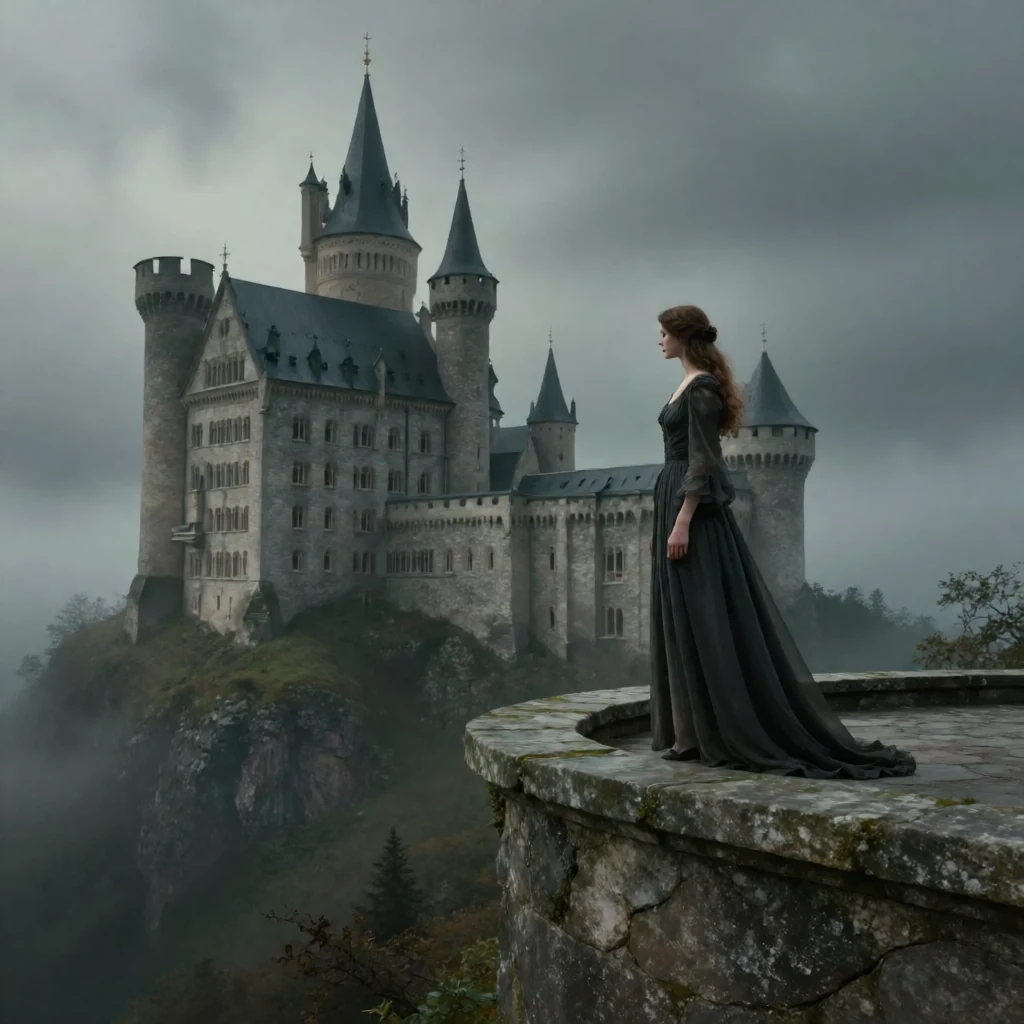
Theresa Delivers Valancourt’s Ring to Emily
In the evening, Theresa, despite her lameness, comes to deliver the ring with which Valancourt had entrusted her. When Theresa presents it, Emily is much affected, remembering that she had seen him wear it often in happier days. She is, however, much displeased that Theresa had received it and positively refuses to accept it herself, though doing so would have afforded her a melancholy pleasure.
Theresa Urges Emily and Valancourt’s Reconciliation
Theresa entreats and expostulates, then describes the distress of Valancourt when he gave her the ring and repeats the message with which he commissioned her to deliver it. Emily cannot conceal the extreme sorrow this recital occasions her, but weeps and remains lost in thought. Theresa then declares she has known Emily from infancy, loves her as her own, and wishes to see her happy; she argues that she has reason to love Valancourt as her own son, that the two clearly love one another, and that they are so alike in temper and ways that, if married, they would be the happiest couple in the whole province. She laments that people fling away their happiness and then weep, and declares that learning, if it teaches folks no better than that, is not worth having.
Emily Rejects the Ring and Bars Valancourt’s Messages
Emily, though she feels the justness of some of Theresa’s remarks, does not choose to explain the circumstances that have determined her conduct toward Valancourt. She tells Theresa that the subject displeases her to be renewed, that she has reasons for her conduct which she does not think proper to mention, and that the ring must be returned with an assurance that she cannot accept it with propriety. At the same time, she forbids Theresa to repeat any future message from Valancourt if she values her esteem and kindness. Theresa, afflicted, makes another feeble attempt to interest Emily for Valancourt, but the unusual displeasure in Emily’s countenance soon obliges her to desist, and she departs in wonder and lamentation.
Emily Plans a Marriage Portion for Annette and Ludovico
To relieve her mind in some degree from the painful recollections that intrude upon it, Emily busies herself in preparations for the journey into Languedoc. While Annette, who assists her, speaks with joy and affection of the safe return of Ludovico, Emily considers how she might best promote their happiness and determines, if his affection appears as unchanged as that of the simple and honest Annette, to give her a marriage portion and settle them on some part of her estate.
Emily Considers Repurchasing Her Family’s Paternal Estate
These considerations about Annette and Ludovico lead Emily to the remembrance of her father’s paternal domain, which his affairs had formerly compelled him to dispose of to M. Quesnel. She frequently wished to regain it because St. Aubert had lamented that the chief lands of his ancestors had passed into another family, and because they had been his birth-place and the haunt of his early years. To the estate at Thoulouse she has no peculiar attachment and wishes to dispose of it in order to purchase her paternal domains, if M. Quesnel can be prevailed on to part with them, which, as he talks much of living in Italy, does not appear very improbable.
CHAPTER XV
After a week at La Vallée, Emily departs with Count De Villefort and the Lady Blanche for his estate at Château-le-Blanc, where they are warmly received by the Countess and others. M. Du Pont awaits them there, and the Count, mistaking Emily’s mildness for openness to his friend’s suit, presses her further to abandon her affection for Valancourt, only to discover her resolve unchanged. Emily withdraws for a solitary evening walk that carries her to the monastery of St. Clair, where she observes the monks at vespers amid a scene of peaceful contemplation framed by an ancient chestnut tree. She learns that Sister Agnes lies dying in a state of profound dejection, and after conveying her regards to the nuns, she returns through gathering darkness to the château, musing upon the account she has heard before composing her thoughts with an address to the winds.
The original text of this work is in the public domain. This page focuses on a guided summary article, reading notes, selected quotes, and visual learning materials for educational purposes.