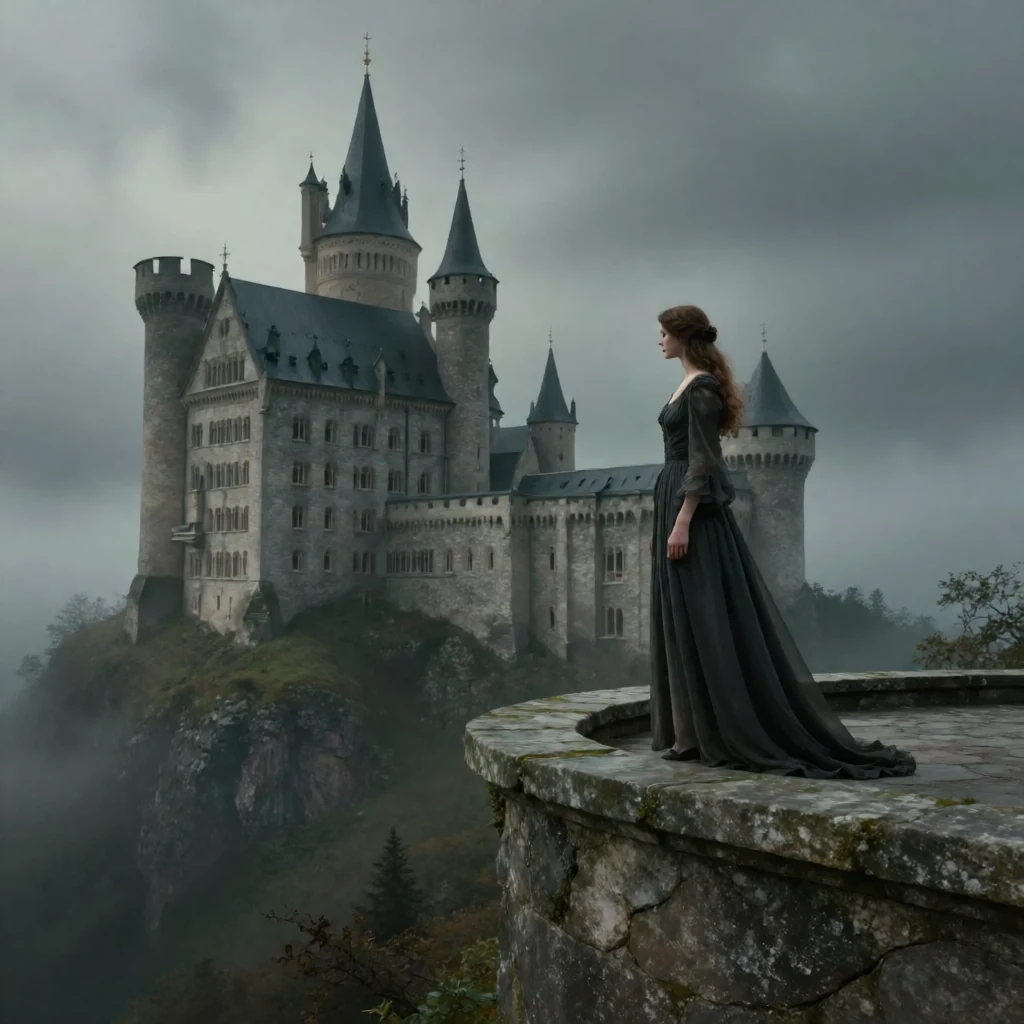
Laurentini’s Plot to Frame the Marchioness for Infidelity
Perceiving that she has recovered her influence, Laurentini determines to live and to employ all her enchantments to win his consent to the diabolical deed she believes necessary. With deep dissimulation she estranges him from his wife, exploits the Marchioness’s unreturned affection for another, and—having first extracted a promise that he will forbear avenging himself on that rival—directs his jealous pride toward the Marchioness, hoping his restrained vengeance will burn fiercer and prevail on him to assist in destroying her.
Innocent Marchioness Suffers Her Husband’s Cruelty
The innocent Marchioness observes with grief the alteration in her husband’s manners—his reserve, austerity, and unkindness—while she weeps and plots the recovery of his affection. She had accepted his hand in obedience to her father, though her heart was given to another whose amiable disposition, she believes, would have made her happy.
Murder of the Marchioness via Slow Poison
Drawing on her early discovery of the Marchioness’s secret attachment, Laurentini furnishes the Marquis with seeming proof of his wife’s infidelity; in the frantic rage of wounded honor he consents to her destruction. A slow poison is administered and the Marchioness falls a victim to Laurentini’s jealousy and subtlety and to the Marquis’s guilty weakness.
Marquis’s Remorse and Rejection of Laurentini
The moment of Laurentini’s triumph becomes the commencement of suffering that never leaves her. Revenge dies even as it is gratified, leaving only unavailing pity and remorse. The Marquis, too, finds the moment of his revenge to be one of remorse toward himself and detestation toward his partner in crime; he cannot recover the conviction that justified him, and even his dying wife’s solemn assurance of innocence cannot dispel his agony. He spares Laurentini’s life only on condition that she spend her remaining days in prayer and penance.
Laurentini’s Retreat to St. Claire Monastery
Overwhelmed with disappointment at receiving contempt and abhorrence from the man for whom she stained her conscience with blood, and touched with horror at her unavailing crime, Laurentini renounces the world and retires to the monastery of St. Claire.
Laurentini’s Secret Night Music and Convent Haunting Rumors
At the convent, Laurentini’s deep remorse and unfulfilled passion unhinge her mind; a heavy, silent melancholy settles over her, broken by occasional fits of frenzy until her death. Her only indulgence is to walk in the woods near the monastery in the lonely hours of night, playing a favorite instrument and singing the solemn, melancholy airs of her native country—mysterious nocturnal music which, combined with the château’s legends, produces reports that the neighborhood is haunted.
Marquis’s Lingering Guilt and Eventual Death
The Marquis quits Château-le-Blanc immediately after his wife’s death and never returns, vainly seeking to lose the sense of his crime in war and the dissipations of a capital; a deep and unaccountable dejection hangs over him until he dies with a horror nearly equal to Laurentini’s.
Concealed Truth of the Marchioness’s Death and St. Aubert’s Secrecy
The physician who noted the singular appearance of the Marchioness after death was bribed to silence; a servant’s whisper never ripened into investigation, and the manner of her death was never prosecuted. Her brother, M. St. Aubert, however, suspected the truth; many letters passed between him and the Marquis on the subject, and these—together with the Marchioness’s own letters confiding her unhappiness—are the papers St. Aubert so solemnly enjoined Emily to destroy. His tender concealment of her history and name explains his emotion when she was named by La Voisin, his caressing of her picture at La Vallée, and his request to be interred near the Villeroi monument where her remains were deposited.
Laurentini’s Will Reveals Emily’s Familial Connection to the Villerois
Soon after entering St. Claire and before showing any symptoms of insanity, Laurentini made a will bequeathing a legacy to the convent and dividing the rest of her personal property—made very valuable by her jewels—between Madame Bonnac (an Italian lady and her relation) and the nearest surviving relative of the late Marchioness de Villeroi. As Emily St. Aubert is not only the nearest but the sole such relative, this legacy descends to her, finally explaining the whole mystery of her father’s conduct.
The original text of this work is in the public domain. This page focuses on a guided summary article, reading notes, selected quotes, and visual learning materials for educational purposes.