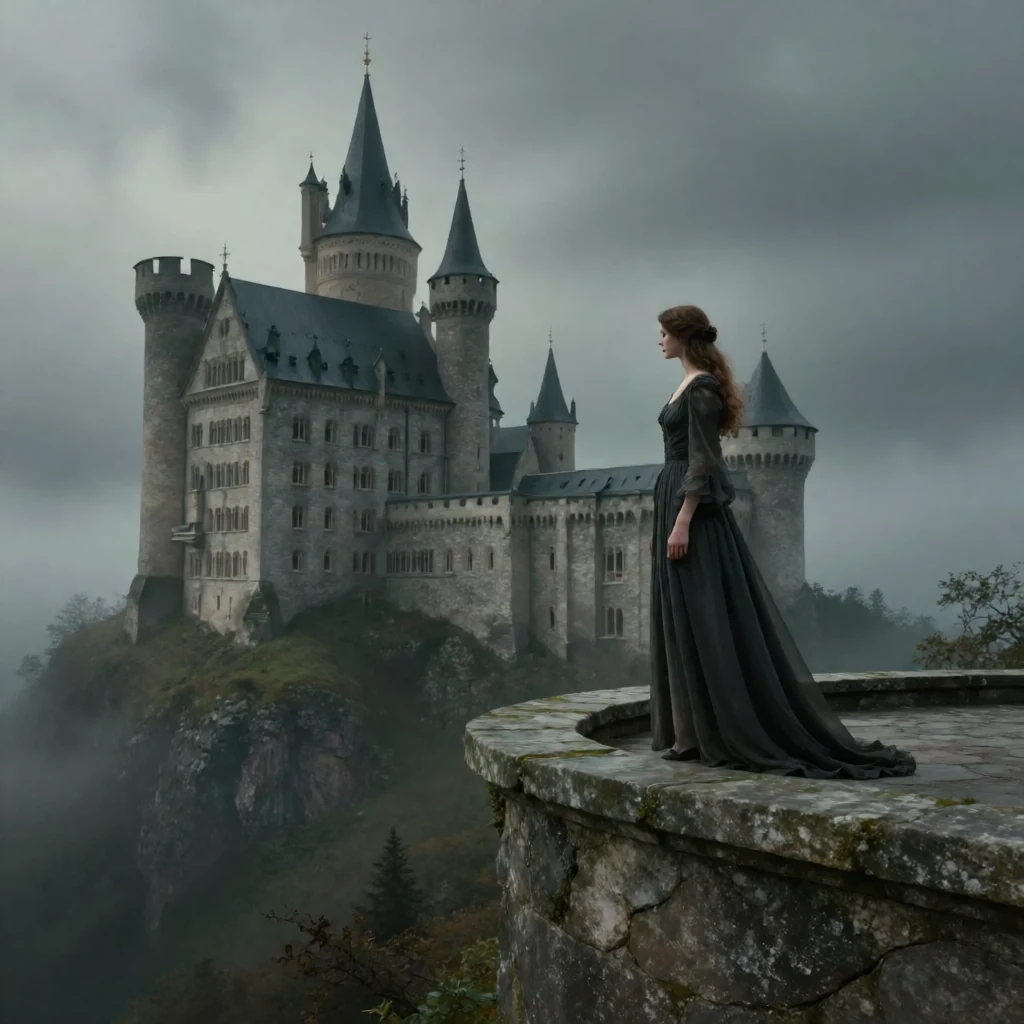
Milton Epigraph on Sepulchral Shadows
The chapter opens with a quoted epigraph from John Milton depicting thick, damp, gloomy shadows that linger in charnel vaults, sepulchres, and around new-made graves, establishing a dark, morbid tone for the chapter’s events.
Emily Reacts to Montoni’s Second Excuse
After Montoni sends a second excuse to avoid meeting with her, Emily grows suspicious, believing his conscience is prompting him to avoid an explanation of her visit. She briefly considers forcing an encounter with him but is held back by terror, and the day passes with a new, dreadful sense of expectation about the coming night disturbing her previously calm state of mind.
Band Returns to Castle Celebrating Plunder
In the evening, the second contingent of Montoni’s armed band returns to the castle after an excursion among the mountains, shouting and exulting as they enter the courts. Emily, hearing the noise from her remote chamber, initially fears they are preparing to commit a barbarous act, until Annette reassures her the men are only celebrating the plunder they seized during their trip.
Emily Suspects Montoni Leads Banditti
The band’s celebration of plunder confirms Emily’s growing belief that Montoni has turned to robbery to recover his ruined fortunes. She reasons that his remote, inaccessible mountain castle, located near routes frequented by wealthy travelers, is perfectly suited for raids, and his unprincipled, cruel, fearless nature makes him well-suited to lead a band of robbers.
Historical Context of Italian Condottieri
The narrative interrupts Emily’s speculation to provide historical context for the era: due to insufficient state revenues to maintain standing armies during frequent wars, a class of military leaders called Condottieri arose, made up of disbanded soldiers who either formed robber bands, attached themselves to popular chiefs for hire by warring Italian states, or occupied remote fortresses with tacit government tolerance. The passage notes Montoni had long aspired to emulate these figures after encountering them in Venice and Padua’s gaming circles, and held midnight councils with fellow former soldiers to plan his current lifestyle at the castle.
Emily’s Midnight Casement Watch
When night falls, Emily returns to her casement to watch for the mysterious figure she glimpsed the prior night, aided by bright moonlight. She wavers between curiosity about the figure, which she suspects may be connected to her aunt’s fate, and terror of potential danger, ultimately deciding not to speak to it if it appears. She observes the terrace, a lone sentinel, and groups of guards changing watch, and eventually retires to rest, resolving to repeat her vigil the following night.
Emily Requests Permission to Depart
The next day, Emily sends Annette to arrange a meeting with Montoni, and arrives punctually at 11 o’clock to find him with his officers. After dismissing his companions, Montoni listens as Emily begs to return to France, citing her deceased aunt as reason for her departure. He refuses outright, and when Emily challenges his right to detain her, he insists his will is sufficient justification, leaving her without recourse.
Verezzi and Orsino’s Violent Clash
Back with his officers, Montoni discusses plans for an upcoming expedition, and the impetuous Verezzi opposes Orsino’s cautious suggestion to lie in wait for the enemy, accusing Orsino of cowardice. Enraged, Orsino attempts to stab Verezzi in the back with a stiletto, but Montoni intercepts him and forces him to hide the weapon before Verezzi notices. Verezzi then demands Montoni choose between him and the cowardly Orsino for the expedition, prompting Orsino to draw his stiletto again and charge, leading the two men to be separated by Montoni and the rest of the party.
Montoni Duels Verezzi
Montoni reprimands Verezzi for his intemperate speech, but Verezzi insists moderation is a trait of cowards. Offended, Montoni draws his sword and challenges Verezzi, who accepts the duel. During the fight, Orsino attempts to stab Verezzi a third time, but is again stopped. After a long, violent struggle, the combatants are separated and reconciled, and Montoni retires with Orsino for a lengthy private consultation.
The original text of this work is in the public domain. This page focuses on a guided summary article, reading notes, selected quotes, and visual learning materials for educational purposes.