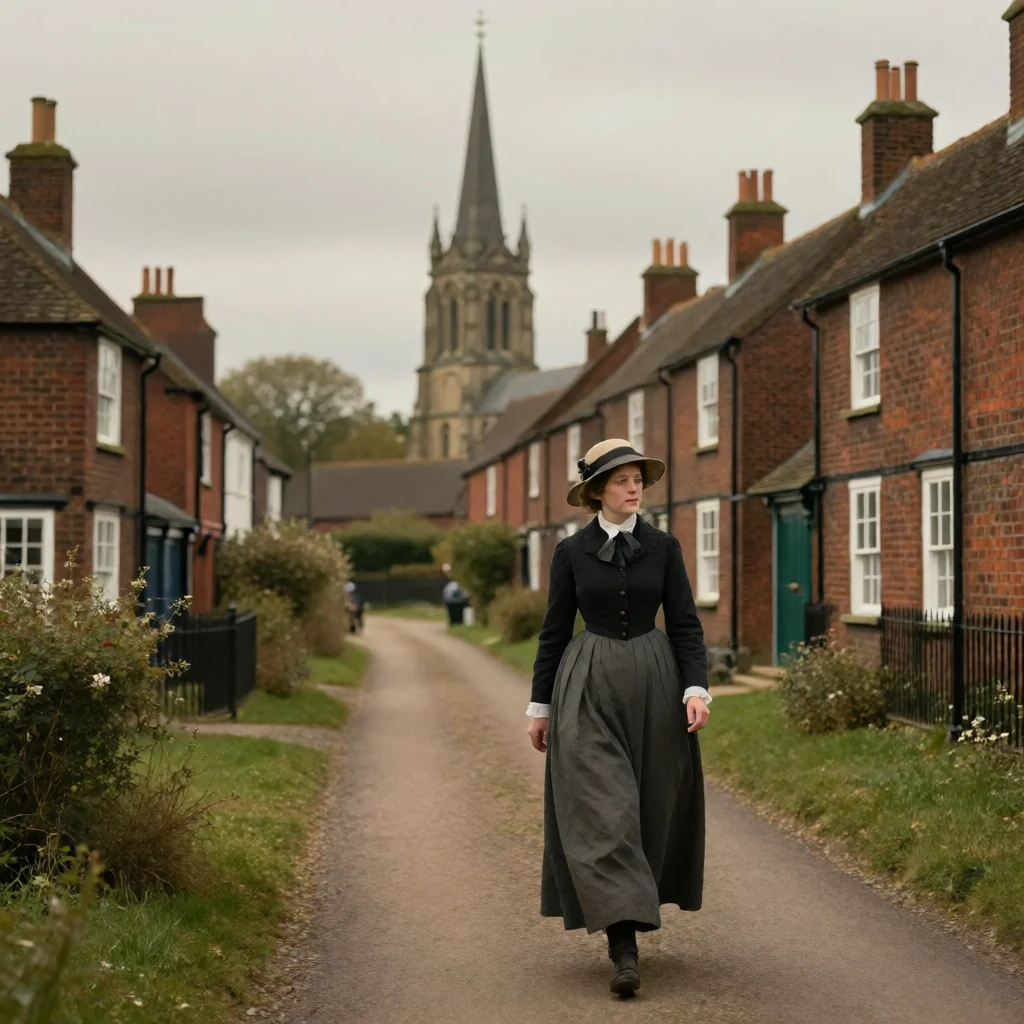
The Departure to Ilsely
After taking Raffles to bed that night, Bulstrode ordered his closed carriage ready at half-past seven the next morning. At six o’clock he had already been long dressed, spending his wretchedness in prayer. At quarter past seven, with cold peremptoriness, Bulstrode told Raffles he intended to conduct him as far as Ilsely, where he could take the railway or await a coach. He warned that if Raffles returned to Middlemarch or spoke injuriously, he would have nothing from him. He gave Raffles a hundred pounds and drove him ten miles before parting. The servants imagined Raffles to be a poor relation, and were not surprised their master should want to get rid of such a cousin.
Fears of Imminent Disgrace
Bulstrode returned home with no confidence that he had secured more than a respite. He was conscious of a deposit of uneasy presentiment in his wife’s mind, because she carefully avoided any allusion to it. He had been accustomed to taste the flavor of supremacy and the tribute of complete deference, but now his voice tottered when speaking to edification. His imagination continually heightened the anguish of an imminent disgrace. He foresaw that if his defiance of Raffles did not keep the man away, the disgrace was certain. He recoiled from the imagined burning, yet judged it must be more for the Divine glory that he should escape dishonor.
Preparations for Leaving Middlemarch
That recoil had at last urged Bulstrode to make preparations for quitting Middlemarch. He would transfer his management of the Bank and give up any active control of other commercial affairs on the ground of failing health, but without excluding future resumption. He wished to leave an opening for his return after brief absence if favorable intervention should dissipate his fears. He continually deferred the final steps, clinging to the impression that something would happen to hinder the worst. The Hospital presented itself as a principal object of outlay on which he could fairly economize.
Consulting Caleb Garth
Among the affairs Bulstrode had to care for was the management of the farm at Stone Court in case of his absence. He consulted Caleb Garth, wanting the agent who was more anxious for his employer’s interests than his own. Caleb advised him not to trust to a mere bailiff, but to let the land, stock, and implements yearly, and take a proportionate share of the proceeds.
A Proposal for Fred Vincy
Caleb Garth, considering Fred Vincy’s future, conceived an alluring idea about letting Stone Court. He proposed to Bulstrode that Fred Vincy be placed there on the understanding that Caleb would be responsible for the management. It would be excellent schooling for Fred, who might make a modest income there while having time to get knowledge by helping in other business. Caleb was so elated with this hope of a “neat turn” being given to things that he nearly betrayed everything to Mary. He restrained himself and kept in strict privacy from Fred certain visits he was making to Stone Court to look into the state of the land and stock.
Gaining Bulstrode’s Consent
Bulstrode had anything but a warm interest in his nephew Fred Vincy, but he had a strong wish to secure Mr. Garth’s services on many scattered points of business. Hence he made no objection to Mr. Garth’s proposal. There was also another reason: Mrs. Bulstrode, having heard of Lydgate’s debts, had been anxious to know whether her husband could do something for poor Rosamond. Remembering this dialogue, Bulstrode felt he should be glad to tell his wife he had made an arrangement for the good of her nephew Fred. He gave Mr. Garth the assurance that Fred Vincy should be allowed to have the tenancy of Stone Court on the proposed terms.
A Castle in the Air
Mrs. Garth expressed cautious concern: “But suppose the whole scheme should turn out to be a castle in the air?” Caleb replied with optimism that the castle would tumble about nobody’s head. He was occupied with this bit of probable happiness which he held in store like a hidden birthday gift for Fred and Mary.
The original text of this work is in the public domain. This page focuses on a guided summary article, reading notes, selected quotes, and visual learning materials for educational purposes.